
More Random Thoughts: Self Talk

Posted by: Curtis Stevens on August 19, 2011 12:00 pm

I climbed a mountain for the first time the other day.  It has been one of my goals since I moved to the Crowsnest Pass.  I went with my daughter,  the exchange student that lives with us and a 11 year old child.  It was really an amazing experience.  But what has this got to do with counseling, one might ask?  One of the tasks in Cognitive Behavioural Therapy is to help the client to become aware of their self-talk and to counteract the negative self-talk with more positive statements/affirmations.  I’ve gotten so used to challenging the un-resourceful self-talk that clients practice, but really don’t pay that much attention to mine.  I guess you can say that I need to practice what I preach. 

Continue reading


*The views expressed by our authors are personal opinions and do not necessarily reflect the views of the CCPA

On the Usefulness of Concepts

Posted by: John Stewart on August 18, 2011 2:51 pm

Concepts are the mental integration of multiple aspects of reality that may come from our current perception or from earlier-formed concepts.  While seminal concepts are generally viewed as being derived from the processing of direct experience and discovery, the ongoing process of concept formation, where a person learns to sort specific experiences into general rules or classes, is commonly depicted as the classification of new or existing into some type of hierarchical structure.  The models described in the literature vary and include (but are not limited to) depictions of concepts as being organized around: rules of inclusion and exclusion; prototypes (that possess a central tendency); exemplars; and explanations, or outlines, of the experience.  While the space here does not allow in depth explanation of these theories, all agree that awareness of the hierarchical distinctions being used can help guide behaviour in new situations.

Continue reading


*The views expressed by our authors are personal opinions and do not necessarily reflect the views of the CCPA

Delivering and Receiving Bad News: What School Counsellors Need to Know

Posted by: Lori Walls on August 18, 2011 2:48 pm

It can sometimes be challenging to come up with topics for the school counselling blog. For this week’s topic I began thinking back on the interactions that I had with school counsellors during my own early school years. One of the interactions that had a significant impact took place during my middle school years and involved the delivery of the news of my grandfather passing. In my own professional career as a counsellor I have often delivered difficult news to a client or a student and I would like to think that, much like the school counsellor who informed me that my grandfather had passed, I was able to effectively communicate the difficult news, convey empathy, and offer support.  However, when thinking about the conscious steps I had taken to prepare and plan for these occasions it became clear that I had never received any direct training or even attempted to seek out any information on how to be effective in these types of situations.

Continue reading


*The views expressed by our authors are personal opinions and do not necessarily reflect the views of the CCPA

What is Your Self-Care Catch Phrase?

Posted by: Derrick Shirley on August 18, 2011 2:45 pm

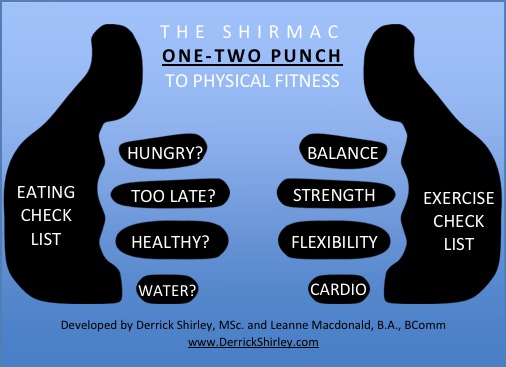
I love vacations. I love road trips. I love eating. These three things added up spell, “weight gain.” Well not exactly, but “IlovevacationsIloveroadtripsIloveeating” does not pass a spell check.

Despite my best efforts, on our recent vacation to New York and the East Coast of Canada, I sacrificed healthy eating for convenient eating; sandwiches, snacks, pretzels, subs, some fresh fruit but very little vegetables. As a result, by the end of the two weeks I could feel the difference in my body. Even my eleven-year-old step daughter could feel it, “When I get home, I going to eat vegetables for a whole week!” she said. Experience is a great teacher.

Continue reading


*The views expressed by our authors are personal opinions and do not necessarily reflect the views of the CCPA

What are the Effects of Verbal Abuse on Children?

Posted by: Asa Don Brown on August 16, 2011 8:36 am

What are the effects of verbal abuse on children? How am I defining verbal abuse? Verbal abuse is any aggressive behavior that occurs through human communication. Such behaviors include: belittling, swearing, name-calling, negatively criticizing, threatening, ordering, and the undermining of a person’s integrity.  The intent of verbal abuse is often to prove rude, offensive, disparaging, defamatory, slanderous, and scornful.  It’s overall intent is often to degrade the soul and mind of the individual to such a degree that they are without an ability to retaliate. 

As a therapist, I have heard all types of excuses why verbal abuse is acceptable. Parents have tried blaming their child’s behaviors, attitudes, and perceptions as being the catalyst of their own negative behavior. It is not uncommon to witness a parent deflect, but it is rare to hear a defensive parent accept responsibility.  Moreover, we all know that many parental behaviors are learned behaviors, attitudes, and perceptions.  Parents have learned from watching and witnessing their own parents, teachers, and others who played a significant roles in their life. 

Continue reading


*The views expressed by our authors are personal opinions and do not necessarily reflect the views of the CCPA

Art and Music Therapy in Rehab and Beyond

Posted by: Priya Senroy on August 15, 2011 12:00 pm

In the last couple of months I have been doing some research on how creative arts therapy can be used to work with clients with disability. This need came up because of two reasons-one I am getting more clients with disabilities in my counseling session-clients with psychical and intellectual disabilities and trying to adapt my creative arts background in my current counseling practice. The second need is also to equip myself with tools so that I am ready to gear my practice under the Accessibility for Ontarians with Disabilities Act ( AODA) which is coming into effect  in 2012.

I found this video shared by the department of rehabilitation medicine, University of Washington. The presentation is an hour long but gave me an insight on some of the basic techniques or tools that I could adapt and modify in my current practise. Even though is primarily based on art and music, I think creative arts counsellors from all kinds of ‘art’ background would be able to take away some ‘teachable moments’ from this video.

Art and Music Therapy in Rehab and Beyond from NW Regional SCI System on Vimeo.

On a personal level, it was also inspirational as well as motivational in my journey of working with people with disability.


*The views expressed by our authors are personal opinions and do not necessarily reflect the views of the CCPA

If You Can’t Take a Vacation….

Posted by: Victoria Lorient-Faibish on August 12, 2011 12:00 pm

I found that this summer due to my husband’s schedule going on a family vacation will not be possible.   My disappointment has affected me. The reality is that I can go on vacation alone but I am really sad that it cannot be with him. And so here is where I begin to apply my 90/10 rule.  The event that disappoints me is the 10% of the issue. How I react is 90% of the issue.   At another time I might have sulked or fought or even hurled passive aggressive badgering comments at him in order to get my way.  I am not proud of my past reactions…. Although I do have compassion for myself because I know that when you know better… you do better. This kind of reactivity is purely inherited from my family culture and let me tell you we were a family of reactors!

The reality is that we really have control over very little. We don’t have control over outcomes, other people, timing or much of anything. But alas we do have control over our reactions, thoughts and attitudes. The truth is even those require a world of discipline. For me to stay away from negative and petty reactions I need to do my work. I need to meditate on what is really important versus what I think is important. In this case, I meditate of the fact that life is short and even though I cannot have my partner with me on my leisure time… I have leisure time and thank goodness, we are healthy, in love and all is well.

I have decided to be creative.  I take days off during the week here and there. My husband joins me at the beach on an occasional day off.  We go to dinner at different restaurants from different countries and we play act that we have gone on a trip to that country.  It is all very satisfying and brings us closer as a couple.  I get to feel refreshed and he does not have to feel bad that the summer may have been a bust due to his work schedule or my reactions. A win/win I would say.


*The views expressed by our authors are personal opinions and do not necessarily reflect the views of the CCPA

Reading Between the Lines

Posted by: Dawn Schell on August 12, 2011 12:00 pm

An important component of online counselling is learning how to read between the lines. Same as in face-to-face (f2f) counselling it’s about paying attention.  In f2f counselling we pay attention to the verbal and nonverbal cues (amongst other things).  In online counselling we pay attention to: what people say, what they don’t say, word choices, phrasing, name substitutions, pacing, inconsistent spelling errors, understatements, grammar, punctuation (or lack of same), capitalization, use of metaphors, misquotes.  I could go on but I assume you all know what I am talking about!

Let me give you a few examples of the kinds of statements clients might make and some of my “reading between the lines”. 

Continue reading


*The views expressed by our authors are personal opinions and do not necessarily reflect the views of the CCPA

Self and Experience

Posted by: Jeffrey Landine on August 11, 2011 12:00 pm

As we indicated in our last blog, we think that semantic memory is where occupational information is stored while episodic memory is where information about the self is stored.  This dichotomy represents the foundation of the Cognitive Information Processing (CIP) approach to career decision-making (Peterson, Sampson, Lenz & Reardon, 2002).  In this theory, episodic memory, defined as the memory of autobiographical events which include attributes such as time, place, people and associated emotions, is believed to be the recalled material from which we derive a sense of self.  All the little mental “movies” of our lives that we can recall (and some that we can’t recall) help to create a picture of self in our world.  As such, experience plays a key role in this aspect of memory.

Continue reading


*The views expressed by our authors are personal opinions and do not necessarily reflect the views of the CCPA

Get Inspired about Psychotherapy!

Posted by: Debbie Grove on August 9, 2011 12:00 pm

I was recently inspired by a blog I read by Dr. John Grohol, Founder and Editor-in-Chief of Psych Central (www.psychcentral.com). In reflecting and writing on client-counsellor fit, I have been thinking a lot about counselling and psychotherapy from the client’s perspective. Dr. Grohol’s discussion highlighted how a few sessions of psychotherapy can positively contribute to mental health. In other words, investing in this time is well worth the effort, especially given how impactful it can be on one’s quality of life. Moreover, I was struck by his positive tone, putting psychotherapy in a bright light – helping to unleash it from the silence that stigma too often brings. I liken psychotherapy to any other aspect of our well-being that requires a check-in, boost, and/or maintenance. After all, we likely do not think twice about taking our car in for maintenance, fixing the house, seeing the doctor or dentist, and so on. Our mental, emotional, and relational well-being is just as important!

Dr. Grohol went on to comment how the right fit in psychotherapy is “vitally important” – I couldn’t agree more! He stated that this tends to be a process of “trial and error.” While I hear that a lot, I think this is an aspect of psychotherapy that needs a lot more exploration and discussion – watch for my future blogs about the topic of reducing trial-and-error with collaborative consultation.

Continue reading


*The views expressed by our authors are personal opinions and do not necessarily reflect the views of the CCPA