The Emerging Field of Psychotraumatology in Canada

Posted by: Linda AK Thompson on September 12, 2012 2:03 pm

Reflections of a Trauma Nurse/Counsellor’s Academic, Research & Clinical Experiences   Mid-Way – Traumatogenic Wounds & Beacon Messengers

In my mid-thirties in the mid-eighties, I remember sitting in a sociology class and our professor announced that every family system has skeletons in their closets somewhere down the line and across the generations.  Not only was I naïve about deception, I was also unaware of skeletons contained and held secret (closeted) by at least one living family member who contains the  transgenerational wound – traumatogenic [11]. 

My masters to doctorate process spanned 8 years of intense theoretical studies and I progressed to bifocals.  I am indebted to the vast number of academic/clinical teachers involved in my career/skill sets and development – quite amazing when I think back to the 16 year old who dropped out of school to simply be a practical nurse.  I still like those two words.  I am unable to formally acknowledge/thank all of my teachers to whom I remain grateful, however, there are some I refer to as ‘beacon messengers.’ It is their messages that stay with me and I hold onto dearly to sustain my faith, hope and fortitude to remain on track so that the bedside trauma nurse could and indeed did transition to become a trauma counsellor.

From 1989 to February 2012, I operated as a dual-role professional:  a Canadian Certified Counsellor (CCC) and Registered Nurse (RN).  In June 2012 and after 46 years of service, I prematurely, but gracefully surrendered [4] and placed myself on the RN inactive list and this is another story.  My current plan is to maintain my status as a CCC and owner, senior consultant of Matrix of Trauma (© MOT ™) for as long as my services are required and deemed helpful by the client population I serve.  My beacon mentors originate from both fields of nursing and counselling:

Continue reading


*The views expressed by our authors are personal opinions and do not necessarily reflect the views of the CCPA

Small Steps to Feeling Fulfilled

Posted by: Maritza Rodriguez on September 12, 2012 1:54 pm

Children are naturally inquisitive and curious. They believe that everything is possible and have a strong belief in themselves and their abilities. A survey of young children resulted in 50% of the kids in a classroom boasting they were the fastest runners in their class.

Along the way, however, life gives all of us messages that are incongruent with the above children’s thoughts of themselves. We experience disappointments, failures, seemingly insurmountable challenges and our zest for greatness is dampened. For many of us, fear creeps in. We stop trying to attain our dreams or settle for very little so as not to let ourselves down.

Continue reading


*The views expressed by our authors are personal opinions and do not necessarily reflect the views of the CCPA
Oppositional Children

Posted by: Asa Don Brown on September 11, 2012 4:40 pm

“Be the change that you wish to see in the world.”

                                                                                     ~ Mahatma Gandhi  


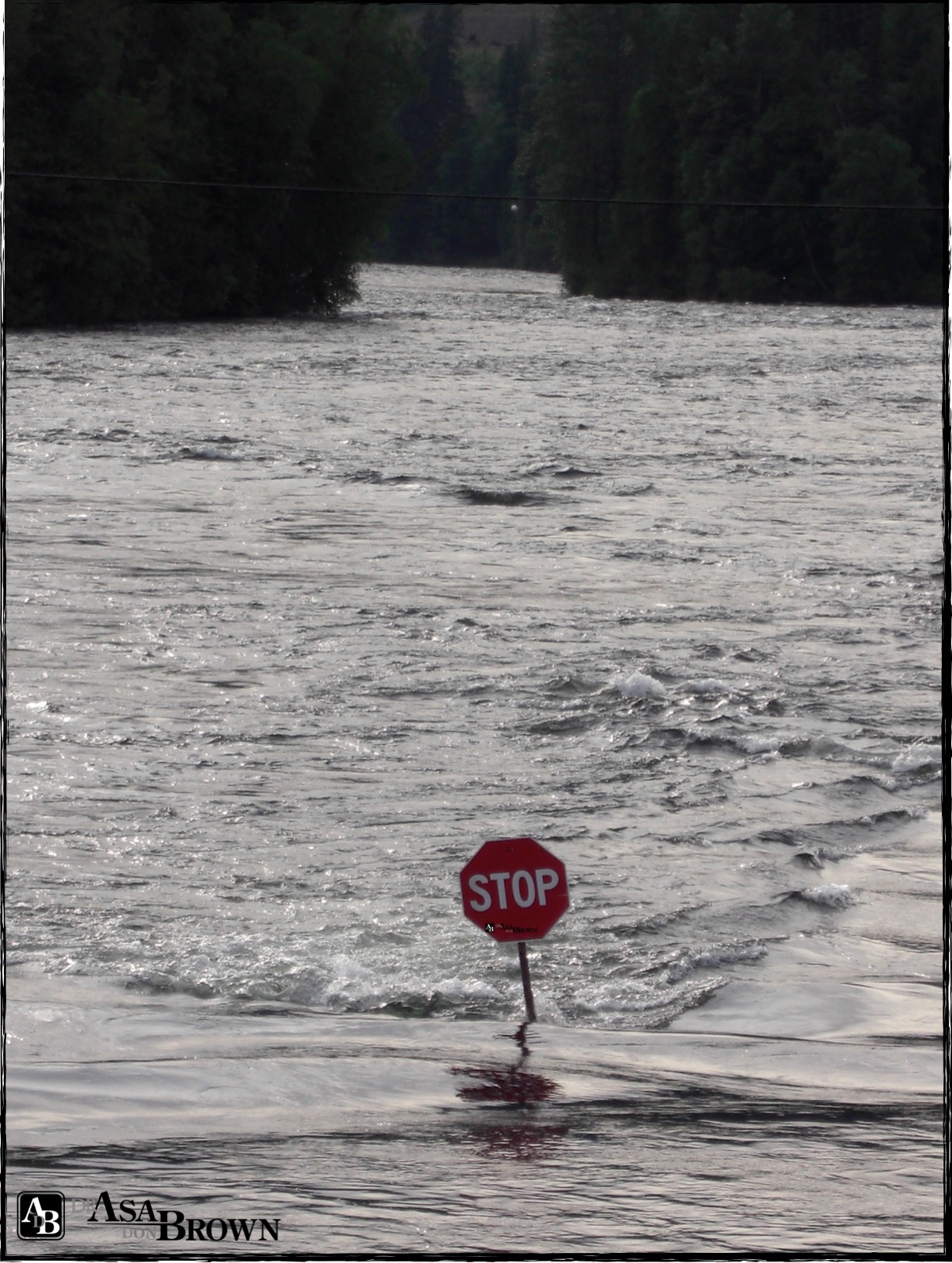
Children who act out in an oppositional manner, are frequently drawing upon an internal struggle to oppose or reject something in their lives.  Oppositional children are often blamed for their defiant behaviors, but are not always offered a listening ear, to hear why they are acting out in a disobedient and uncooperative way.

It is important to recognize that not all children who are acting out or behaving in an oppositional manner, should be diagnosed.  In fact, it is of extreme importance that children who act out in negative ways be given an opportunity to discuss the problems that plague their young lives.  Moreover, as a good clinician, we should be looking at the entire scope of the child’s life, including the psychosocial and economic perspective.  Unfortunately, in some egregious cases, children are reacting rather than simply acting out.  Therefore, as a clinician we must offer our best detective skills when looking at the life of a child. 

Continue reading


*The views expressed by our authors are personal opinions and do not necessarily reflect the views of the CCPA

Job Hunting is a Treasure Hunt

Posted by: Hailing Huang on September 6, 2012 3:46 pm

What is your experience about your job hunting? Do you feel stressed, do you feel overwhelmed, and does it shatter your sense of security and make you feel helpless, vulnerable in an uncertain world? All of those symptoms are indicators of emotional or psychological trauma. For some people, the job hunting process is a traumatizing experience, isn’t it? Especially during the season of recession, the news from every channel is, either no jobs, or not qualified, or over qualified, or not enough experience, or simply no reply. Facing those negative responses again and again can drag down your self-esteem, confidence, and values. After a few months of the same replies, anyone could sink into depression.

So how do we take care of ourselves? How do we survive this traumatizing experience and continuously rejuvenate the positive energy is a request for a desirable outcome? Here are some practical tips that may help you relieve the pressure:

 1.  A Desirable Goal: The Treasure Hunt

When the goal is desirable, it becomes an efficient motivator, the key is to make it meaningful. A story about three stone cutters well illustrates this point: the first one regards his job as boring, since it only involves cutting the stone into the same shape again and again. The second one regards his job as a means of taking care of his family; he is proud of what he can achieve. And the third one regards his job as contributing to the history, the stone he cuts will make the building and the building will last for thousands of years. Job hunting is a repetitive action, make sense of what you are doing; brain storm some ideas to make it meaningful or fun can motivate you to do it again and again with love and interest, not with fear or loathing. Maybe you can regard it as a treasure hunt.

Continue reading


*The views expressed by our authors are personal opinions and do not necessarily reflect the views of the CCPA

Will This Grief Ever End…?

Posted by: Priya Senroy on September 6, 2012 3:22 pm

Dear readers…..
I am digressing this month from sharing about what’s happening in the filed on creative arts in counselling in other parts of the world to sharing some recent experiences that I have been dealing with at work.
It seems that one fourth of my clients are dealing with grief and loss issues at some level .Its either directed linked to them or somebody they know.
I have been supporting children, families, caregivers, grandparents to process the feelings of transition, endings and closures in my counseling sessions and wanted to share some of the activities that I have found to be useful when talking hasn’t helped…….
Most of these are that what I have been taught, have read or have researched and modified to suit the particular client, depending on their ages and stages of grief.
Some of my trial and tested ones include:
Creating a grief or memory collage to a favorite music listened to by the person.
Creating a family tree painting using the handprints of family members as the leaves with wishes for each other.
Developing messages in art (if you could create a message for your special person using art as a form of expression, what would you want to communicate?).
Making a  paper boat with messages for the person who has passed and sailing it in open water.
Using T-Shirts and other paraphernalia bearing the picture and facts about the deceased, to symbolize the life and death of their loved ones. 

I found these to be self reflective as well as helping in the grieving process so if anybody finds anyway to modify and use them……please do so.

By: Priya Senroy


*The views expressed by our authors are personal opinions and do not necessarily reflect the views of the CCPA

Inspiring Your Child

Posted by: Asa Don Brown on August 30, 2012 11:35 am

“I have not failed.  I’ve just found 10,000 ways that won’t work.” 

                                                                                    ~ Thomas A. Edison   

Failure is good, failure is necessary, failure stimulates a desire for success.  When an individual fails, we are instinctively and unconsciously prompted to discover a path to success.  Successful people are inspired people; they are unwilling to accept the “status quo.”  Inspired individuals are willing to challenge the norm, ask questions, seek solutions, and forge through unbeaten paths.  Inspired individuals are unwilling to give up.

THE GOOD OF FAILURE

The importance of failure is that it reminds us that we can do better, be better, and achieve more. 

Why are we so concerned about making mistakes?  Why are we afraid of failure?  As a society, we are taught that failure is a remark of our character, our persona, our very worth.  From Hollywood to Bollywood we view movies and television shows that remark upon the negativity of failure. 

The Positive Aspect of Failure

If I fail, then I have a guidepost, indicating the areas with which I can improve. Failure has become the barometer of negativity, rather than a potential of opportunity.  Without failure, we could not relish in the achievement of our successes.  As a good parent or teacher, we should teach our children that failure is an opportunity for improvement and growth, rather than a blockade deterring us from our greatest potential.  Failure is no more than a mere challenge begging us to be better. 

Continue reading


*The views expressed by our authors are personal opinions and do not necessarily reflect the views of the CCPA

The Gift of a Struggle

Posted by: Nicole Maier on August 30, 2012 11:29 am

If your kids are anything like mine, then “struggling” is not at ALL what they would describe as a gift: Lego, iPad apps, gum and sour keys, now we’re talking. 

Of course like so many things with parenting children, is the “gift” that truly emerges isn’t what they think it will be. 

For example, if you think in your own lives, how does it feel when you have been training for your goal this year like running a marathon, cycling the Fondo, mastering headstand in yoga, completing a course you have been slogging away at, or even quitting a nasty habit (you know the one)? Likely you feel proud, strong, accomplished, maybe even a little cocky… I know I would be hard pressed to deny teasing my closest friend as we run together (one in particular who’s name rhymes with “new”). 

Essentially, after working hard at something, no matter if it’s physical or mental one tends to feel encouraged from the inside out during the process as well at the finish. 

Continue reading


*The views expressed by our authors are personal opinions and do not necessarily reflect the views of the CCPA

Cyberloafing or What I Did On My Summer Vacation

Posted by: Dawn Schell on August 21, 2012 11:57 am

In my part of Canada summer took its own sweet time arriving.  It is here now though and we are grabbing all the sunshine we can.  As the lazy summer days roll by it’s hard to imagine [dare I say it?] September is just around the corner.  

Where does the time go?  I remember way back in June how I set goals for this summer.  I was going to get so much reading done. You too?  Well, there is still time!

Here’s a couple of suggestions for a little light summer reading on the topic of online counselling.

First up, the excellent (if somewhat dated) “Psychology of the Internet” by Patricia Wallace.  She examines the ways in which the online environment can influence the way we behave, which then becomes part of the Internet’s psychological environment for others.  It’s a fascinating read, addressing the ‘disinhibition’ effect.  Her style of writing is quite accessible so it’s great for summer reading.

Go to International Society for Mental Health Online https://www.ismho.org/home.asp and cruise the News & Events section.  Just this week an article was posted on Web-based programs for behaviour change and self-management. ISMHO also has the draft copy of the American Psychological Association Guidelines for the Practice of Telepsychology.  Now that’s a great beach read [grinning].   

Always an interesting read – the latest issue of Therapeutic Innovations in Light of Technology (TILT) is out.  It’s published quarterly by The Online Therapy Institute/Online Coach Institute in the UK.  http://www.issuu.com/onlinetherapyinstitute/docs/tiltissue11

Enjoy the rest of summer – whatever you choose to do!

Dawn Schell, MA, CCC, CCDP is an affiliate counsellor with Worldwide Therapy Online Inc.  http://www.therapyonline.ca


*The views expressed by our authors are personal opinions and do not necessarily reflect the views of the CCPA

Healing Through Creative Arts!

Posted by: Priya Senroy on August 21, 2012 10:04 am

In my journey to find about how creative arts can be used in different cultural contexts, I came an article which has fascinated me and caused a paradigm shift in my perception of looking at Creative Arts Therapy as Western Concept.

This report describes the results of a study by the Aboriginal Healing Foundation (AHF) ,Canadain the use of creative arts in healing programs. Since many cultural activities are

arts-based,  this article addresses some questions that  arose around the use of creative arts in healing programs; in particular,

• How often are creative arts incorporated into healing programs?
• What are the associated benefits and challenges?

The formal research question guiding this study was,

• What happens when art, music, dance, storytelling, and other creative arts become a part of community-based Aboriginal healing programs?

Very interesting read!!!!

http://www.ahf.ca/downloads/healing-through-creative-arts.pdf


*The views expressed by our authors are personal opinions and do not necessarily reflect the views of the CCPA

The Emerging Field of Psychotraumatology in Canada

Posted by: Linda AK Thompson on August 17, 2012 2:18 pm

Reflections of a Trauma Nurse/Counsellor’s Academic, Research & Clinical Experiences

My Beginning:  Have Trauma Will Travel & Rude Awakenings:

In 1989, this is what I said to myself ‘have trauma will travel’ on a novel path and idea that this trauma nurse, retiring from bedside intensive care unit (ICU) nursing could transition, with transferable skill sets gained as a mid-life professional, into a private nursing practice to be a grief counsellor.  A good naïve innocent thought until I realized from my own bereavement that the phenomena of grief requires master level education/training in order for me to be helpful or acceptable in any professional association providing counselling services[21]. 

Google search Psychotraumatology and Wikipedia high-lights three professionals: Frank Ochberg, MD is named the founding father of modern Psychotraumatology; Gottfried Fisher, PhD is named the founder of Psychotraumatology in Germany, and Steve Abadie-Rosier is an expert in criminology and considered the ‘psychoanalyst of the irrecoverable or the borderline.’  Goggle search Psychotraumatology Canada and Wikipedia high-lights the Canadian Friends of Herzog Hospital.  I was pleased to see the range of services now available and of particular interest to me is The Soldiers Project.  My father was a WW2 veteran and post-war a firefighter. During his end-of-life and palliative care journeys, I suffered great sadness alongside my family as my dad, my hero – died so hard.  This is another story.

Continue reading


*The views expressed by our authors are personal opinions and do not necessarily reflect the views of the CCPA