Author Archives: Asa Don Brown

The Effects of Eating Disorders

Posted by: Asa Don Brown on December 6, 2013 12:02 pm

“Rivers know this: there is no hurry. We shall get there some day.”
~ A. A. Milne

Eating is a natural and an essential part of life.  The function of food is to nourish the body, but was created to be enjoyed by human beings, as well.  For many, few thoughts are more exaggerated or obsessed, than those who struggle with eating disorders.  An eating disorder cannot only consume your every thought, but it can, and often does, consume your very existence.  You become a prisoner of your own thoughts, and are robbed of many of the joys of everyday living.

As a clinician, I have worked with many who have struggled with eating disorders and disordered eating.  Eating disorders can be defined as disorders that are characterized by abnormal or disturbed eating habits.  “An eating disorder is a collection of interrelated eating habits, weight management practices and attitudes about food, weight and body shape that have become disordered… This disordered eating behavior is usually an effort to solve a variety of emotional difficulties about which the individual feels out of control. Males and females of all social and economic classes, races and intelligence levels can develop an eating disorder.” (PBS, Online, 2013)   Hollywood perpetuates many of these distorted ideals by placing a high value on vanity and perfection. Teenagers are especially impacted by these unrealistic standards, and are daunted by societal pressures to the point of self-sabotage and self-abuse. Unfortunately, in the case of eating disorders and disordered eating, food is the weapon of choice and the individual is the victim of faulty beliefs generated by himself/herself.

The Diagnostic and Statistical Manual of Mental Disorders (DSM-5) has three primary classifications for eating disorders, they are:   Anorexia Nervosa, Binge Eating, and Bulmia Nervosa.

The DSM-5 has defined the primary types and symptoms of eating disorders as being:

Continue reading


*The views expressed by our authors are personal opinions and do not necessarily reflect the views of the CCPA

Accepting Academic Mediocracy

Posted by: Asa Don Brown on November 22, 2013 4:31 pm

“The only real mistake is the one from which we learn nothing.”
~ Henry Ford

ACCEPTING MEDIOCRACY IN ACADEMIA

Why has society lowered the ceiling of academic success?  Why have our standards been lowered to ensure the graduation rate of our children?  Are we not dumbing down our society if we lower our academic standards?  Are we not developing a society of mediocracy?  It is mediocracy that encourages a moderate and poor quality of performance. Are we not creating a society that just gets by with good enough.  Good enough is unacceptable.

In many aspects of our society, we no longer encourage children to dream, to thrive, and to achieve; rather we have become a society of mediocracy and complacency.  Furthermore, we rarely seek to inspire, to encourage, to positively influence, or to spark an internal flame.  We have become a society that has given up; accepting the notion that “mediocracy” is acceptable.  I have yet to meet a high achiever who has allowed mediocracy to be an acceptable standard for his/her life.

THE POLITICAL LOWERING OF ACADEMIC STANDARDS


“Every adversity, every failure, every heartache carries with it the seed of an equal or greater benefit.”
~ Napoleon Hill

In the past, having served as a political strategist in Canada, and as a political aide to a representative in the United States; allowed me to peek my eyes through the window of politics.  It was through this window that I began to recognize how very interconnected the political machine was on the academic world.  It has been through my work in politics, that I have had an unique opportunity to see behind the scenes of political evolution of academia.  I would never have dreamt that the political climate of our day, would make acceptable any standard short of being our best.  Many years ago, the United States Army ran an ad that emphasized an ideological approach to “be all that you can be.”  Are we encouraging children of this generation to be all that they can be?  Or, are we encouraging children of this upcoming generation to simply be comfortable with a passing grade?

Rarely, do we consider the significance of our political system on the academic environment; but remember it is the political machine that funds the academic environment.  If our funding is derived from the political machine, then is not the political beast responsible for our academic endeavors?  Sadly, we give more thought to the latest stadium being erected than we do our children’s academic futures.  Likewise, as a society, we seek to avoid pointing fingers in the direction of our politicians, because this would make those in charge of our taxes and funding responsible for the decay of the minds of our children.   Now understand, I am not saying that the political beast is solely responsible for the demise of the academic environment, but I am saying that it is one cog in the wheel of decay.  Nevertheless, if you are going to bring light to a dark environment, you must choose to shine the light on the environment you are in.  Yet, we cannot forget that parents, teachers and the community at large are equally responsible for ensuring the success of our students.  Raising a child is not a solo act; rather it does take a village to raise a child.

Continue reading


*The views expressed by our authors are personal opinions and do not necessarily reflect the views of the CCPA

Effective Parenting

Posted by: Asa Don Brown on November 6, 2013 9:42 am

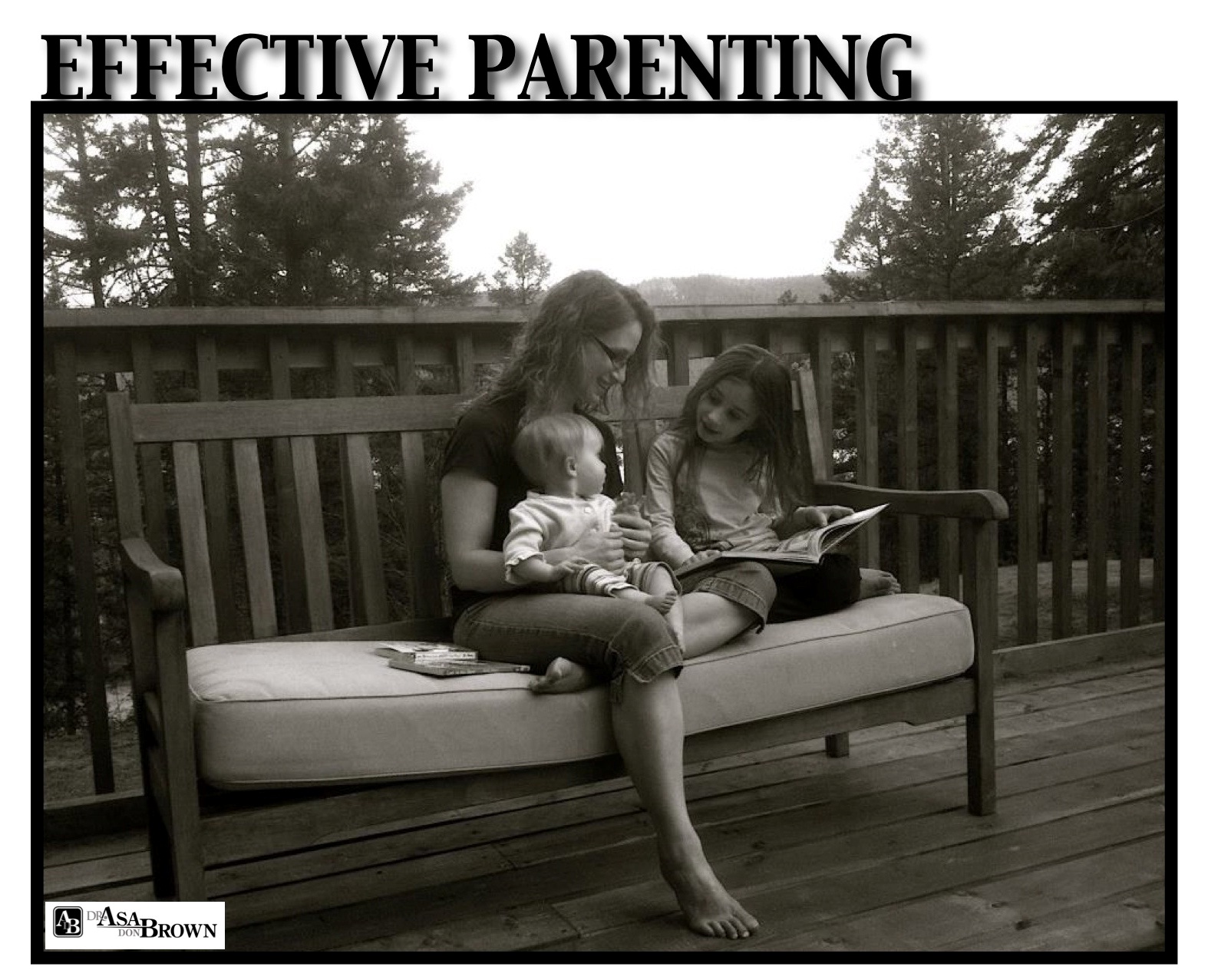
Entering parenthood is liken an Indiana Jones Movie.  You have many uncertainties, insecurities, angst and a general uneasiness about the whole adventure.   Not unlike an Indiana Jones movie, you are always inadequately prepared for the 2 a.m. squelch that ignites into a thundering roar of screaming.  Whether you are speaking of a newborn baby or a teenager, each stage of childhood is a personal learning curve for each parent.

Moreover, no two children are identically alike, thus being educated by one child is only the beginning of your parental pursuit.  From the moment that the child is comfortably placed into your arms, you are operating without a how-to manual.  While many experts can spew their literary, philosophical, academic, and ideological perspectives; children have very few absolutes.   You may be asking yourself, so what are these absolutes?  It is absolutely essential that all children are placed into a loving, compassionate, empathetic, nurturing, caring, and forgiving environment.  Children should never be intentionally exposed to harm of any sort; whether it is forcible or not, the home must be a place of safety and care.   It is absolutely essential that all parents recognize that they are not alone in their parental training.

“No one comes into this world knowing how to be a good parent. The challenges and experiences of our lives directly affect the environment we create for our own children. We know now that crime, divorce, scores of diseases, obesity and poor academic performance are directly linked to adverse childhood experiences, such as child abuse and neglect.” (Learntoparent.org,2013, Online)

Continue reading


*The views expressed by our authors are personal opinions and do not necessarily reflect the views of the CCPA

The Psychology of Perfectionism

Posted by: Asa Don Brown on October 11, 2013 3:14 pm

“I’m a perfectionist, so I can drive myself mad – and other people, too.  At the same time, I think that’s one of the reasons I’m successful.  Because I really care about what I do.”       ~ Michelle Pfeiffer

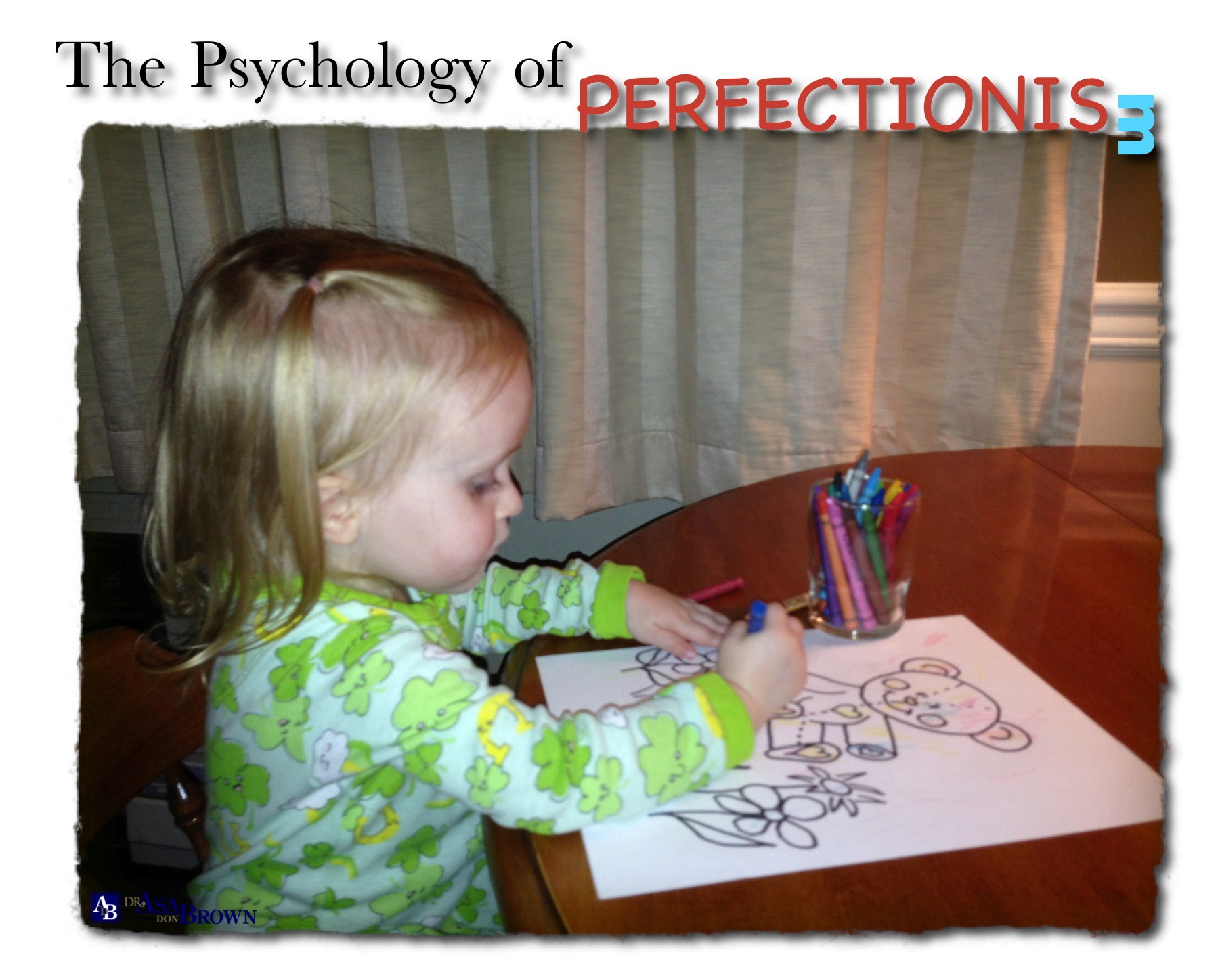
Why is it that perfectionism is considered a negative?  Are there not benefits from having a perfectionistic attitude?  According to New Oxford American Dictionary, perfectionism is “the refusal to accept any standard short of perfection.”  In reality, there a variety of influences that create perfectionism.  Perfectionism may be influenced or imposed by another.  Many times we adopt these habits, traits, characteristics, features, customs, standards, and ideological viewpoints during our youth.  In some cases, the perfectionistic way is unbeknownst to us. 

There are many different types of perfectionism:  A person may desire to prove perfectionistic if he/she has an aspiration to prove flawless in one’s pursuits, endeavors, and through his/her life ambitions.  In some cases, perfectionistic individuals have a strong urge to have even the  appearance of control.  The control maybe over one’s own personal emotional, psychological, or physical being; or it may be over another, an event, a place or an object.  The control may stem from a life that feels out of control, vulnerable, or susceptible to others.  It may have been inspired by physical, emotional, psychological or sexual abuse.  Unfortunately, negative perfectionism commonly stems from our childhood.  

Continue reading


*The views expressed by our authors are personal opinions and do not necessarily reflect the views of the CCPA

The Effects of Belittling

Posted by: Asa Don Brown on September 27, 2013 4:03 pm

“A strong man cannot help a weaker unless the weaker is willing to be helped, and even then the weak man must become strong of himself; he must, by his own efforts, develop the strength which he admires in another. None but himself can alter his condition.”            ~ James Allen

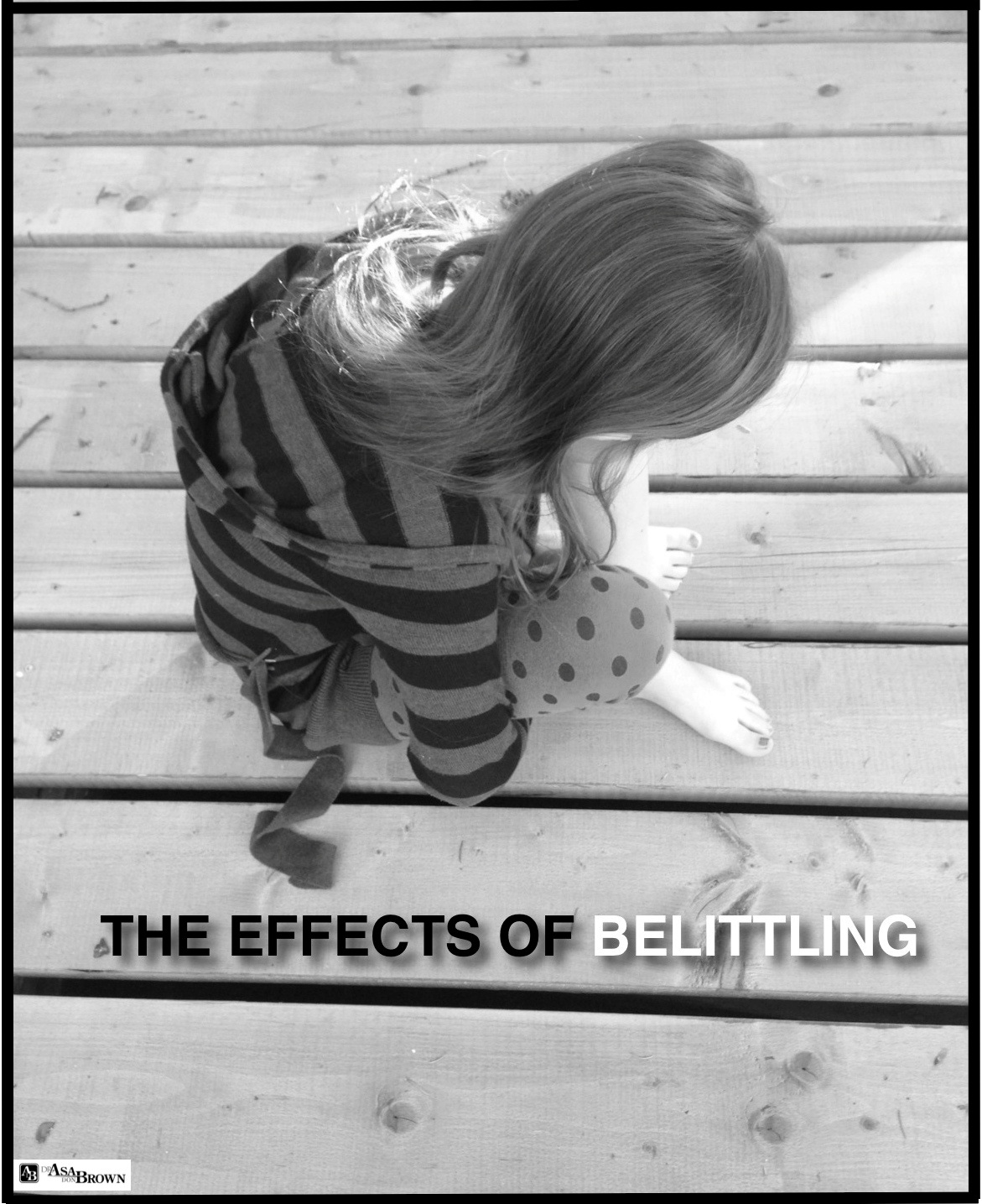
We most commonly associate abuse with sexual and physical deeds.  Rarely do we consider the ramifications that psychological and emotional abuse can have on the life of another.  “It may be the most common kind of child abuse — and the most challenging to deal with. But psychological abuse, or emotional abuse, rarely gets the kind of attention that sexual or physical abuse receives.” (Blue, 2012, Online)

Psychological and emotional abuse are most commonly associated with intentional or grave harm, but psychological and emotional abuse can be as sneaky as a snake.  If you consider the emotional upheaval that occurs within a person’s being when he/she receive a threat, perceive a threat, or vicariously experience a threat; it is as life shattering as being harmed.   A simple threat can accelerate an individual’s desire to find a place of safety and care.  “Keeping a child in a constant state of fear is abuse…” (Blue, 2012, Online) If a child fears being spanked, and/or some other egregious form of punishment, then you create an environment of fear based parenting. 

Abuse is the intentional or the unintentional emotional fraying of another’s personhood.  It is emotional abuse that can have a dire impact upon a person’s self-esteem and the development of his/her personal ego. It is through this development of the ego that an individual gains an individualistic impression of his/her self-importance and his/her inner person.   

Continue reading


*The views expressed by our authors are personal opinions and do not necessarily reflect the views of the CCPA

Creating Life

Posted by: Asa Don Brown on August 30, 2013 3:05 pm

“Having kids – the responsibility of rearing good, kind, ethical, responsible human beings – is the biggest job anyone can embark on. As with any risk, you have to take a leap of faith and ask lots of wonderful people for their help and guidance. I thank God every day for giving me the opportunity to parent.”             ~ Maria Shriver

As a couple, there are many challenges that you will face simply being within a relationship.  Your relationship may tinker between the off-and-on again paradigm.  You may dislike your spouse’s personal habits, hygiene, mindsets, and/or belief systems. 

There are many variables that can cause a couple to have relationship strife.  If an individual within the relationship has an addiction or addictive personality; the nonaddictive partner may feel neglected or barricade from getting to “really” know their spouse. 

Unfortunately, we live in an era of global financial hardships and economic woes.  The lack of employment opportunities and corporation layoffs has become the norm within of our society.  Infuse the societal troubles with a lack of time and you will create the perfect storm for a newly formed or broken relationship. 

Not all are facing the hardships of financial woes or employment layoffs.  In some cases, the challenges for a relationship may center around a lack of intimacy or unrealistic expectations about sex.   Sexual expectations and intimacy are all too often intertwined.  While sexual expectations are often developed early on within a relationship, we seldom speak of our sexual desires early on.  Unfortunately, sexual conversations most commonly occur when the relationship is in an unhealthy state.  The couples discussions are often filled with anger, frustration, bitterness, rage, and confusion about the relationship and the sexuality within. When the sexuality of a relationship is discussed between a couple; there are commonly feelings of despair, resentment, and hopelessness until the matter is resolved in a healthy manner.  It is vitally important to avoid creating life if your sexual and/or your personal relationship is unhealthy.

If a couple is doing well, then-and-only-then, should they consider the possibility of having children.  Having a child can prove the greatest stressor of a relationship.  Even the very discussion of having a child, can spur heated debates and personal battles. 

THE CHALLENGES OF CREATING LIFE…

“I’m sorry, it’s true.  Having children really changes your view on these things.  We’re born, we live for a brief instant, and we die.  It’s been happening for a long time.  Technology is not changing it much – if at all.”   
       ~ Steve Jobs

As a therapist, I have counselled a number of individual’s on the decision to have or not to have children.  “If you’re a couple, the decision to have a child or remain childless is a joint decision.” (Wade & Kovacs, 2005, p. 28) Having children will have a significant impact upon your relationship.  It is paramount that if-and-only-if, you, as a nucleus couple, decide to create life; then-and-only-then should you even consider undertaking the obligation of forming such life.   Regrettably, not every couple has been equal players in the creation of life, nor has every person within a relationship known about the lives that are being created.   Of course, if we wanted, we could open Pandora’s box to all the possible discussions about sex and sexuality, but the intent of this article is and has been solely designed to discuss creating life and the meaning therein. 

The challenges are unlimited when considering the creation of life.   If I decide to have a child, then I must consider whether or not I want to be eternally connected to my partner.  Even the legendary Dr. Albert Ellis was once quoted as saying, “I would have liked having children to some degree, but frankly I haven’t got the time to take the kids to the (swear word) ballgame.”

Sadly, the possibility of a relationship ceasing does exist.  Therefore, it is absolutely necessary that to consider whether or not we would like to be forever connected or linked to our partner.   We seldom consider the implications of a relationship ceasing, but if so, the ramifications of creating life can have a dire effect upon the life of the child.   For some the creation of life is a good idea at the time; for others, there are religious implications behind the creation of children; while for others, there remains little explanation or consideration.  

CHILDREN ARE NOT…

Children are not the answer to a bad relationship.  Unfortunately, I have encountered more than one couple or partner who has decided to have a baby to mend or repair their unhealthy relationship.  Having a child should never be the remedy for a broken relationship, no more than having sex should be about forgiveness.

It is not uncommon for someone to think that a baby will rekindle the flame.  For many, it is thought that a baby will reunite or repair a broken relationship.   First of all, if a baby is born healthy, then it might serve as a positive measure within the relationship.  However, if the baby is born unhealthy, then the couple’s level of stress and anxiety will reach peak heights.  A child’s life should never be considered as a healing aide within a relationship.  “If a baby is brought into a relationship in which one partner is opposed to having a baby, the relationship will usually suffer, and as a result so does the child.” (Wade & Kovacs, 2005, p. 28)

Furthermore, it is not uncommon for those in bad relationships to manipulate their partner by the discussing the possibility of having a child.   I have encountered both men and women who have used “a baby” as a source of manipulation within their relationship.  Baby manipulation is one of the most common themes of bad relationships.  

  • “I will have a baby with you, if you…”
  • “I should have a baby with my partner, because this will heal our relationship.”
  • “I really can’t stand the guilt of denying him or her the right to a child.”
  • “While I really do not care for children, I will have a child so that we remain a couple.”
  • “My faith insists that we have children, so I think I will have a child to appease my faith.”

As a potential parent, your priorities should shift.  You are no longer alone in this world.  You are now forever bonded to another person on this planet.  As a potential parent, you are creating a life that will forever need your unwavering guidance. 

CHILDREN ARE…

“Restaurants are like having children:  it’s fun to make them, maybe, but then you have them for good and bad.  You are going to have to raise them and if something goes wrong when they are 30 years old, they will still be your little boy.”                   ~ Wolfgang Puck

Children are the greatest teachers you will ever encounter.  I have personally attended more than 13 1/2 years of university, but you can rest assured; that my greatest teachers have yet to set a foot in a university classroom.  Children can serve as your most profound teacher, guide, and inspiration.  It is amazing how a child who has been egregiously harmed in this life, can serve as an awe-inspiring motivator of life.  The life of a child is typically filled with an abundance of resiliency.

Children should never be considered as a remedy for a bad relationship.  If you are struggling within your relationship, it is prudent that you consider seeking the counsell of a therapist.   Furthermore, be certain that you and your partner can be intricate players within the counselling environment.   If not, your problems may continue to exist.  

A child is a mirage, often appearing to be less complex than they really are.  No child has ever been born with an owner’s manual.   No child has ever sat down at their birth and discussed the meaning of life or the purpose of their own life.   Yet, many who have a fantasy of sharing their life with another, rarely give great debate or heated discussion before bringing forth life. 

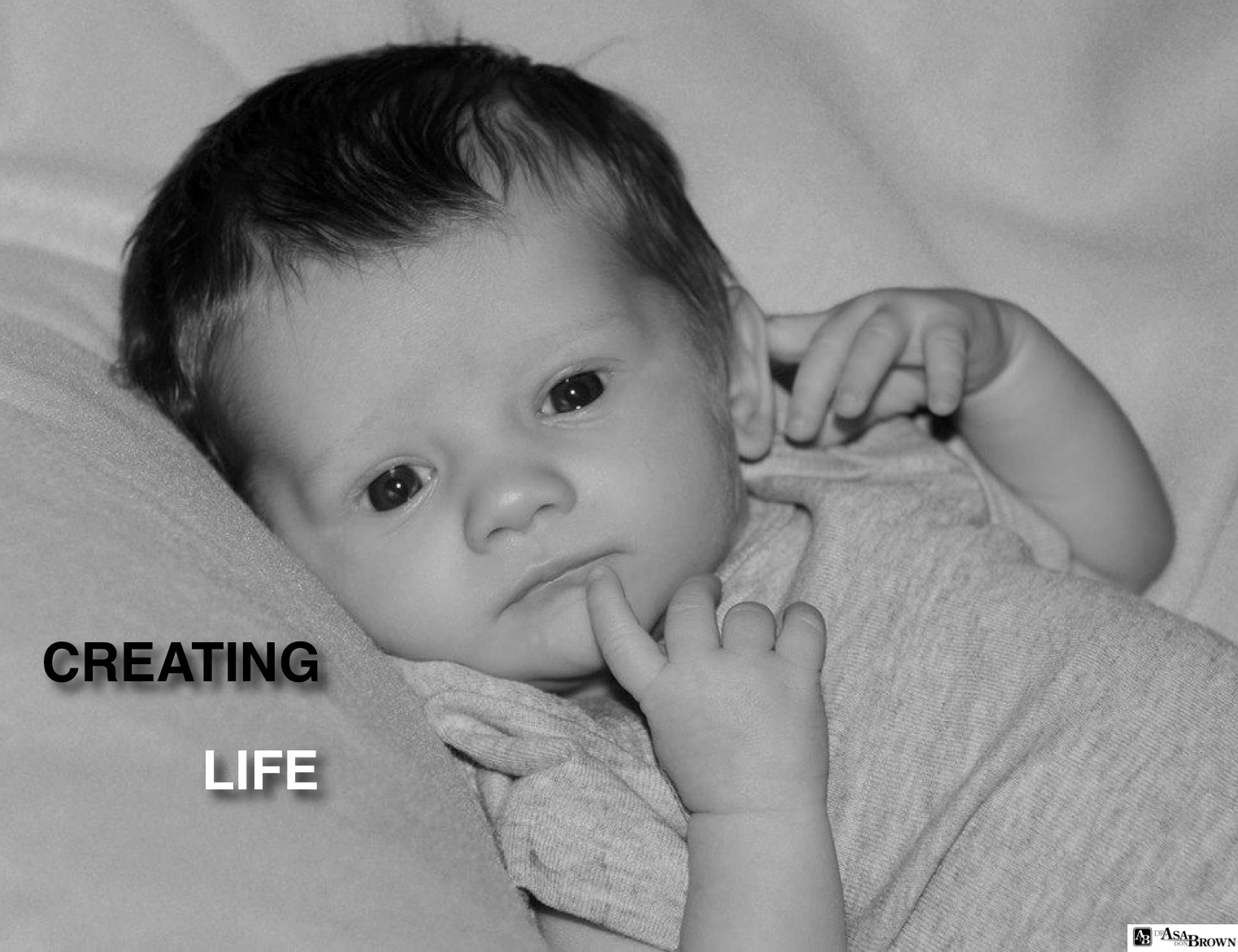
Children are magical creatures who seem to bring forth our maternal and paternal instincts. “Yes, a baby is so powerfully appealing that people are even entertained watching it sleep.  Just notice how grown people tiptoe to a crib and look down at a baby.” (Cosby, 1987, p. 22)   Baby’s are undoubtedly alluring.  It is often this mystical side to babyhood that we mistake their incredible powers as being capable of healing or bringing aide to our relationship.  Be more than certain that if you decide to have a child, that it is a decision made with a clear consciousness and a sound mind.   

Children are forever.   

Authors:  Asa Don Brown, Ph.D., C.C.C., N.C.C.M.

Websitehttp://www.asadonbrown.com

REFERENCES

Brown, A. D. (2010) Waiting to live, Bloomington, IN:  IUniverse

Cosby, B. (1987) Fatherhood. New York, NY:  Berkley Books

Forward, S. (2001) Emotional blackmail, When the people in your life use fear, obligation, and guilt to manipulate you.  New York, NY:  HarperCollins Publishers

McCoy, D. (2006) The manipulative man, Identify his behavior, counter the abuse, regain control. Avon, MA:  Adams Media

Wade, D. & Kovacs, L. (2005) I want a baby, He doesn’t, How both partners can make the right decision at the right time. Avon, MA:  Adams Media


*The views expressed by our authors are personal opinions and do not necessarily reflect the views of the CCPA
Personal Empowerment

Posted by: Asa Don Brown on August 30, 2013 2:52 pm

“A strong man cannot help a weaker unless the weaker is willing to be helped, and even then the weak man must become strong of himself; he must, by his own efforts, develop the strength which he admires in another. None but himself can alter his condition.”                                                                                    ~ James Allen

We associate empowerment with the liberation of a group of people, race, creed, religious ideology or personal belief system.  Empowerment is the enabling of another person through the strengthening of their personal self-esteem and the development of their personal ego. It is through this development of the ego that an individual gains an individualistic impression of their self-importance and their inner self.   The empowerment of an individual should never come at the cost of another’s rights, freedoms, or liberties.  

EMPOWERMENT’S ORIGINATION

As children, our personal self-esteem, self-worth, and internal drive are enhanced by those who shape our being.  It is through the recognition of our personal goodness, abilities, talents, worth, and individuality that we gain a healthy sense of self.  When we are empowered, we are less willing and likely to be drug through the mud by another. 

Empowerment teaches us that we are worth more than the negativity that may be slung our way.  Even if, we are responsible for a negative deed, act, or event; it is through our own acceptance of  our roles in life that we maintain our personal empowerment.   It is the acceptance of our roles in life that we are living a life guided by personal responsibility.  Personal responsibility is the willingness to accept both the good and bad choices in life.   It is through personal responsibility that we accept the ownership for our lives.   

Continue reading


*The views expressed by our authors are personal opinions and do not necessarily reflect the views of the CCPA

Staying True Unto Oneself

Posted by: Asa Don Brown on August 14, 2013 3:10 pm

“Your time is limited, so don’t waste it living someone else’s life. Don’t be trapped by dogma – which is living with the results of other people’s thinking. Don’t let the noise of others’ opinions drown out your own inner voice. And most important, have the courage to follow your heart and intuition. They somehow already know what you truly want to become. Everything else is secondary.”
~ Steve Jobs

What does it mean to “stay true unto oneself?”  Shakespeare spoke of this immortal question, others have reformatted and repackaged the idea, but still many remain uncertain of the essential meaning of being true unto oneself. 

What is the importance of staying true unto oneself? However you want to package the basic premise is:  be authentic in all that you do.  Do not waver from the nature of your true person.  Whoever you are, allow that person to shine through. 

AUTHENTICITY

Authentic people are undisputedly genuine.  Genuine people do not rely on the approval or acceptance of others, rather they diligently seek to be themselves.  They deny the ownership of critical words or deeds that others lay at their feet.  Genuine people are not perfect, but strive for improvement on a daily and frequent basis.  They are also capable of accepting positively constructive criticism, while denying the negative intentions, deeds, actions, or criticisms that others may choose to offer.   An authentic person is a sincere person relying upon their inner being for acceptance and approval.

Continue reading


*The views expressed by our authors are personal opinions and do not necessarily reflect the views of the CCPA

What is Your Source of Inspiration?

Posted by: Asa Don Brown on June 11, 2013 4:42 pm

“The whole history of science has been the gradual realization that events do not happen in an arbitrary manner, but that they reflect a certain underlying order, which may or may not be divinely inspired.”
 ~ Stephen Hawking

What is your source inspiration? What or who inspires you to live and prove productive?  Is your source of inspiration a person, a place or thing?  If so, what is that source of inspiration?  Are you inspired by a spiritual being or religious ideological viewpoint?  Is your inspiration your soulmate or an important friend?

Why is it important to be inspired? Whether you are inspired by another individual or something within your own person; inspiration is the motivator within life. Inspiration is the catalyst for prodding you forward.  What is the importance of inspiration?  If we are inspired, we will inspire those around us.  Inspiration beseeches inspiration.

Continue reading


*The views expressed by our authors are personal opinions and do not necessarily reflect the views of the CCPA

Personal Responsibility

Posted by: Asa Don Brown on May 23, 2013 4:28 pm

“Personal responsibility is the willingness to completely accept choices that we have made throughout our lives.”
                                                                                    ~ Asa Don Brown, Waiting to Live

Personal responsibility is the ability and willingness to accept our past, whether good or bad as a marker within our history.  It is also recognizing that our history does not have to define us or be the determining factor of our lives.

PERSONAL RESPONSIBILITY IS NOT

Responsibility is not identifying with our past failures or successes.  Nor is it allowing others to place the past upon our person.  Responsibility cannot be the acceptance of other’s failures or successes.  We may have all had a moment in time, whereby we slough off personal responsibility, transfer personal responsibility or blame others for our failures or the successes in our lives.   Personal responsibility is not the denial of our successes or of our failures, rather it is the willingness to take ownership of our personal history.  

Continue reading


*The views expressed by our authors are personal opinions and do not necessarily reflect the views of the CCPA