The ONLY Way of Getting off the Compassion Fatigue Rollercoaster for Good!

Posted by: Siri Brown on April 10, 2012 3:59 pm

The first time I suffered from counsellor burnout, aka Compassion Fatigue, was at my first job at a residential treatment centre.  I was young, fresh, idealistic and ready to dive into the rewarding work of helping others.  After only about a year and a half, I was drinking regularly, smoking again after a hiatus of over a year and a half, and exercising compulsively (at least an hour and a half a day).  I was crying on my way home from work, and frustrated and ashamed of myself and my apparent lack of healthier “coping skills”.

I didn’t know what was going on – how come I was struggling so much?  Why was I feeling the need to escape from my feelings so compulsively?  Why was I so emotionally sensitive?  What had happened to the old me?  Despite my efforts at distracting myself, the cracks started to show – I have two distinct memories that helped me realize something was really wrong. 

The  first one was during a massage, when the massage therapist placed her hands on my shoulders and asked, “why are you carrying the weight of the world on your shoulders? “.  This prompted a waterfall of tears.  How did she know that was exactly how I was feeling?

Continue reading


*The views expressed by our authors are personal opinions and do not necessarily reflect the views of the CCPA

The Counsellor Will See You Now – Part Three

Posted by: Dawn Schell on April 10, 2012 3:51 pm

Does the research justify the use of video for delivering counselling?  Is it clinically effective?  Excellent questions!  

I would like to direct your attention to an excellent review of the literature.  This review written in 2009[1] builds on a previous review written in 2003, consolidates the information available up to 2008 and suggests future research avenues.

The review discusses an exponential increase in articles from 1970 – 2008.  “From an initial review of 68 peer-reviewed journal articles in the period 1970–2000, there were 63 new published reports three years later and 148 new publications from April 2003 to July 2008”. A quick search of http://clinicaltrials.gov/ indicates over 340 studies are currently underway or have recently been completed.  And I bet that’s not all!

Richardson et. al. (2009)  point out that the bulk of the published reports on videocounselling are case studies, novel clinical applications, program descriptions/evaluations and assessment studies with a “handful” of randomized, controlled studies.  Videocounselling was used with rural and remote populations, children and adolescents, older adults, veterans, deployed personnel, cancer patients and incarcerated patients. 

What types of results were reported in Richardson et. al. (2009)?

Continue reading


*The views expressed by our authors are personal opinions and do not necessarily reflect the views of the CCPA

Wellness Tips from The Self-Care Daily™

Posted by: Derrick Shirley on April 2, 2012 8:00 am

Tip #28: Fun with your Signature

****************************

Write your name with your non-dominant hand.

If you are right-handed, use your left. If you are left-handed use your right. If you are ambidextrous, use your toes (or just use your toes anyway). It may be hard to read, but you’ll love the laugh you’ll get just trying. Have fun and sign away!

When your spirit is up, you are up.

Continue reading


*The views expressed by our authors are personal opinions and do not necessarily reflect the views of the CCPA

The Importance of Play

Posted by: Asa Don Brown on March 29, 2012 4:25 pm

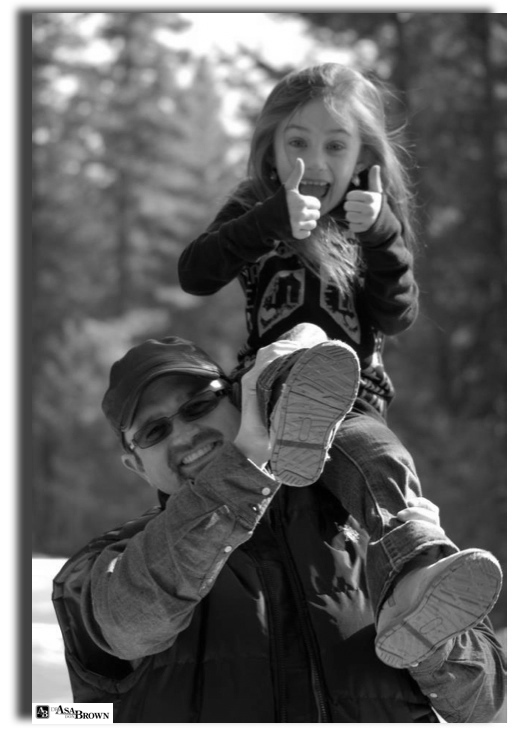
Children thrive upon play.  As a toddler, we mimic our parents, our siblings, our pets, the television, and many other significant participants in our lives.  As a child, we are in a perpetual learning curve, constantly seeking to be stimulated.  Fostering a need for such stimulation begins within the home.  As parents, we are the consummate role model.  We are the creative instigator of their developing minds.  

Creativity is the freest form of self-expression and, for children, the creative process is more important than the finished product. There is nothing more fulfilling for children than to be able to express themselves freely. The ability to be creative can do much to nurture your children’s emotional health. All children need to be creative is the freedom to commit themselves to the effort and make whatever activity they are doing their own. 

(PBS, 2012, Online)

Continue reading


*The views expressed by our authors are personal opinions and do not necessarily reflect the views of the CCPA

Welcome Spring!!!

Posted by: Priya Senroy on March 20, 2012 2:54 pm

And a big warm welcome to fellow bloggers and readers…

As the weather changes and I am preparing to finish my cybercounselling course, I wanted to share an article that was published in the CCPA journal in 1999, tilted- Resolution of Value Conflicts in Multicultural Counselling  by Noorfarah Merali, University of Alberta.

This along with other related articles and documents have helped me to tweak and modify my thought process as I assimilate more of the best practices in my own private practice.

Happy Reading!!!!

http://cjc-rcc.ucalgary.ca/cjc/index.php/rcc/article/download/129/309


*The views expressed by our authors are personal opinions and do not necessarily reflect the views of the CCPA

The Counsellor Will See You Now – Part Two

Posted by: Dawn Schell on March 20, 2012 2:46 pm

Just as my client was telling me something important I lost the Skype connection.  Bam. The screen went black. It took a few precious minutes to get back online and back in touch with the client.  The client seemed to be okay with it and picked up the story where she had left off.  Me?  Well, it took me a moment longer to take off my ‘technical problem-solving hat’ and put my ‘counsellor’ hat back on. 

When you are using videoconferencing these moments happen.  The technology fails.  It’s one thing to have this happen in a conversation with a friend.  It’s another thing altogether when it happens with a client in a moment of vulnerable sharing.

How about this scenario – a client Skypes with you and as part of that Skype session you have sent each other written messages.  The client shares a computer and Skype address with her spouse and she hasn’t told her spouse she is having counselling.  While Skype calls are themselves encrypted the history of calls, contacts and messaging history stays on the computer.

So what can we as ethically responsible counsellors do?  

Continue reading


*The views expressed by our authors are personal opinions and do not necessarily reflect the views of the CCPA

Parallels Between Global and Personal Changes

Posted by: Maritza Rodriguez on March 20, 2012 2:10 pm

There seems to be a constant theme in our modern society: transition. All around us there is change. Globally, the world is changing. Often it feels that it is changing faster than most of us can keep up. World politics and economics have especially reinforced these changes in the last few years.

Generationally speaking, there are also gross variations in attitudes and expectations. For instance, younger workers do not automatically accept societal norms such as hard work, long hours and accepting conditions without question.

This global movement has, in turn, amplified transition on a personal level. Examples include how the economic hardships have changed the habits of many families, including but not limited to budgeting and savings. For many individuals it has meant having to change jobs and even train for new occupations.

Continue reading


*The views expressed by our authors are personal opinions and do not necessarily reflect the views of the CCPA

Hello Creative Counsellors

Posted by: Priya Senroy on March 15, 2012 10:00 am

As I continue on inviting all of you to join me on a journey around the world on pioneers of creative therapeutic intervention/modalities, I would like to introduce you to the work of Prof. Mooli Lahad.

http://en.wikipedia.org/wiki/Mooli_Lahad

He has been a great influence on my work as a creative arts therapist and I have used his Integrative Model of Coping and Resiliency ‘BASIC PH’ extensively.

בית

In my endeavor to learn from his knowledge base, I have found this site where he introduces e-learning simulation game accompanying the step by step guide on how to prepare for and manage a crisis.

http://62.90.118.229/ciwin/ciProgram/cipublish/prep_man_crisis23_activity/

I am also intrigued by his ‘SEE FAR CBT’ psycho -trauma treatment protocol, adopted by other practitioners worldwide, which I plan to include in my existing work.

I hope if you ever have the opportunity to hear him or attend any of his workshops or even go to Israel and study under him, I would strongly encourage you to do that, meanwhile, please visit the websites for more information on him.


*The views expressed by our authors are personal opinions and do not necessarily reflect the views of the CCPA

Challenges Dealing with International Students

Posted by: Barbara Schneebeli on March 13, 2012 10:05 am

The idea of becoming an international student is an attractive concept for both the school board and students. It enriches the school district financially and culturally. For students coming from overseas, it allows them to learn first hand about other cultures and customs, to create life long friendship across culture, and to gain new perspective on Canada and the world.

It gives students an understanding on how tightly connected the people and countries of the world are to each other. It opens young minds to the importance of understanding other languages and other cultures particularly with respect to career and personal opportunities.

But the main reason, international students are coming to us, is to benefit from a Canadian education. 

I have not kept up with the statistics lately but it seems to me the number of international students has increased. In our school alone, the international population has increased by 25% over the last year.

Continue reading


*The views expressed by our authors are personal opinions and do not necessarily reflect the views of the CCPA

Wellness Tips from The Self-Care Daily™

Posted by: Derrick Shirley on March 13, 2012 9:58 am

Tip #26: Try Some Potato Peel Push Ups

****************************

If it is your turn to cook tonight, do some exercises in the kitchen while you prepare the food.

Try some deep knee bends, various stretches or yoga poses, counter push ups or dips, or do lunges as you walk around the kitchen from the fridge to the stove to the sink.

If you really get into it, create some of your own new exercises and/or pair them with your preparation activities such as, “Potato Peel Push Ups” (after every potato peeled, you do one push up), or “Dish Washin’ Deep Knee Bends” (after you wash a plate or glass, you do one deep knee bend). There are no limits to your imagination so have some exercise fun while you are in the kitchen.

As you are cooking healthy, you can be thinking healthy and squeezing in a little exercise.

Continue reading


*The views expressed by our authors are personal opinions and do not necessarily reflect the views of the CCPA