
Book Review

Posted by: Priya Senroy on October 13, 2011 11:49 am

Greeting fellow counsellors.

In this Fall  blog, I am excited to share a book that I came across in my quest to quench my thirst for more knowledge. Counseling as an Art :Creative Arts In Counselling,  provides myriad practical suggestions for how to use the creative arts in counseling and serves as a reminder that there are a variety of venues to precipitate growth–no matter how diverse the life experiences of the counselor and client may be. 

For courses in Counseling and Mental Health programs.  The chapters are written in a logical sequence, exploring seven specific art forms, and the research and techniques that support their use in clinical settings. Each chapter offers inspiring ideas for working with special populations and strategies for using various art forms in concert with one another. Designed to enrich many counseling courses, the text provides a unique combination of history, theory and application and demonstrates all the creative arts have to offer the healing and helping professions.

The author Samuel T. Gladding has a website that can be visited for more information at http://www.wfu.edu/~stg/creativity/creativity_in_counseling.html


*The views expressed by our authors are personal opinions and do not necessarily reflect the views of the CCPA
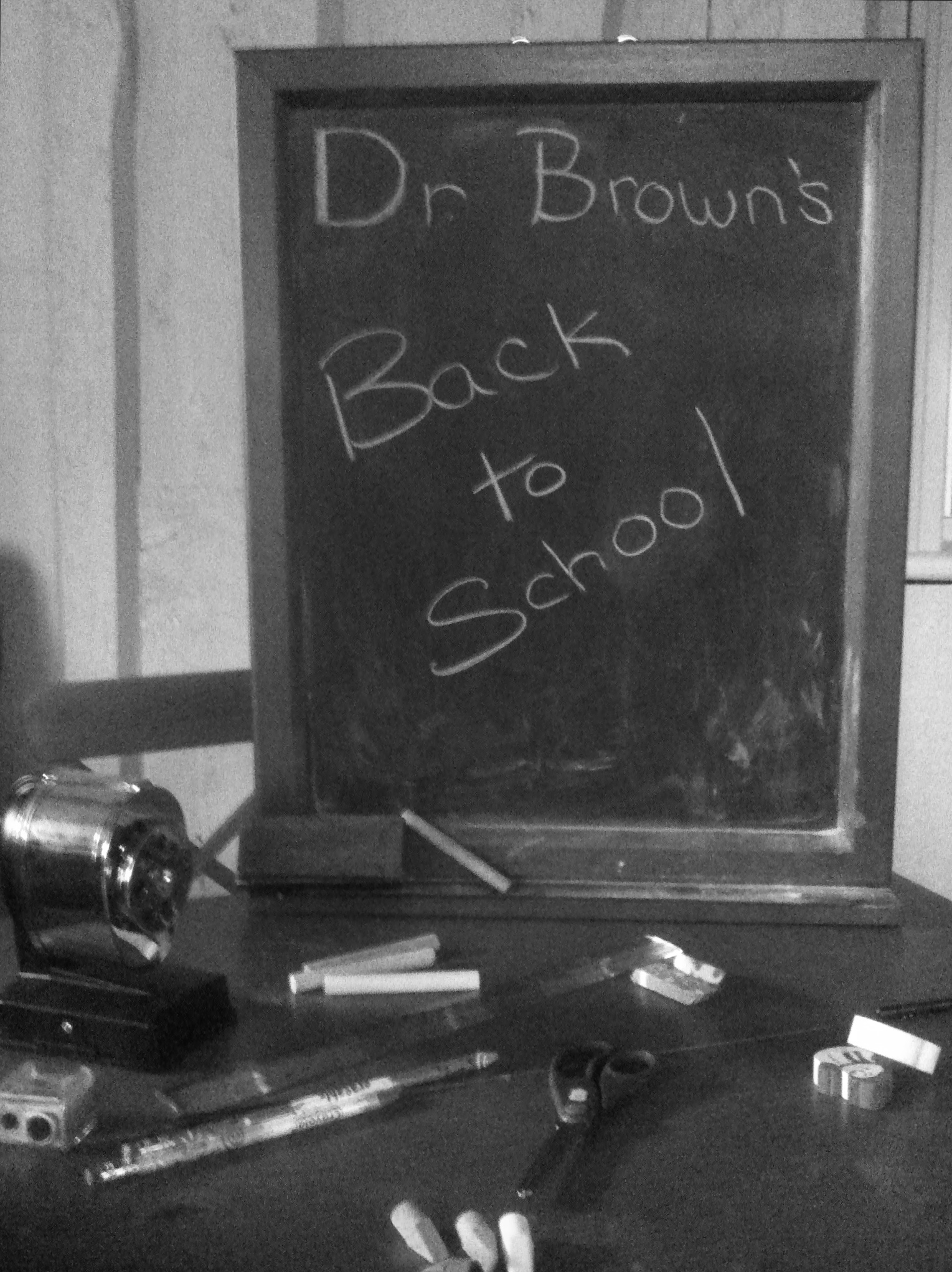

Back to School

Posted by: Asa Don Brown on October 13, 2011 11:09 am

At this point-in-time, your child has probably been in school for two-to-four weeks.  They are beginning to acclimatize to being back in the school routine.  For many children, returning to school ignites insecurities, anxieties, and feelings of apprehension.

For others, they return to school feeling jubilant and expressing great happiness.

Why the dichotomy of emotion? There are many reasons children develop these mixed emotions. For children who are dreading a return to school; it is often one singular negative experience that ignites their imagination. Why would a child allow a singular event to damper their academic pursuits? Children need to feel, experience, and ultimately be included.  Inclusion is the heart and soul of personal acceptance and worth.

What are some of the causations of such dread? Children may avoid or dread school because of a history of being bullied; they may find the academic process personally challenging or overwhelming; they may have failed or performed poorly in a class; they may have had teachers who were focused on their own personal matters, allowing the child to become lost in the academic cycle. 

Continue reading


*The views expressed by our authors are personal opinions and do not necessarily reflect the views of the CCPA

Blog #11

Posted by: Curtis Stevens on October 10, 2011 12:00 pm

As a reminder, the thoughts expressed here are mine alone – they do not, necessarily reflect the beliefs of counsellors in general or the Canadian Counselling and Psychotherapy Association.

Last time I started talking about my own experience with counseling.  I recognized two points:  1. that I don’t think I make a very good client and 2, that the stigma about going to counselling is real.  I talked briefly about the counsellor as the client and somehow went onto a tangent about crossing from the cognitive realm to the emotional realm.  As a matter of fact I don’t think I’m quite done talking about emotions.  Why do people struggle so much with accepting their emotions?  I know why I avoid my feelings (counselling must be working). My emotional responses played significantly into my ability to escalate or de-escalate high crisis situations working with children and families.  I also had to learn to de-personalize my emotional responses due to the nature of the issues I was dealing with (sexual abuse victims and perpetrators, suicide, victims of violence).  Basically, I had to learn to “shut off” if I were to have any longevity in this field.  People start being trained to not feel at a very young age.  As a baby, we cry and almost instantaneously we are lifted cuddled and nurtured until we stop.  When we cry, our parents change us, play, distract, and/or stick a pacifier or bottle in our mouths.  As we get older, our education continues.  When we are sad, parents, family and friends immediately start to cheer us up.  When we are angry, we are told to not be angry.  When we are afraid, we are taught to avoid the things that scare us, or are shamed into not being afraid (its only a little itty bitty spider, you shouldn’t be scared).  In fact, it seems that whenever we express anything other than happiness or love, others went well out of their way to make us stop feeling that way and to make us feel better.  From an infant we are taught that it is not o.k. to feel a certain way and that we should do anything including shoving whatever makes us feel better into our mouths (doughnuts, cigarettes, alcohol, drugs) to make it stop.

Continue reading


*The views expressed by our authors are personal opinions and do not necessarily reflect the views of the CCPA

Career Development Doesn’t Take Place in a Vacuum

Posted by: Jeffrey Landine on September 27, 2011 2:37 pm

In our last blog we indicated that we will be focusing on issues within the different career developmental phases. We begin this discussion with a focus on developmental tasks that individuals encounter during the Growth phase. Generally, this phase of career development is experienced from 4 to 13 years of age. We think it is important for career counsellors and career educators to be cognizant of how their clients resolved and learnt from a number of these tasks due to the assumption that mastering this learning lays the framework within which later concepts and behaviors are developed. In this presentation, we will focus on psychosocial development as it implicates some of the soft skills as defined, for example, in the Employability Skills 2000+ profile.

During the Growth phase, individuals encounter a number of psycho-social tasks.  This line of theorizing and research was developed by Erik Erikson and continues to explicate a significant aspect of human growth and development. Prior to the Growth phase, during the first three years of life individuals encounter the developmental tasks of trust versus mistrust, and autonomy versus shame and doubt. The next two stages, initiative versus guilt, and industry versus inferiority are encountered during the Growth period.

Continue reading


*The views expressed by our authors are personal opinions and do not necessarily reflect the views of the CCPA

Burnout: A Common Problem for School Counsellors

Posted by: Lori Walls on September 27, 2011 2:34 pm

I decided to write on the topic of school counsellor burnout since it is already the third week into the new school year. If you are like me it was exciting to start back, but reality has since set in and things seem a bit overwhelming with all that needs done. Burnout is a term that is often applied to those in helping professions and is typically identified as emotionally exhausted, withdrawal from and cynicism toward clients, and a sense that you are no longer accomplishing tasks. Friedman (2000) suggested that burnout occurs in several stages: the emergence of stress, the emergence of stress-induced experiences, and the emergence of reactions to stress-induced experiences. These stages can progress along a cognitive track that includes thoughts focused on a lack of personal and professional fulfillment or along an emotional track that involves feelings of exhaustion and general overload. Friedman indicated that many theories of stress and burnout have been posited, but one factor common to all theories of stress is that those under stress and on the road to burnout report a discrepancy between what they expected and what they have actually observed. This discrepancy can lead to a deterioration of professional and personal self-efficacy and ultimately burnout.

Continue reading


*The views expressed by our authors are personal opinions and do not necessarily reflect the views of the CCPA

Recipe to be Totally Contented!

Posted by: Victoria Lorient-Faibish on September 27, 2011 2:30 pm

My world at work is always more satisfying,  the more my world at home is satisfying. This is not as easy as it may appear to be.  So many therapists tend to make their practice the brightest penny in the bunch when it comes to their lives.  I contend that this leads to burn out pretty quickly. 

As a busy private practitioner for nearly 20 years, I am a fierce walk your talk person in favour of having a super, deliciously rich private life. Filled with good like minded friends, satisfying hobbies, a fun social calendar and personal spirituality… whatever it may be. 

This has been my recipe for feeling a deep contentedness in my professional life.  I am always happy to get back to work because my personal life has filled me.  I work a 4 day week and have done so for years. Initially I did this schedule to help me with my stress levels a while back but even though that quickly got under control I decided to keep the 4 day week.  It just made so much sense to me.

I now try and pack my Mondays to Thursdays and I feel very satisfied that at work, I am making a difference for my clients.  They can feel my enthusiasm and my clarity. And I am always so happy to know my Friday is off to pursue my personal life once again for 3 days.

This is my recipe for contentedness. What is yours?


*The views expressed by our authors are personal opinions and do not necessarily reflect the views of the CCPA

Blog #10

Posted by: Curtis Stevens on September 27, 2011 2:21 pm

It has been awhile since I last sat down to write for Counselling Connects.  I made it through the mountain climbing episode as described in the last post.  Let’s get out of the mountains and back into the counselling office.  We’ve talked (well I’ve talked, you’ve listened) about setting goals, being aware of the content and the process and we’ve discussed being aware of self talk.  I thought it would be interesting to talk about my experience as a counsellor going for counselling.  My daytime job is with Alberta Children’s Services.  Through my job I see a lot of sad, unfortunate and unsettling things on a day to day basis.  I have found that after working for the department for almost 20 years that I need to become more aware of my feelings (it’s amazing what a person can get used to).  To help me get in tune with my feelings, I’ve enlisted the help of a therapist.  I’ve noticed two significant things as a counsellor going for counselling:  1. I’m not necessarily a good “client” and 2.  The stigma about counselling is real, but not necessarily where you think. 

Continue reading


*The views expressed by our authors are personal opinions and do not necessarily reflect the views of the CCPA

To Everything There is a Season

Posted by: Dawn Schell on September 16, 2011 2:33 pm

This September marks my sixth year in my Online Counselling practice [wondering where the time has gone]. It seemed like a good time to review the past six years and to give some thought to the cycles of client activity in my practice.

I will admit to being a number nerd. I started keeping track of the number of client sessions per month as I was curious to see if there was a regular pattern.  Were some months consistently busier each year?  And was it similar to my f2f counselling practice?

Continue reading


*The views expressed by our authors are personal opinions and do not necessarily reflect the views of the CCPA

The Benefits and Challenges of Children’s Television Programming

Posted by: Asa Don Brown on September 16, 2011 2:21 pm

In the early 1950‘s, the objective of children’s programming was originally to provide content to entertain children on Saturday mornings. Today, while children’s programming continues to be a source of entertainment, it has evolved to become an educational resource for facilitating literacy, developing imagination, cultural awareness, scientific quandaries, mathematical problems, and social aptitude. 

As parents, we should be active participants in the lives of our children.  Parents should not use the television as a babysitting tool.  Children should not be spending countless hours numbed out in front of the television set, viewing randomly picked programs on randomly picked channels.  There should be some rhyme and reason behind what your child is watching.

Continue reading


*The views expressed by our authors are personal opinions and do not necessarily reflect the views of the CCPA

Comment bien faire mention de son statut de membre professionnel et de ses titres de compétence

Posted by: CC PA on September 16, 2011 2:13 pm

Chaque association a ses propres politiques en ce qui concerne la façon de citer les titres de compétence. En tant que membre, il importe que vous preniez connaissance de ces politiques avant de faire quelque mention que ce soit au sujet de votre statut de membre sur vos cartes de visite, votre site Web ou tout autre véhicule promotionnel que vous pourriez utiliser.  Vous pourriez en effet contrevenir aux politiques de votre association sans même le savoir.

C’est d’ailleurs le cas que vous pratiquiez ou non au sein d’une profession officiellement réglementée. Il existe de nombreux titres protégés au Canada et il importe de connaître les exigences associées à leur usage. Par exemple, au Québec, le titre de « conseiller d’orientation » est un titre réservé qui ne peut être utilisé que par les personnes inscrites au tableau de l’Ordre des conseillers et conseillères d’orientation du Québec. Pour sa part, la British Columbia Association of Clinical Counsellors autorise l’usage du titre « Registered Clinical Counsellor » par les personnes inscrites à cette association.

Continue reading


*The views expressed by our authors are personal opinions and do not necessarily reflect the views of the CCPA