What to Expect From A High School Counsellor? What Is The Difference Between A School Counsellor and A Guidance Counsellor?

Posted by: Barbara Schneebeli on January 26, 2012 10:38 am

It is the end of January and the time to meet with our new entering grade 8 students. Next week, my colleagues and I will go to elementary schools to start program planning. Program planning is the process where we explain to elementary school children what to expect when entering high school, we talk about various classes, extra curricular activities, life in high school in general etc.… 

When I ask students what a high school teacher does the typical answer is, “they teach their subject of choice”. It’s guaranteed I’ll hear a few “ duh ” and “ OMG, that was a weird question!” here and there in the process. But when I ask what a high school counsellor does there is usually a pause, followed by a timid uncertain answer, “a high school counsellor helps us out in choosing our courses?” Yes, I’ll guide you in choosing your courses, although in BC grade 8 options are not very complicated. Your only choice is to make sure you register in an elective that you like and not just because your friend is going into it. Anything else you think I might do besides guiding you in choosing your courses? Anyone…??? 

Continue reading


*The views expressed by our authors are personal opinions and do not necessarily reflect the views of the CCPA
Where Does Online Counselling Take Place?

Posted by: Brian Dosenberger on January 26, 2012 10:29 am

As an online counselling session begins I welcome them to my office and familiarize the client with my office and environment that is not visible via the VoIP technologies. Licensing bodies in Canada have a daunting task in front of them determining counsellors’ use of online counselling. Where does the counselling session occur?

My insurance stipulates that I am covered to conduct therapy that occurs within the provincial boundaries of which I am registered. So this leads to the question, where does online counselling occur?  I could argue that the internet is the taxi, train, or jet plane that brings the client to my office. Others could argue that if my client is in Ontario and I (the therapist) am in Alberta, the therapy occurs in Ontario.  The third argument, suggests that the counselling session occurs in neither the counsellors office nor the client’s home but rather a virtual space where counsellor and client meet in the middle. I know for a fact that I would be in big trouble with my licensing body if I flew to Ontario and conducted a counselling session. Having stated this fact, I have to truly believe that the counselling session I conduct occur in my own province to ethically see clients outside of my province. What is the evidence and how can we determine that the appointment occurs at the counsellor’s office? Basically, because the client schedules an appointment with the counsellor, determines that the client is coming to the appointment as opposed to the counsellor coming to their residence.

Continue reading


*The views expressed by our authors are personal opinions and do not necessarily reflect the views of the CCPA

Private Practice – The Intuitive Decision?

Posted by: Brian Dosenberger on January 26, 2012 10:24 am

 I wanted to start my blog by discussing the question that I and many other counsellors pose to themselves at some point, “Should I start a private practice?” I believe that there are two ways to make any decision, intuition and reasoning.  As a practicing counsellor I realize that I could make my decision by writing out the advantages and disadvantages of starting a private practice or learn to trust my intuition to make my decision based on that feeling.

The decision to enter the private practice counselling is intriguing. There are experienced counsellors that find the thought of entering the world of private practice daunting. At the same time there are novice counsellors that dive head first into private practice. What are factors influence a counsellor’s decision to offer private practice counselling? I can’t speak for everyone, however, maybe by sharing my (a novice counsellor) decision to enter into the world of private practice will allow you to gain some insight into this intriguing question.

Continue reading


*The views expressed by our authors are personal opinions and do not necessarily reflect the views of the CCPA

Resolutions and Change in the New Year

Posted by: Maritza Rodriguez on January 23, 2012 8:00 am

The beginning of the year marks a time that many people make resolutions in their lives. Some want to make major overhauls while others are looking to fine tune their behavior. This is the traditional time to want to make a change as the calendar transitions from one year into another.

Change is a constant in the development of human beings. Bodies change and people grow.  Mental capabilities are strengthened and our ability to analyze and adapt to situations bring wisdom. Many believe that there is very little change in adulthood but that is far from the truth. While children and adolescents undergo the largest transformation, human beings never cease growing.

While change is an ongoing process, many often take on too much change at one time or lack the motivation to sustain a resolution. It often becomes an overwhelming process, rather than an opportunity for growth.

Continue reading


*The views expressed by our authors are personal opinions and do not necessarily reflect the views of the CCPA

Having a Crisis? Let’s Chat.

Posted by: Dawn Schell on January 20, 2012 3:46 pm

Over the past several years Crisis lines across have begun to add online components to their crisis services.  Based on conversations with people involved and research I have read — after years of successfully running crisis lines a pattern emerged of a significant drop in phone calls from the under 25s.  

As Robin Shantz noted in a 2006 article “We knew the problems youth are facing weren’t going away.  And it’s not like youth don’t have access to phones…”[1].  What became apparent is that youth’s help-seeking behaviour had changed.  They wanted to be able to access crisis services online.  As one messaging software company put it “…Increasingly people are not using the phone to seek help. Instead they turn to the tools they use elsewhere in their daily life: websites, live chat and text messaging”.[2] 

Continue reading


*The views expressed by our authors are personal opinions and do not necessarily reflect the views of the CCPA

When Clients Die: To Cry, or Not to Cry?

Posted by: Siri Brown on January 20, 2012 3:41 pm

The recent holidays reminded me of a time when I returned home from a two week vacation refreshed, rested, and rejuvenated.  Work started at 8:30am; at 8:36am a colleague is in my office, face sombre, eyes welled, asking, “Have you heard?”   A client, survivor of a series of unfortunate hardships, has died in a tragic incident.  My colleague looks at me expectantly, arms hovering, silently offering the need for a hug, and I am flummoxed.  The time, now 8:39am, brings another colleague into view, ready to share the same sad news.  I see both of their expectant faces, waiting for the “typical” response – but though I am saddened by the news (the client was a delightful, generous, unique human being), I am not emotionally devastated, as seems to be expected.  It begs the question:  to cry, or not to cry?

Continue reading


*The views expressed by our authors are personal opinions and do not necessarily reflect the views of the CCPA

“Wellness Tips from The Self-Care Daily™.”

Posted by: Derrick Shirley on January 20, 2012 8:00 am

Wellness Tip #37: Vacation Planning for Health

Be heart led rather than head led when planning your next vacation.

Do you have a dream vacation spot or activity? Is there some place you have always wanted to visit or some thing you have always wanted to do or try? Let your deepest yearnings and passions guide you and influence your choices and activities. Let your “down time” fill you up physically, emotionally, mentally, and spiritually.

Do some internet research or call your travel agent to get more information. You might find your dreams are not as far away as you once thought.

Continue reading


*The views expressed by our authors are personal opinions and do not necessarily reflect the views of the CCPA

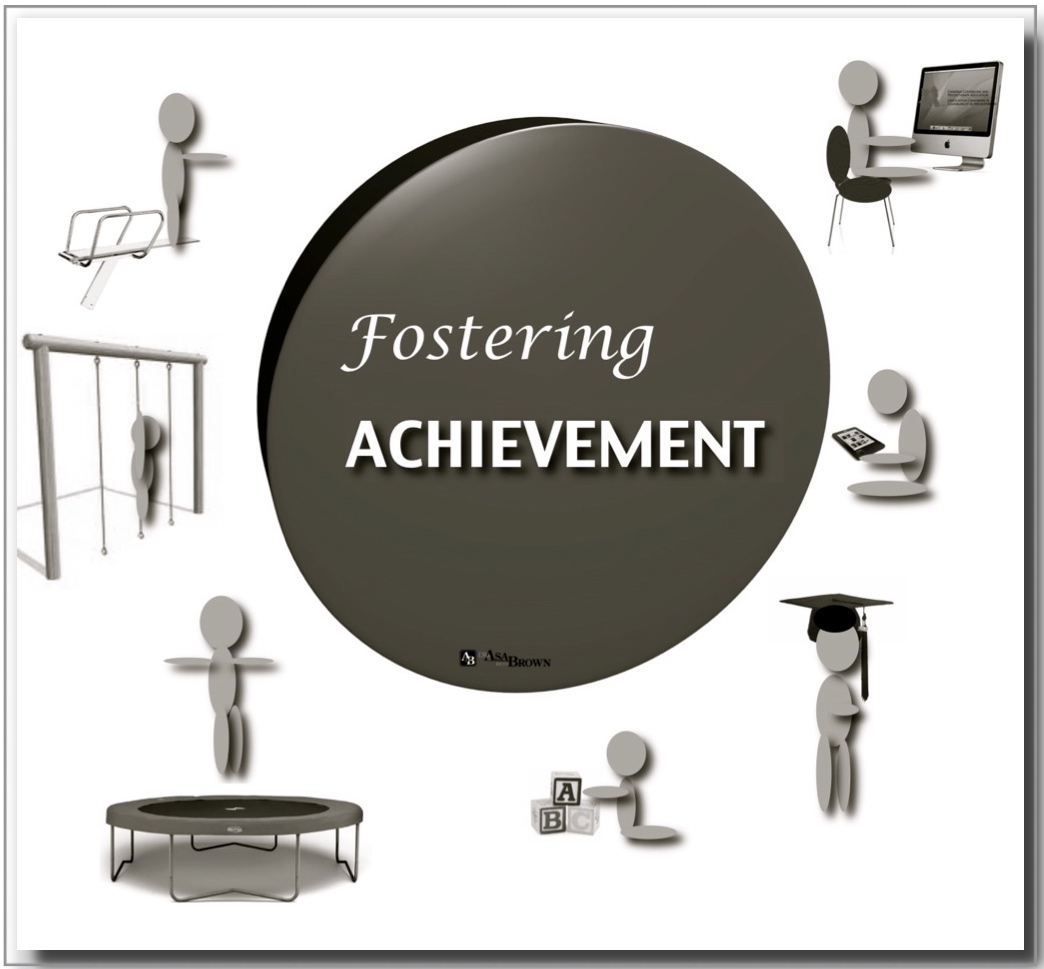
Fostering Achievement

Posted by: Asa Don Brown on January 19, 2012 3:32 pm

Do you embrace your children’s accomplishments, achievements, and successes?  When was the last time you spoke words of praise unto your children?  Have you taken time out to encourage your children?  Do you encourage only the “big” successes, or are you offering praise for the little ones as well?  Do you respond to failure as a bad thing? Are you offering encouragement when your children fail to succeed?

Children thrive on positive affirmations, strokes, and encouragement.  Children who live in environments where they are belittled or berated; have a higher likelihood of giving up on their dreams and life ambitions. Likewise, a child who is belittled or berated is more likely to have a lowered self-esteem and self-awareness. 

Continue reading


*The views expressed by our authors are personal opinions and do not necessarily reflect the views of the CCPA

Communicating as a Couple – So That Can Each Be Heard as an Individual

Posted by: Marjorie McPhee on January 17, 2012 11:11 am

The Love Language

In this day and age, I find that the daily stressors are overpowering and overwhelming the initiative and desire to put that extra effort into making things work in relationships. In Session you hear things like:

  • We hardly see each other.
  • We don’t have time for each other
  • We are working late hours in order to pay the bills
  • By the time we complete everything that has to be done in a day, there is no time for ourselves
  • Because of the pace that we have set, the pressures have us coming home angry, upset, short- tempered, with no more energy to give to anyone else
  • We’re always arguing or yelling at each other about something
  • The kids won’t even listen to us
  • He/she never listens to or hears me

Continue reading


*The views expressed by our authors are personal opinions and do not necessarily reflect the views of the CCPA

Making Connections Between Self and Occupational Information

Posted by: John Stewart on January 17, 2012 10:52 am

In our last blog, we focused on providing some suggestions career practitioners can do to make the most of the TOKW initiative. We think this initiative represents an episode that could be significant in contributing to adolescents’ vocational identity. Without a vocational identity, individuals experience difficulty conceptualizing career related information and making vocational choices. There are two processes that help the developing adolescent to further elaborate and enhance their emerging vocational identity. These processes are integration and differentiation. In this blog we will focus on integration.

Vocational integration is the process whereby individuals perceive the similarity that exists between their personal attributes in their self-system and the requirements necessary to enter and perform an occupational role.  This integration can take place when adolescents meet a person with whom they identify and who performs an occupational role of interest to them, and/or when they learn of the traits needed to perform the occupational role of interest. We see the results of these two experiences as being stored in either episodic memory (meeting the significant person) or semantic (reading about the occupational role traits) memory.   Both these types of memory contribute to the development of the self-system and to making connections between the self-system and the world of work. It is the connections between these two domains of knowledge that contribute to developing a vocational identity. We think that this aspect of identification is one of several components that aid the process of developing a vocational identity.  Furthermore, we think it plays a significant part during adolescent psychosocial identify formation as postulated by Erikson.

Continue reading


*The views expressed by our authors are personal opinions and do not necessarily reflect the views of the CCPA