In this month’s blog, I am sharing an article that I came across which describes the efficacy of utilizing expressive arts in group counselling to enhance communication. It goes on to discuss the research conducted by the authors which include methodology and preliminary findings; and provide examples of expressive arts activities that can be used by counsellors in their group counselling work.
These series of videos took me back to 1993 when I started incorporating drama, art, music and movement into my special needs teaching. And it was then I fell in love with the creative arts therapy medium and decided to pursue it as a full time career before inducing counselling into it.
I wanted to share it with you as I am currently incorporating it again in my practice and would like to encourage some of the practitioners out there who might want to use their expertise in working with people with disabilities.
One in every five Canadians will face a mental health issue at some point in their lives. Despite the commonality of mental health and mental illness concerns, many Canadians have never consulted a certified counsellor. They have formed their views about counselling and therapy on what they may have seen in movies or read in fiction. The media tend to portray therapy as a verbal exchange between a counsellor and a client. It is rare that the public is exposed to accurate images of therapy. Typically, the erroneous classical portrayal of a client lying on a couch, with the therapist seated behind scribbling notes is the prevailing image.
Each person moves through the world and interacts with it in different ways and. has developed unique ways of managing emotions in everyday life. Fortunately, today’s field of counselling recognizes this individuality and has broadened its modalities to include a variety of therapeutic approaches to address diverse needs and ways of expressing difficulties.
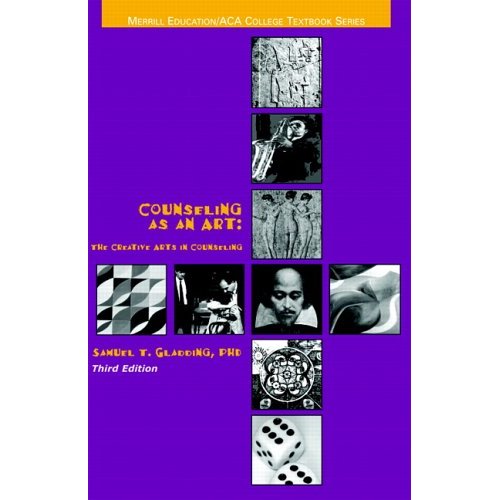
In this Fall blog, I am excited to share a book that I came across in my quest to quench my thirst for more knowledge. Counseling as an Art :Creative Arts In Counselling, provides myriad practical suggestions for how to use the creative arts in counseling and serves as a reminder that there are a variety of venues to precipitate growth–no matter how diverse the life experiences of the counselor and client may be.
For courses in Counseling and Mental Health programs. The chapters are written in a logical sequence, exploring seven specific art forms, and the research and techniques that support their use in clinical settings. Each chapter offers inspiring ideas for working with special populations and strategies for using various art forms in concert with one another. Designed to enrich many counseling courses, the text provides a unique combination of history, theory and application and demonstrates all the creative arts have to offer the healing and helping professions.
In this month’s blog, I am sharing my research that I have been doing on using Creative Arts with people with mental health issues. I came across the Art Angel Project in which a fellow creative art therapist is involved in and I found the work to be fascinating, inspiring and stimulating.
There is a video at the end of the description and a link to a pdf document, titled The Arts and Mental Health :Creativity and Inclusion- for those who are interested in knowing more .
We like to think of childhood as a time of carefree wonder and imagination. Days filled with running through fields, looking under rocks, climbing trees and experiencing new things with anticipation and curiosity. For some children these same activities are not met with joy but with anxiety and fear. Anxious children are often intelligent, sensitive and creative. These are the good qualities that can overcome the anxiety which typically thinks, feels and imagines the worse.
Sarah is a sweet little nine year old girl. Her parents brought her for therapy because she was crying uncontrollably when it was time to go to school. She also had difficulty staying overnight at her grandparents, was afraid to go for sleepovers at friends, worried if her parents were late to pick her up and didn’t like to try new things. She could read, write and draw very well but would not do it because she might make a mistake. Sarah had Separation and Perfectionist Dragons.
It is imagination that creates fears and imagination can be used to tame those fears. In working with anxious children it helps to externalize their fearful thoughts into the form of dragons which they can learn to tame. The first thing we do after talking about the situations that make them fearful and identifying the dragon’s name is, to make the dragon in art. The dragon can be made from clay or colorful plasticine or painted on paper.
In the last couple of months I have been doing some research on how creative arts therapy can be used to work with clients with disability. This need came up because of two reasons-one I am getting more clients with disabilities in my counseling session-clients with psychical and intellectual disabilities and trying to adapt my creative arts background in my current counseling practice. The second need is also to equip myself with tools so that I am ready to gear my practice under the Accessibility for Ontarians with Disabilities Act ( AODA) which is coming into effect in 2012.
I found this video shared by the department of rehabilitation medicine, University of Washington. The presentation is an hour long but gave me an insight on some of the basic techniques or tools that I could adapt and modify in my current practise. Even though is primarily based on art and music, I think creative arts counsellors from all kinds of ‘art’ background would be able to take away some ‘teachable moments’ from this video.
In this July blog, I continue to share with you some amazing work happening in other parts of the world in the field of using creative arts as a counselling process.
This video illustrates how classes in acrobatics may be combined with group counselling concerning setting and obtaining goals in life within the realms of
social work. It provides guidelines for those in charge of acrobatics and counselling classes.
The facilitators recommended that if this combination methodology is meant to be used with a specific group of participants over a number of classes in acrobatics ideally over a period of at least a few months, involving at least 10 classes organized at regular intervals. Classes in acrobatics will help build confidence and self-esteem of participants. The counseling methodology is designed to capitalize on learning points classes in acrobatics provide concerning how to set and obtain goals in life.
Again this is for facilitators who are skilled in the language of acrobatics and for others who may want to get inspired to combine an art form that they are experts in with counselling.
*The views expressed by our authors are personal opinions and do not necessarily reflect the views of the CCPA
Continuing on exciting happenings in the field of Creative Arts, this blog is inspired by an article published by Art therapist, Cathy Malchiodi on the topic- Art Therapy Meets Digital Art and Social Multimedia, Art therapy goes digital in the 21st century…well maybe.
Cathy’s opening paragraph caught my attention as did this video I saw on the internet. According to her, traditional materials of 20th century visual arts-drawing, painting, sculpture, and collage or mixed media–have defined the field of art therapy for the past 50 years. But as digital technology has become more accessible and straight-forward, practitioners of art therapy are gradually including digital media as a method and means for client self-expression.
Now whether art therapists are going to use this medium or not is dependent on individuals- will it be covered by insurance etc and be seen as important as face to face sessions or not will probably will take time as, again according to Cathy, first, the field of art therapy will have to catch up with fast-moving changes in digital and social media as well as develop research studies to evaluate the benefits of these media with the hands-on activities such as drawing, painting, modeling, constructing, and assembling.
For those who are interested, this video demonstrates how traditional and non- traditional formats of using art therapy with clients can be intermixed to make the medium more accessible and interactive at the same time.
You can also join an ongoing lively discussion, Digital Art Therapy, is via the social networking service LinkedIn and hosted by media expert Ginger Poole to get more information.
*The views expressed by our authors are personal opinions and do not necessarily reflect the views of the CCPA
I have been watching some interesting videos on You tube while trying to bring different kinds of didactic presentation materials into these blogs. So in the coming months, I would like to share different drama, theater, visual art, dance and other art forms which are being used as counselling techniques in various parts of the world. Some of the techniques are unusual while other are well know tools of the trade.
These two featured presentations talks about using the dance/movement forms as counseling technique. As a drama and movement therapist myself, I am always looking for unique and traditional dance forms that can be used in various combinations while working with clients groups.
The first feature goes on a journey to India and talks about combining Yoga and Dance into a cutting edge format for expression as well as performance. This feature pulled on my heart strings as I come from India and have myself at many times incorporated my Indian classical dance background in my counselling work.