Tag Archives: counselling

Preventing and Managing School Violence

Posted by: Asa Don Brown on June 6, 2012 10:49 am

Children are barometers of the chaos that exists within their lives.  If a child’s internal and external lives are proving emotionally gregarious, then life can prove personally limitless.  However, if life is proving egregious in nature, then all forms of life may feel personally bleak and without personal merit. 

WHAT IS THE CAUSATION OF SCHOOL VIOLENCE?

Children who act out violently are frequently displaying signs of desperation. Desperation may be fueled by a child feeling excluded, judged, disrespected, disapproved, disavowed, or unloved.

Acts of school violence have left many with feelings of frustration, indifference, and a feeling that schools utterly are incompetent.  The reality is, school administrators, teachers, parents, and students themselves are feeling hopeless and desperate to bring normalcy to the academic process.   

ANGER

Anger is most commonly the root cause of school violence.   What is anger?  Anger is a strong emotional response to a situation, event, circumstance, or person.  It is this displeasure with life at school, in their home, or globally.

Continue reading


*The views expressed by our authors are personal opinions and do not necessarily reflect the views of the CCPA

The Effects of Trauma on Children and Adolescents

Posted by: Asa Don Brown on May 23, 2012 4:40 pm

And finally I twist my heart round again, so that the bad is on the outside and the good is on the inside, and keep on trying to find a way of becoming what I would so like to be, and could be, if there weren’t any other people living in the world. 

                                                                                                       ~ Anne Frank

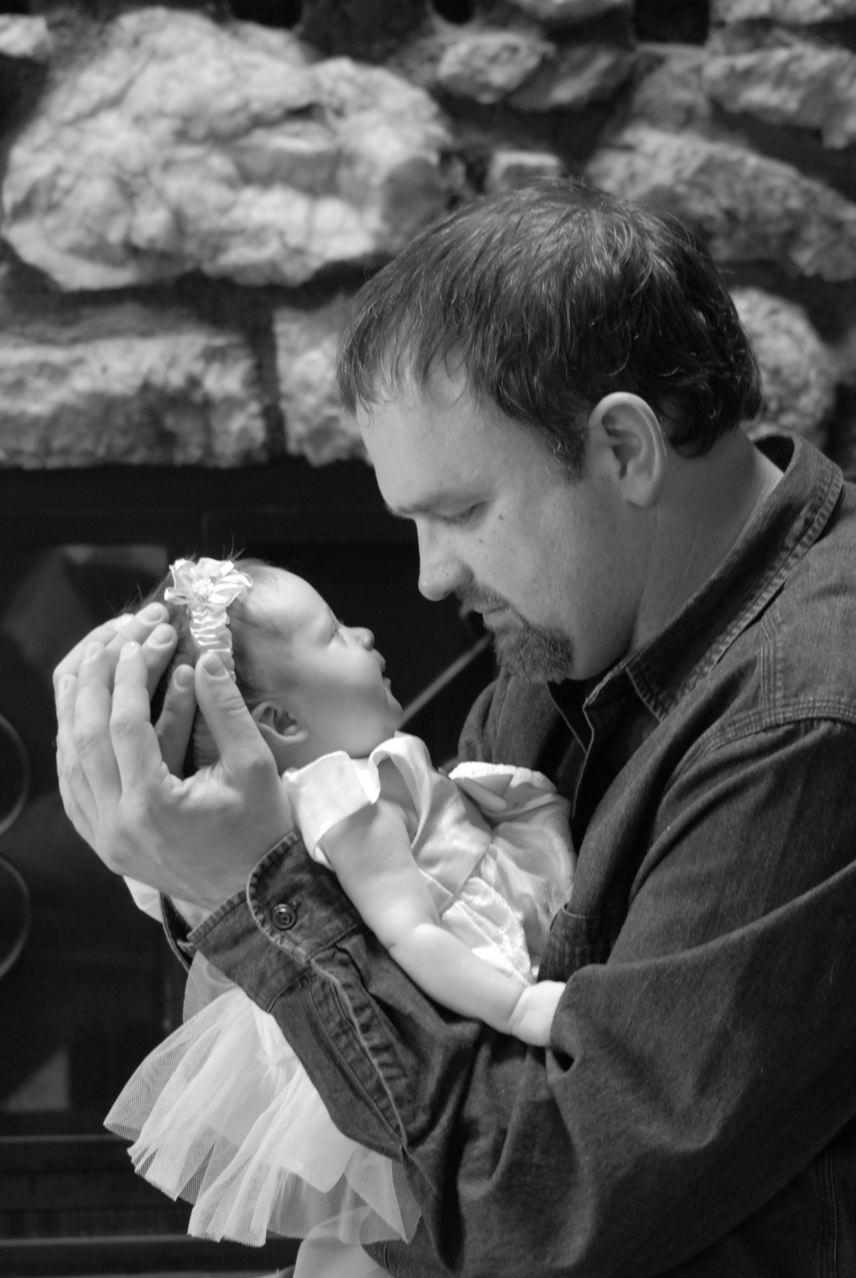
Traumatic experiences incurred in early childhood can have an egregious effect upon the human condition including: the psychological, physiological, neurological, emotional, social, and academic readiness and preparedness for life. 

One of the greatest challenges posed to professionals is that,  “childhoood trauma does not come in one single package.” (Brown, 2008, p. 5) Therefore, making the diagnosis, treatment, and prognosis is the Achilles heel of the therapeutic process. 

Continue reading


*The views expressed by our authors are personal opinions and do not necessarily reflect the views of the CCPA
Lesbian, Gay, Bisexual, and Transgender Issues in Counselling

Posted by: Priya Senroy on February 28, 2012 10:19 am

In my recent work experience, I have been coming across working with clients with diverse backgrounds and I found this article which has been helping me to fine tune my counselling skills dealing with Lesbian, Gay, Bisexual, and Transgender issues.

http://www.counseling.org/Resources/Competencies/ALGBTIC_Competencies.pdf


*The views expressed by our authors are personal opinions and do not necessarily reflect the views of the CCPA
Holiday Wishes Readers

Posted by: Priya Senroy on December 13, 2011 10:53 am

As we begin to wrap the year up, I thought of sharing two books with you.

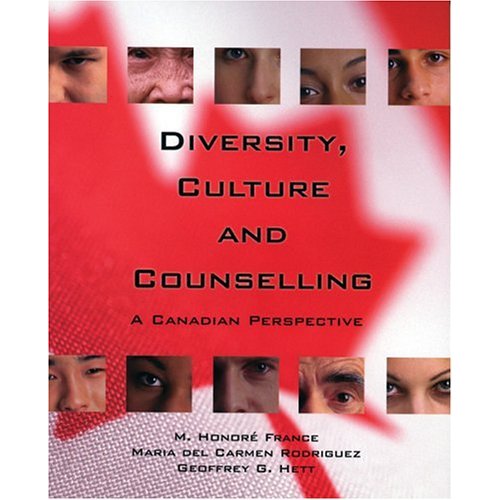
Diversity, Culture and Counselling: A Canadian Perspective:  by Geoffrey Hett, M. Honoré France, Maria del Carmen Rodriguez  is based on the belief of diversity and the importance of culture, that multicultural counselling offers an approach to working with people from different ethnic, racial, religious backgrounds and sexual orientations. Understanding the causes and costs of stereotypes and biases is vital if counsellors are to bridge the ethnic and racial divide. Being secure in one’s own identity, culturally and racially, can only help to ensure that people accept and respect individual and collective differences. This book provides necessary background information relative to many of the diverse cultural groups in Canada .Canadian society encompasses a variety of cultural, ethnic and religious groups. It is essential for the counsellor to understand the beliefs and thought processes of individuals within these various groups in order to establish rapport and understanding, as well as to make the counselled individual feel comfortable.

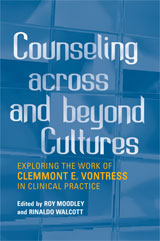
Using as a starting point the pioneering work of Clemmont E. Vontress, the contributors to Counseling Across and Beyond Cultures trace the evolution of multicultural counseling and discuss remaining challenges for practitioners. Essays include a personal reflection by Vontress himself, critical analyses of the growth of multicultural counseling, considerations of his influence in Canada and the UK, and African and Caribbean perspectives on his work. Throughout, the importance of Vontress’s accomplishments are celebrated, while critical analysis points the way towards further work to be done in the field.  The book focuses on the fact that professional counseling is a dynamic field, necessarily changing to reflect shifting societal norms and client needs. In an increasingly multicultural and globalized society, there is a growing need for counselors to be sensitive to the diverse needs of clients expressing different cultural and ethnic beliefs and facets of racial, gender, sexual, age, ability, disability, or class identities.


*The views expressed by our authors are personal opinions and do not necessarily reflect the views of the CCPA

Hello readers!

Posted by: Priya Senroy on December 5, 2011 3:57 pm

In this month’s blog, I am sharing an article that I came across which describes the efficacy of utilizing expressive arts in group counselling to enhance communication. It goes on to discuss the research conducted by the authors which include methodology and preliminary findings; and provide examples of expressive arts activities that can be used by counsellors in their group counselling work.

 http://counselingoutfitters.com/vistas/vistas08/Odegard_Article_24.pdf


*The views expressed by our authors are personal opinions and do not necessarily reflect the views of the CCPA
The Benefits and Challenges of Children’s Television Programming

Posted by: Asa Don Brown on September 16, 2011 2:21 pm

In the early 1950‘s, the objective of children’s programming was originally to provide content to entertain children on Saturday mornings. Today, while children’s programming continues to be a source of entertainment, it has evolved to become an educational resource for facilitating literacy, developing imagination, cultural awareness, scientific quandaries, mathematical problems, and social aptitude. 

As parents, we should be active participants in the lives of our children.  Parents should not use the television as a babysitting tool.  Children should not be spending countless hours numbed out in front of the television set, viewing randomly picked programs on randomly picked channels.  There should be some rhyme and reason behind what your child is watching.

Continue reading


*The views expressed by our authors are personal opinions and do not necessarily reflect the views of the CCPA

The Benefits of Laughter

Posted by: Asa Don Brown on September 2, 2011 10:52 am

What is Laughter? 

Laughter is the ability to create sound as a reaction to a stimuli evoked by internal or external events, situations, or persons.   It is this physical manifestation that is signaled by a state of being; a state of thought; or as an emotional response. Laughter is the body’s release valve, allowing for the pressure within the body, both good and bad, to manifest through a physical expression and a vocal inflection.  Laughter is an exhilarating experience that can be fueled by having a basic sense of purpose.

There are varying types of laughter from a chuckle, chortle, giggle, titter, twitter, roar, bellow, cackle, tee-hee, snicker, and a laugh.  Laughter is the ability to express one’s internal emotions with an external expression.    

Laughter is the purest form of communication.  It expresses our real desires and intent.   Through laughter we are capable of being real, genuine, and authentically ourselves.  Dr. Robert Provine of University of Maryland, suggests that laughter is perhaps the earliest form of language known unto humankind.  Dr. Provine has suggested that laughter predated the spoken language.  Laughter’s ignition begins at the earliest stages of life. 

Dr. Johannson fondly recalls her strongest memories of laughter being associated with her father.  “The first vision that comes to my mind on the topic of laughter is of my dear father and seeing him laughing so many times… it was wonderful to see.. and actually when I think of him, I see him laughing… about even the simplest matters.” 

Continue reading


*The views expressed by our authors are personal opinions and do not necessarily reflect the views of the CCPA

What are the Effects of Verbal Abuse on Children?

Posted by: Asa Don Brown on August 16, 2011 8:36 am

What are the effects of verbal abuse on children? How am I defining verbal abuse? Verbal abuse is any aggressive behavior that occurs through human communication. Such behaviors include: belittling, swearing, name-calling, negatively criticizing, threatening, ordering, and the undermining of a person’s integrity.  The intent of verbal abuse is often to prove rude, offensive, disparaging, defamatory, slanderous, and scornful.  It’s overall intent is often to degrade the soul and mind of the individual to such a degree that they are without an ability to retaliate. 

As a therapist, I have heard all types of excuses why verbal abuse is acceptable. Parents have tried blaming their child’s behaviors, attitudes, and perceptions as being the catalyst of their own negative behavior. It is not uncommon to witness a parent deflect, but it is rare to hear a defensive parent accept responsibility.  Moreover, we all know that many parental behaviors are learned behaviors, attitudes, and perceptions.  Parents have learned from watching and witnessing their own parents, teachers, and others who played a significant roles in their life. 

Continue reading


*The views expressed by our authors are personal opinions and do not necessarily reflect the views of the CCPA

Benefits of Routine Eye Examinations

Posted by: Asa Don Brown on July 11, 2011 12:45 pm

The British Columbia Association of Optometrists (BCAO) and American Optometric Association (AOA) recommends that children receive their first eye examination within the first year of life.  According to the AOA, the percentage of school-aged children who have visual concerns is 25 percent, or one in every four children. Major optometric associations recommend that children have routine eye examinations. 

What are the benefits of routine eye examinations? Routine eye examinations can rule-out sight threatening eye and health diseases or disorders.  They can prove a preventive measure, as well as, a resource for monitoring health related issues. 

Routine eye examinations can provide a baseline for which future eye health can be compared.  The determination of an accurate prescription can result in comfortable, clear vision. 

Continue reading


*The views expressed by our authors are personal opinions and do not necessarily reflect the views of the CCPA

Hello Readers!

Posted by: Priya Senroy on July 8, 2011 1:24 pm

In this July blog, I continue to share with you some amazing work happening in other parts of the world in the field of using creative arts as a counselling process.

This video illustrates how classes in acrobatics may be combined with group counselling concerning setting and obtaining goals in life within the realms of
social work. It provides guidelines for those in charge of acrobatics and counselling classes.

The facilitators recommended that if this combination methodology is meant to be used with a specific group of participants over a number of classes in acrobatics ideally over a period of at least a few months, involving at least 10 classes organized at regular intervals. Classes in acrobatics will help build confidence and self-esteem of participants. The counseling methodology is designed to capitalize on learning points classes in acrobatics provide concerning how to set and obtain goals in life.

Again this is for facilitators who are skilled in the language of acrobatics and for others who may want to get inspired to combine an art form that they are experts in with counselling.


*The views expressed by our authors are personal opinions and do not necessarily reflect the views of the CCPA