But Are Online Relationships “Real”?

Posted by: Dawn Schell on December 13, 2011 10:29 am

It’s a question I’ve heard many times. From colleagues as they try to understand how online counselling works and from parents as they puzzle over the amount of time their child spends on facebook (and other social media).   Of course, they don’t often define “real” – just express this vague sense that somehow an online relationship is not valid.

Let’s look at some anecdotal reports from this past week in my life. 

A counsellor I know is taking the Cybercounselling Level 1[1] course.  She said she had learned it was possible to feel connected to people she had only met online. That she had “warm feelings” for the others in her course.  This experiential learning was a pleasant surprise to her and enabled her to understand how a client and therapist might be able to establish a positive working relationship in an online format.

Continue reading


*The views expressed by our authors are personal opinions and do not necessarily reflect the views of the CCPA
An Ambassador for the Profession

Posted by: Curtis Stevens on December 13, 2011 10:26 am

Every once in a while I have to take off my individualistic hat and put on my collective hat.  Today’s blog is simply a reminder to people about the importance of the collective.  As individual counsellors, we are often isolated in the work we do.  We do find other, like-minded, people to associate.  We seek out peers for reflective practice.  We collaborate on projects.  When we work in isolation, we tend to forget that there is a bigger picture in the world of counselling.  We forget to remember (or is it that remember to forget) about all the larger collection of counsellors out there that creates the profession.  Without this larger body, individuals would struggle worse than they are now to form their identity as a counsellor.  It is likely that it is because of this larger body that the individual has a choice of their identity at all. It is also likely that due to this body, the community at large sees counselling as a professional body as one that is governed by a regulatory body and managed by a code of ethics; that counsellors are accountable to this governing body (though voluntarily) as well as to the public. 

I guess that the point of my preaching today is to remind people that that collective is coming together in Calgary, Alberta this Spring – May 24-27, 2011 in the form of a conference.  The newly formed Alberta/NWT Chapter will be there looking for ways to build its’ own presence.  The theme is fitting with this discussion;  Reflecting on Self and Practice.  The importance of these conferences is not just the education credits one picks up, but the actual bonding and building of the profession.  Among the social opportunities, there is the intrinsic value of developing a sense of belonging (something we all strive for).  Make sure to find your way to Calgary, Alberta for the conference, and, if it pertains to you… seek out the newly formed Alberta/NWT chapter of the Canadian Counselling and Psychotherapy Association.  Find out what they can do for you… or, more importantly, provide your input in what they will do for you.


*The views expressed by our authors are personal opinions and do not necessarily reflect the views of the CCPA

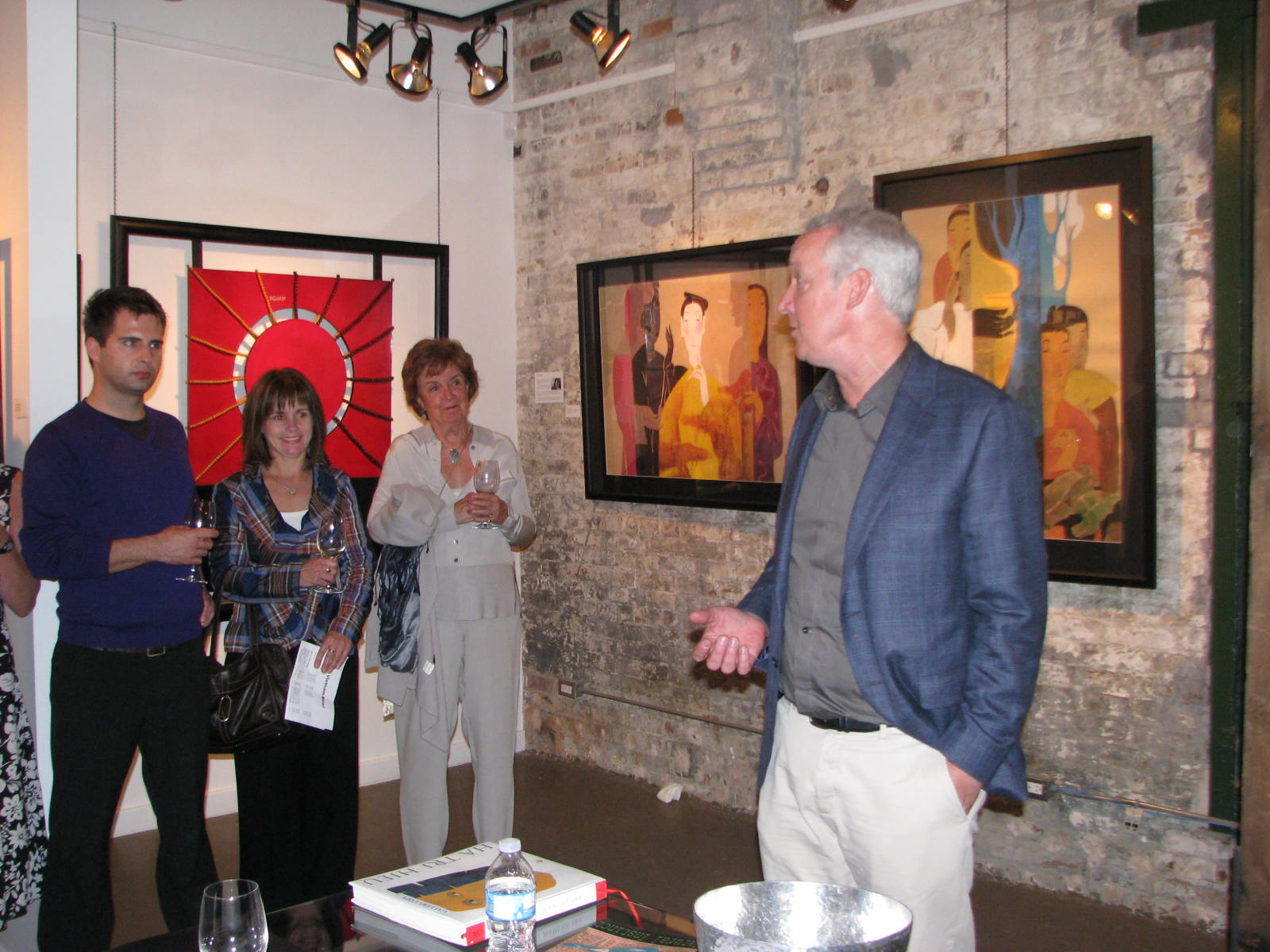
One “Field Trip” Results In Multi-Year International Career, Then Banker Turns Gallery Owner!

Posted by: Mark Franklin on December 13, 2011 10:15 am

Have you ever wondered how to launch an international career? Or even how to kick start your career in another city within Canada? Here’s one success story with insights from Nov. 30, 2011 Career Buzz radio interview

Always wanting to live and work abroad, Andrew Fitzgerald took himself on a career “field trip” from his native Toronto to Vietnam, to see what was possible. He scheduled meetings with professionals in his field and because he was there and had done his research, he soon found a winning strategy. “They could bring in an ex-pat who would be very expensive, or they could hire me.” So he moved to Hanoi, armed with insights and confidence, but without a job yet. Once there, he soon landed a great job.

CareerCycles Tip #1: Take yourself on a career field trip to your desired location, do some research about the local scene and set up meetings beforehand, as part of your intentional exploration.

Andrew then leveraged his position to uncover more opportunities with the same organization, in Singapore, Hong Kong, Manila, and more. How?

Continue reading


*The views expressed by our authors are personal opinions and do not necessarily reflect the views of the CCPA

The Transition into Private Practice: From Employee to Entrepreneur

Posted by: Lucy MacDonald on December 9, 2011 12:00 pm

Professionals enter private practice at different points in the career timeline. Making the transition to private practitioner is like any important transition in life; it requires reflection, the managing of any stress or anxiety, planning, and the ability to adapt to the unexpected.

When making the transition to private practice, most practitioners are moving from the position of employee to entrepreneur.  Many practitioners start their private practice while working as a full time employee. If possible, try to negotiate a four day work week with your employer – working your weekly hours over four days instead of five and using the fifth day as your day to see private clients. Another option is to use Saturday or Sunday as your day to see clients, or to see clients in the evenings if your work schedule allows. Working full time while starting your private practice is a viable option; however not one that you can maintain indefinitely due to the risk of overwork and burnout.

Continue reading


*The views expressed by our authors are personal opinions and do not necessarily reflect the views of the CCPA

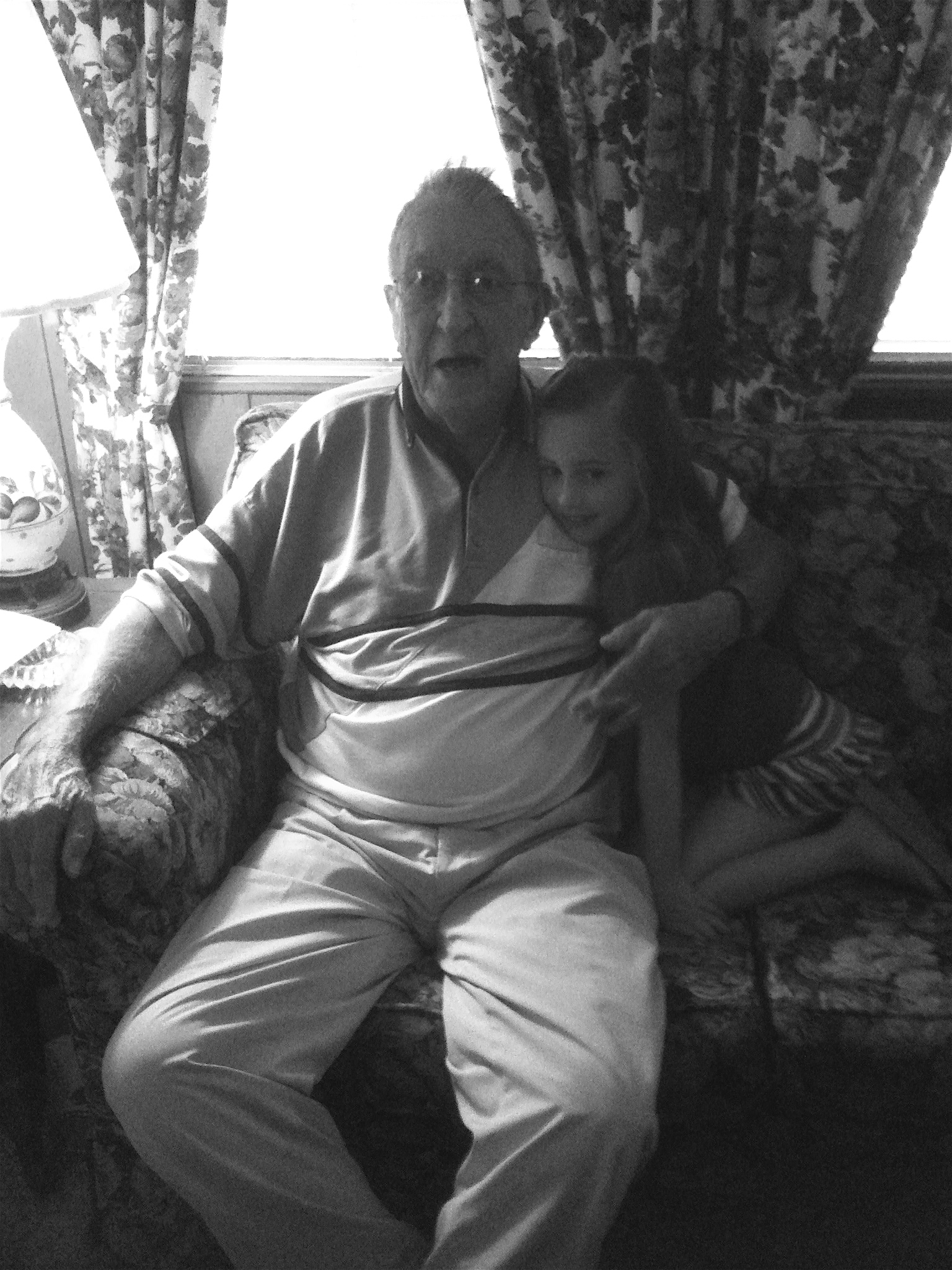
Don’t Dismiss the Elderly

Posted by: Asa Don Brown on December 8, 2011 4:27 pm

Don’t dismiss the positive effect that the elderly can have on the life of a child.  According to the United Nations, the statistical number of the elderly will surpass the number of the young by the year of 2050.   The United Nations’ explanation is that it is due to the “increases in the proportions of older person (60 years or older) are… accompanied by declines in the proportions of the young (under age 15)…” (United Nations, 2011, Online)

 Elder Abuse is Reflective of Child Abuse

In our ever changing and rapidly aging population, seniors are going to become the primary voice of our society.  Thus, senior abuse and senior neglect on are the rise.   Reflectively, the number of child abuse cases have increased during this Great Recession.  Why is there a sudden rise in the number of reported cases of child abuse? A recent study lead by Dr. Rachel Berger of Children’s Hospital of Pittsburgh looked at the rise of shaken baby cases and other forms of brain-injuring. The research findings have been staggering.  During the span of this five year research study the researchers found direct correlation of the number of abuse victims in association with poverty and job instability in the home.   The sagging economy and the inability to find work has lead to a toxic environment in the nucleus home. 

Continue reading


*The views expressed by our authors are personal opinions and do not necessarily reflect the views of the CCPA

Increased Awareness: Personal Patterns

Posted by: Maritza Rodriguez on December 5, 2011 4:54 pm

One of the wonderful benefits of therapy is increased insight into our personal patterns. Some patterns have evolved from habits, while others are familial patterns that we have learned growing up. But whatever the source, these patterns have a strong hold in our lives and our decisions.

It has been my observation over the years that most of us experience the same patterns in our lives over and over with slightly different overtones. Have you ever heard of the idea in which we chose partners that are very similar? Most of us play out the same roles and challenges with different people and usually we are not aware of the pattern in which we are entrenched. An example can include being attracted over and over people who are married, over indulge in alcohol, spend an excessive amount of time and money on their looks, etc. Fill in your own blank. Very often, however, we play out these familiar patterns in various aspects of our lives such as work, health and relationships in general.

Personal insight brings with it freedom. As we become conscious of our belief systems and the reasons behind our behaviors and actions, we can then chose to change and thus break free from patterns we have played out for years. When this occurs, we are then in control of our lives rather than constantly reacting to environmental and/or emotional factors around us.

Overcoming personal patterns correlates with an increased feeling of freedom, sense of control, happiness and overall well being. Can you identify your personal patterns?

 Image courtesy of RGBStock.com


*The views expressed by our authors are personal opinions and do not necessarily reflect the views of the CCPA

Making Functional Behaviour Assessments Accessible for Teachers

Posted by: Lori Walls on December 5, 2011 4:37 pm

This past week I was observing high school students in their classes. These observations started me thinking about the value of Functional Behaviour Assessments and how underutilized they are in schools. Functional Behaviour Assessment (FBA) is founded on the principles of behaviourism which operates from the assumption that all behaviour serves a function. If the function of a certain behaviour can be identified, then that behaviour can be changed. To understand the function of behaviour an assessment of the controlling variables is undertaken.  An FBA includes the following five components: “(a) an operational definition of the problem behavior, (b) identification of predictable antecedent-behavior-consequence chains, (c) determination of stimulus control and operant function, (d) determination of an appropriate functional replacement behavior, and (e) manipulation of antecedent and consequence events to facilitate the replacement behavior” (Scott et. al., 2010, p. 88). There is ample research to support that FBAs can and do result in positive behaviour change in students (Scott et. al., 2010). If positive change results, then why are FBAs so underutilized in schools?

Continue reading


*The views expressed by our authors are personal opinions and do not necessarily reflect the views of the CCPA

Building Resilience for the Holidays

Posted by: Debbie Grove on December 5, 2011 4:19 pm

The holiday season does not have to be stressful – really, no seriously. I cannot help but wonder if the preconception that this time of the year is just ‘naturally’ stressful begins to set us up for anticipatory angst, worry, and anxiety about yet another ‘stressful’ festive season. I truly believe that we can garner some joy and peace if we are purposeful in how we manage the holidays. In this blog, I share some of my top tips for not only surviving the holidays, but learning to thrive in their midst.


Image courtesy of FreeDigitalPhotos.net

Being proactive and purposeful about creating a healthy mindset, attitude, and approach to the holidays can help generate a manageable and enjoyable season. Here are some of my top tips:

Continue reading


*The views expressed by our authors are personal opinions and do not necessarily reflect the views of the CCPA

If You Build A Private Practice The Clients Will Come (well…maybe)

Posted by: Lucy MacDonald on December 5, 2011 4:03 pm

In the movie “Field of Dreams” starring Kevin Costner and Amy Madigan released in 1989, an Iowa farmer has a vision about building a baseball diamond in a cornfield.  Against all reason he proceeds, encouraged by the promise that if he builds a baseball diamond, the baseball greats of the past will come to play another game. “If you build it, they will come” became his mantra when faced with criticism and self-doubt. He did build it and they did come.

Unfortunately, “if you build it, they will come”, does not work in private practice. There is a mistaken notion in the counselling profession that if you want to help others, the clients will want your services. Wanting to help others is definitely a necessary component, but it does not follow that just because you set up a private practice the clients will be there.

Continue reading


*The views expressed by our authors are personal opinions and do not necessarily reflect the views of the CCPA

Hello readers!

Posted by: Priya Senroy on December 5, 2011 3:57 pm

In this month’s blog, I am sharing an article that I came across which describes the efficacy of utilizing expressive arts in group counselling to enhance communication. It goes on to discuss the research conducted by the authors which include methodology and preliminary findings; and provide examples of expressive arts activities that can be used by counsellors in their group counselling work.

 http://counselingoutfitters.com/vistas/vistas08/Odegard_Article_24.pdf


*The views expressed by our authors are personal opinions and do not necessarily reflect the views of the CCPA