
“Wellness Tips from The Self-Care Daily™.”

Posted by: Derrick Shirley on January 9, 2012 12:25 pm

Tip #1: WRITE TO LIVE

As this is the first official self-care tip of 2012, I will share with you one closest to my heart. It remains the most powerful instrument of personal change and transformation in my life, business and weight loss (I lost over 180 lbs) to date:

Personal Writing.

Even if its just a few lines about how you are feeling, try to do some journaling today and everyday. I cannot even begin to tell you how powerful this is and doing this earlier in the day brings the greatest benefits.

Write a letter to yourself, write about your work, or just empty your mind. Write about something funny and watch your mood shift with each word. If you are concerned that someone might read your writing, write on loose-leaf paper, tear it up when finished and destroy it. In this self-care activity, the process is more important than the content.

Make the time to connect with you. You are worth it!

Continue reading


*The views expressed by our authors are personal opinions and do not necessarily reflect the views of the CCPA

Mind Tricks

Posted by: Curtis Stevens on January 9, 2012 12:22 pm

This blogging thing, leads me in many different directions.  I’ve been thinking about my progression… evolution as a “cognitive therapist.”  I still hang onto that title, though, somewhere may have forgotten completely what that means.  My focus has been, and will likely always be,  about  the mental juggle that we all have going on in our brain.  We have random thoughts, thinking errors, mind chatter, under-currents all going on simultaneously with the actual “things” we have to think about throughout our day.  It is often this jumble of thoughts that get us into trouble mentally, emotionally, and behaviourally.  It may be truly dangerous that my thinking has been allowed to evolve without “supervision” to keep me in check.  My evolution has lead me into the world of solution focused thinking, clinical hypnosis and mindfulness… none of which are a far stones throw away from pure cognitive therapy.  I added thinking to the end of solution focussed in replacement of therapy, because I don’t just see it as a therapy, but, truly a way of perceiving things and, I as I see the clients thoughts in a certain way, I tend to manipulate my clients into seeing things a certain way (I’ve touched on this in a previous blog).

Continue reading


*The views expressed by our authors are personal opinions and do not necessarily reflect the views of the CCPA

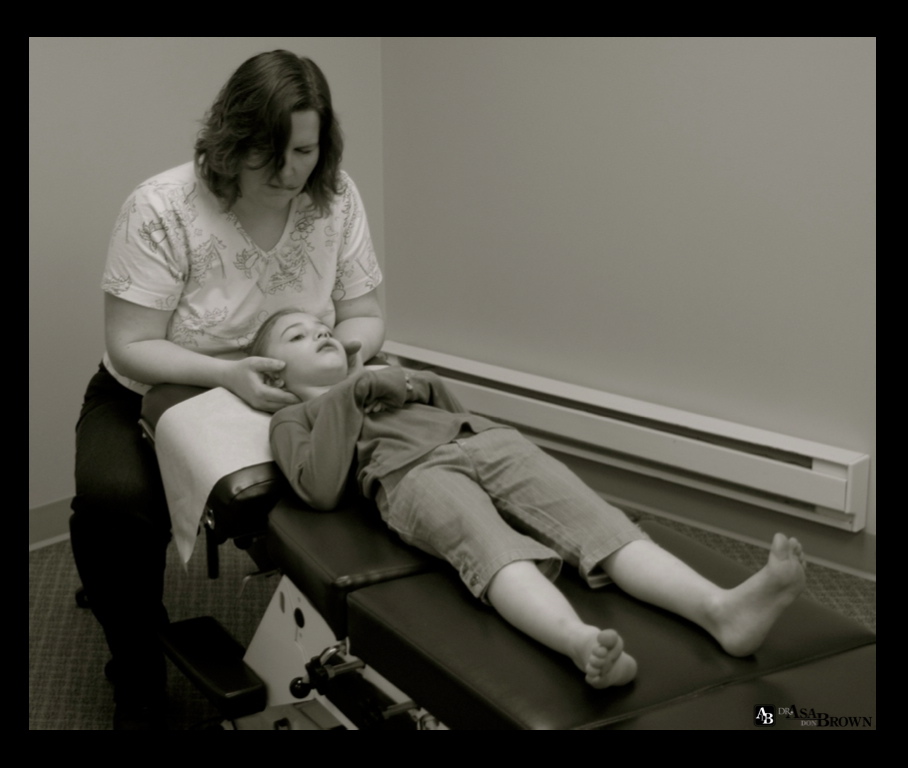
Mental Health Benefits of Chiropractic Care for Children and Youth

Posted by: Asa Don Brown on January 5, 2012 4:47 pm

As therapists we should approach the therapeutic environment as an investigator, seeking to offer the right path of care for our patients.  Sometimes that path may take us down roads that go beyond the psychotherapeutic environment; while other times we may desire a collaboration with other practitioners.  Chiropractors offer competent care for individuals suffering from a host of physiological, as well as, psychological needs. 

As always, it is recommended that you regularly consult with your primary physician on the benefits for your child.  Likewise, it is also recommended that you provide your child’s complete health history and medication history to the chiropractor.  Be certain that your chosen chiropractor has a working knowledge of child and youth related disorders, diseases, and health related matters.  It is always recommended that your health professionals are working collaboratively.  Do not forget that you are your child’s best health advocate and authority. 

Continue reading


*The views expressed by our authors are personal opinions and do not necessarily reflect the views of the CCPA
The Career Statement: A Revolutionary Tool For Career Management, For 2012 and Beyond

Posted by: Mark Franklin on January 5, 2012 4:39 pm

As Career Professionals, it is powerful and gratifying when our clients become empowered to articulate their strengths and career aspirations clearly and confidently. Many Career Professionals intuitively facilitate clients toward this outcome, yet few if any consistent and widely embraced methods exist to guide clients toward such an authentic and effective statement.

Increasingly, CareerCycles Associates and trainees have been fine tuning a narrative method of practice to distil what matters from what happened to guide clients toward the creation of their unique Career Statement. Over the past five years, 120 Career Professionals across Canada and the U.S. have been trained in the CareerCycles narrative method of practice. In the same time, more than 2000 clients have benefited from creating their Career Statement, with consistently excellent results and feedback.

Continue reading


*The views expressed by our authors are personal opinions and do not necessarily reflect the views of the CCPA
New Year Greetings to My Fellow Counsellors

Posted by: Priya Senroy on December 22, 2011 2:37 pm

I hope 2011 was rewarding and challenging for many of you as it was for me!!!! 

So as I reflect back  on 2011 and look forward  to 2012 at the same time, I have decided that I would like to bring in a piece of the world every month to this blog space!!!! 

So what does that exactly mean??? 

Continue reading


*The views expressed by our authors are personal opinions and do not necessarily reflect the views of the CCPA

Benefits of Faith

Posted by: Asa Don Brown on December 22, 2011 2:27 pm

What is it about faith that draws so many towards a higher being and a desire to be “enlightened”?  Children are much more impressionable when expressions of faith are displayed, whether inwardly and/or outwardly.  During this time of year, we hear songs of praise, see images of devotion, and hear the clamoring of religious words being spoken in the halls, synagogues, temples, and churches.  Faith is an abundant aspect of life.  

THE THERAPEUTIC ENVIRONMENT 

Does faith enrich a child’s experience of life? In the field of psychotherapy, counselling, and psychology, faith was historically considered a taboo subject, something we left for parents to embark upon.  As a graduate student, I recall having been told countless times that “faith is something that we don’t tread upon,… or if we do, we tread lightly.”  Moreover, if a patient desired to speak of their faith; we should walk cautiously through this minefield, always emphasizing the patient’s statue of faith.  

If we are to plunge into the life of a person, should we not also be learning about their faith’s values, morals and ethics?  Why is it that we resist speaking about faith in our clinical practices?  Are we afraid that our own faith might come under scrutiny?  Of course, we are not to testify or discuss our faith during therapy. 

Ironically, discussions we have with our patients in therapy, have a way of burrowing their way into our conscience mind beyond the therapeutic session.  Faith happens to be one of those conversations that I have had countless times with fellow practitioners. I have found practitioners who either do not feel comfortable having such conversations with their patients; or they allow their personal foundations of faith to embark upon the patients; or they have a bitter feelings when discussing faith; or they are completely neutral.  If a therapist is wavering on their own foundations of faith, or if they are incapable of allowing the patient’s foundations of faith to be the center piece; they should step aside; referring this patient to someone who maybe unbiased towards faith.  

Continue reading


*The views expressed by our authors are personal opinions and do not necessarily reflect the views of the CCPA

Shifting the Onus for Bullying Prevention from Students to School Personnel

Posted by: Lori Walls on December 22, 2011 2:19 pm

In the news this past month there have been a number of stories that highlight the often devastating consequences of bullying in our schools. Despite attempts by schools to introduce zero tolerance policies and anti-bullying programs, school violence appears to be on the rise. When doing research on this issue it became clear that the success of these anti-bullying programs is directly related to the reporting of threats or violent incidents. This places the onus on students to reduce bullying in the schools. Oliver and Candappa (2007) stated that only 11% of adolescents are willing to report the problem to school personnel and that reporting rates are lowest among boys and minority groups.  Given the low rates of reporting among adolescents and the increase in the severity and number of incidents of bullying in the schools, it appears necessary to revisit the role of students in anti-bullying programming. 

Eliot et al. (2010) conducted a study examining the relationship between school climate and student willingness to seek help for bullying and threats of violence. The study used an “8-item scale to measure the extent to which students perceived that adults at school care about students, respect them, and want them to do well.” (p. 539). An additional 8-item scale was used to measure student willingness to seek help from school staff members for bullying and threats of violence. Findings suggested that students who perceive their school climate as supportive were more likely to report bullying to school personnel. A supportive school climate was defined by students as having caring and respectful teachers that took an interest in the students on an individual and personal level.

Continue reading


*The views expressed by our authors are personal opinions and do not necessarily reflect the views of the CCPA

Top 11 for 2011

Posted by: Dawn Schell on December 22, 2011 2:16 pm

As 2011 winds down I wanted to share with you some of the top online mental health sites I have used with clients (both in-person and online) in the past year.   

Before I recommend a site to a client I check that the URL is still active and I review the site.  I inform clients that referring them to a website is not a wholesale endorsement of everything on the site.  I also encourage my clients to use their own judgment about what they read.  

And now…here they are! 

Continue reading


*The views expressed by our authors are personal opinions and do not necessarily reflect the views of the CCPA

Getting the Most from TOKW

Posted by: Jeffrey Landine on December 22, 2011 2:13 pm

In our last blog, we focused on the practice of exposing adolescents to work environments through the Take Our Kids to Work Day (TOKW) movement.  We highlighted the necessity of individuals linking occupational information with their perceived self-attributes, a process that promotes the development of a vocational identity.  The growth in self-understanding does not cease with the ending of the growth phase of career development. Moreover, we maintain that individuals who do not continue to link self-information and occupational information during the exploration phase will likely lack the meta-dimensions of clarity, certainty, and harmony as they understand the components of their self-concept system. We strongly support the TOKW initiative but suggest that the career practitioners involved need to go farther by preparing and processing the day with participants.  The focus of this blog is to suggest ways that practitioners can facilitate the linking of occupational information with self-precepts to enhance vocational identity formation by preparing and process the experience with their participants.   

First, often the focus of TOKW is on the provision of factual occupational information only.  While this provision is an important component, it is best experienced by encouraging adolescents to link this occupational information with their perceived self-attributes.   TOKW is an episode in the life of an adolescent. As such, it has a significant potential to enhance vocational identity either in helping the individual to make choices in favor of or against an occupation, or to lack overall relevance.  Episodes help to develop the self-concept and consequently ensuring the TOKW episode is appropriately prepared for and processed contributes to the elaboration of the self-concept and to vocational identity.  A critical component of any episode is the context in which it happens.  We think that helping adolescents to prepare for TOKW helps them to build a framework around what to anticipate during the episode.  Providing adolescents with questions to ask about the work environment (Holland’s work environments are helpful here) and about the psychological (aptitudes, skills, interests, values, personality traits) and social (occupational role, salary, educational requirements, occupational future) aspects of each occupation encountered helps them to develop appropriate concepts.  These concepts contribute to their understanding of the world of work, and to making the links between their perceived self-attributes and the occupational information learned during the episode.

Continue reading


*The views expressed by our authors are personal opinions and do not necessarily reflect the views of the CCPA

Holiday Wishes Readers

Posted by: Priya Senroy on December 13, 2011 10:53 am

As we begin to wrap the year up, I thought of sharing two books with you.

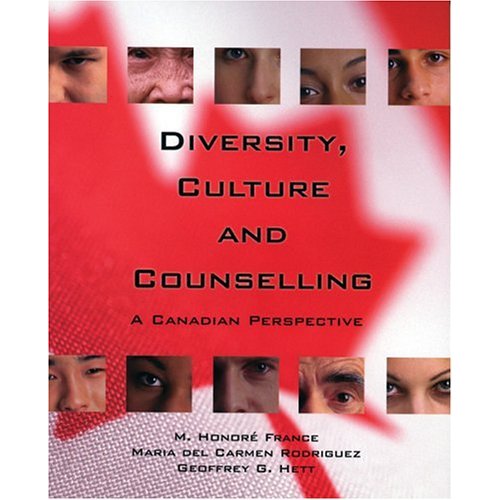
Diversity, Culture and Counselling: A Canadian Perspective:  by Geoffrey Hett, M. Honoré France, Maria del Carmen Rodriguez  is based on the belief of diversity and the importance of culture, that multicultural counselling offers an approach to working with people from different ethnic, racial, religious backgrounds and sexual orientations. Understanding the causes and costs of stereotypes and biases is vital if counsellors are to bridge the ethnic and racial divide. Being secure in one’s own identity, culturally and racially, can only help to ensure that people accept and respect individual and collective differences. This book provides necessary background information relative to many of the diverse cultural groups in Canada .Canadian society encompasses a variety of cultural, ethnic and religious groups. It is essential for the counsellor to understand the beliefs and thought processes of individuals within these various groups in order to establish rapport and understanding, as well as to make the counselled individual feel comfortable.

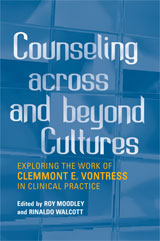
Using as a starting point the pioneering work of Clemmont E. Vontress, the contributors to Counseling Across and Beyond Cultures trace the evolution of multicultural counseling and discuss remaining challenges for practitioners. Essays include a personal reflection by Vontress himself, critical analyses of the growth of multicultural counseling, considerations of his influence in Canada and the UK, and African and Caribbean perspectives on his work. Throughout, the importance of Vontress’s accomplishments are celebrated, while critical analysis points the way towards further work to be done in the field.  The book focuses on the fact that professional counseling is a dynamic field, necessarily changing to reflect shifting societal norms and client needs. In an increasingly multicultural and globalized society, there is a growing need for counselors to be sensitive to the diverse needs of clients expressing different cultural and ethnic beliefs and facets of racial, gender, sexual, age, ability, disability, or class identities.


*The views expressed by our authors are personal opinions and do not necessarily reflect the views of the CCPA