Office Space

Posted by: Brian Dosenberger on February 8, 2012 11:50 am

Finding the ideal office space and situation for your private practice is one of the most important decisions in starting a private practice.  As a counsellor starting a new practice it can be anxiety provoking because you may be committing money while being uncertain whether clients will call. Today, we’ll look at the options that counsellors have from the least to most risk.

  • Home-based practice. Home-based practice allows the counsellor to work from the comforts of home provided they have ideal space. This would be a great option for someone focusing primarily on providing online counselling. The challenge is that you never leave the office and you never leave home.     


  • Rent space by the hour.  Starting out your private practice renting by the hour involves very little risk. This allows the counsellor to maintain current employment while slowly building up a practice in the evenings, weekends, or part-time during the day. The down side of this option, depending on the situation, is the space may not be available when you need it and at a suitable time for your client.

  Continue reading


*The views expressed by our authors are personal opinions and do not necessarily reflect the views of the CCPA
Wellness Tips from The Self-Care Daily™

Posted by: Derrick Shirley on February 8, 2012 11:39 am

Tip #78: Feel the power of your freedom.

You are free to choose and follow any path in your life and/or your career. Make choices that support, and are aligned with your goals. If you are unclear of your life or career path, set time aside to review or renew it, or ask for help if needed.

Be grateful for your freedom to choose and exercise it.

*************************************************

Continue reading


*The views expressed by our authors are personal opinions and do not necessarily reflect the views of the CCPA
Counsellor’s Taboo

Posted by: Curtis Stevens on February 8, 2012 11:31 am

The views expressed in these blog entries are my own.  They are probably not completely endorsed by the Canadian Counselling and Psychotherapy Association, although they should be…

I’m sparked to write this entry partly by the book I’ve been attempting to write (check back on earlier blogs) and by my attempts to start my own private practice.  I’ve worked for the Alberta Government for some time now and was dismayed but not surprised to discover that even though I am an ethical practitioner and specifically trained to do clinical hypnosis, I was not allowed to use these particular skills with my clients.  I am also not completely surprised that a training that I took with the  police and social workers regarding  interviewing child sexual abuse involved relaxation and guided imagery to help people recall details of events, but they, too, were not allowed to use the word hypnosis.  What does surprise me is that, as I pursue EAP providers to supplement my private practice, there are still bodies that are involved with the direct counselling of clients that do not accept or support the use of clinical hypnosis with clients.  I get the general public being a little more on guard when I mention that I do hypnosis as part of my practice… we wouldn’t want to be tricked into clucking like a chicken, but major service providers?  Fear and avoidance can only mean one thing… lack of knowledge.  We fear what we don’t know, and most of us; even trained head shrinkers, don’t know hypnosis.

Continue reading


*The views expressed by our authors are personal opinions and do not necessarily reflect the views of the CCPA

Under the Influence of Terry O’Reilly: The Courage to Speak Up; The Beautiful Letter

Posted by: Mark Franklin on February 8, 2012 11:26 am

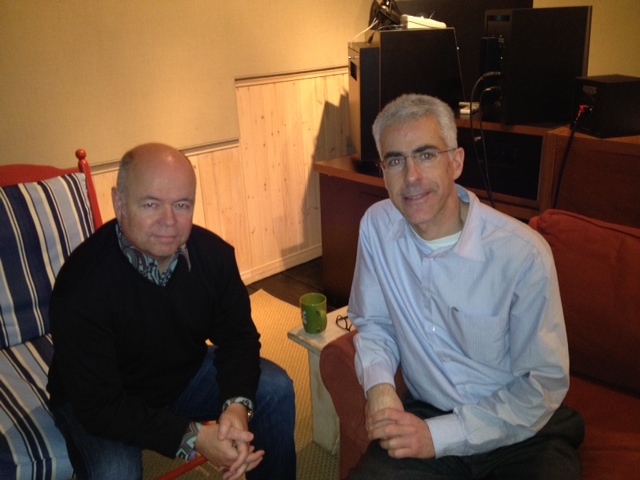
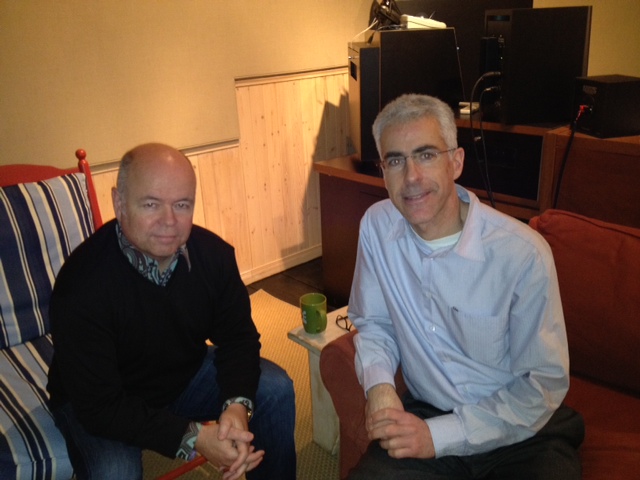
Award winning advertising and marketing expert, Terry O’Reilly, author of “The Age of Persuasion: How Marketing Ate Our Culture,” and host of “Under the Influence” on national CBC radio joined me on Career Buzz radio recently (pictured together) for a feature conversation. In this exciting hour of radio, Terry shared ideas and stories about:

  • What you can do better to communicate your own story and harness “The Power Of Storytelling”
  • Turning points in his own career story
  • What the career field can learn to shape up its image and market itself better

A key turning point: “I had five years under my belt and I was still considered green. One day I put my hand up in [an important client] meeting and said, ‘I feel differently, and let me take you though my thinking.’ The creative director looked at me and said, ‘I agree.’ And the whole room switched around to my point of view. In that moment, my career changed. I was given incredible opportunities by the creative director. It was the first time I had the courage to listen to my inner voice.”

Continue reading


*The views expressed by our authors are personal opinions and do not necessarily reflect the views of the CCPA

Self-Care – When it’s Hard Walking the Walk…

Posted by: Siri Brown on February 8, 2012 11:18 am

I ended up in the ER last week, stitches to my right (dominant) hand, resulting from a losing battle with a broken glass.  Exiting the hospital at 11:30pm, I was faced with a decision – to go, or not to go, to work the next day?  Self-care I can trumpet to my clients, but oh-how-complicated it becomes as I face my own choices.  This blog entry is about my own journey navigating an acceptable balance between my professional and personal responsibilities.    I hope that it might help “normalize” this challenge for other clinicians, dedicated, as I am, to the clients we serve.

Facts:   I have 3 stitches in my hand.  I am not in any amount of inordinate pain as a result.  I have almost 7hrs of sleep available to me.  I have a fairly full schedule tomorrow including clients without telephones or other means of contact.   It is only one more day of work before the weekend.   I  just spent two plus hours in the hospital (second one I visited – first one, the ER was closed).  It would help to keep the wound dry and immobilized for at least 24hrs.  I am mad at myself for what I consider a stupid, unnecessary injury.   What to do?

Continue reading


*The views expressed by our authors are personal opinions and do not necessarily reflect the views of the CCPA

Researching Chatting

Posted by: Dawn Schell on February 8, 2012 11:15 am

As I mentioned last time a number of crisis lines have added online services such as real-time chats and e-counselling.  It’s not just Canada. A 2007 report from Child Helpline International[1] lists 13 other countries that make use of web-based support in addition to their phone-based support.  Given the shifts in help-seeking behaviour in youth it makes sense.

While web-based support is being widely used researchers and crisis line counsellors are still determining what makes for the most effective and appropriate ways to use this medium.  Research has been focussed on outcomes, session impacts, building rapport, assessing therapeutic alliance, comparisons of telephone versus chat, motivations for choosing chatting versus calling and client feedback.

Continue reading


*The views expressed by our authors are personal opinions and do not necessarily reflect the views of the CCPA

Body Image

Posted by: Asa Don Brown on February 2, 2012 10:00 am

Culturally, North America has become obsessed with the concept of body image.  Children are bombarded by mixed messages describing the “right” physique and the “right” body type. These messages are broadcasted through television, radio, movies, magazines, newspapers, billboards, the web and through a barrage of electronic gadgets (i.e. cell phones, tablet computers, personal computers).  “Body image is a widespread preoccupation. In one study of college students, 74.4% of the normal-weight women stated that they thought about their weight or appearance ‘all the time’ or ‘frequently.’ But the women weren’t alone; the study also found that 46% of the normal-weight men surveyed responded the same way.” (Brown University, 2012, Online)

Continue reading


*The views expressed by our authors are personal opinions and do not necessarily reflect the views of the CCPA

Differentiation Starts in the Schoolyard

Posted by: Jeffrey Landine on February 1, 2012 5:08 pm

We have been speaking at length about vocational identity and the various processes that contribute to its development.  Last time John pointed out that in the development of concepts related to self and occupations, there are two processes that are essential: integration and differentiation. Through the process of integration a person learns to put concepts about the world of work together, like using tools and building things, to build a more complex unit such as carpenter.  In this example subordinate concepts are integrated into a superordinate concept. With differentiation, the second process, the person separates general (superordinate) concepts into specific meaning (subordinate concepts), such as the difference between a general contractor and a cabinetmaker. Such differentiation allows people to experience one situation or occupation as different from another.

John also made reference to Erikson’s fifth stage of psychosocial development, the stage where identity is formalized.  Erikson came to see this stage as having two distinct steps.  The first step, usually typical of older adolescents and young teens, involves the development of identity by similarities.  The individual’s sense of identity at this step is based on how closely he or she fit or are similar to an identifiable group.  In the schoolyard this is evident when one sees groups of students dressed similarly, listening to the same music and expressing the same interests.  Identity is achieved by integrating one’s self with the group.

Continue reading


*The views expressed by our authors are personal opinions and do not necessarily reflect the views of the CCPA

Starting a Private Practice in Clinical Counselling

Posted by: Marlowe Lindberg on January 26, 2012 12:03 pm

Greetings, first, let me give you a little background about me.  I have a degree in business, master’s degrees in adult education, and my second master’s degree is in clinical counselling psychology, as well I have a post-graduate diploma in leadership and administration. In addition to counselling at various places, such as: Hospice in Edmonton, a Women’s Crisis Centre, as a High School Counsellor, and with Cowichan Family Life. I also taught part-time in the bachelor of management degree program at Concordia University, Edmonton, and part-time as the co-ordinator and academic counsellor for the bachelor of education, adult education route at the University of Alberta, and as well, I taught many of the programs in the adult education degree program.  In addition, for many years, I was in  partnership with my husband growing our 4 very successful Optometric Eye Clinics.  When he retired, we moved to Campbell River, BC., where I have now started my private practice in clinical counselling.  

The first question you need to ask yourself is: Do you need immediate income????   Before you even consider preparing a business plan, you need to do the math.  How much income do you need to generate in your private practice that would be equal to a full-time salary if you were employed in an agency possibly earning $43,622.00 per annum? 

Continue reading


*The views expressed by our authors are personal opinions and do not necessarily reflect the views of the CCPA

Hello Readers!

Posted by: Priya Senroy on January 26, 2012 10:46 am


I am delighted to be being part of the 2012 bloggers for Counselling Connect.


To start the first blog of 2012, I am sharing a paper titled, A Critique of Multicultural Counselling Competencies and Implications for Counsellor Education By Pamela Knelsen Olfert.


According to the author, this project is an analysis of multicultural counselling competencies (MCC). This project explored how MCC can be incorporated effectively into counsellor education and how multicultural learning can be encouraged across different learning domains. This was done by exploring the background of the MCC movement and reviewing MCC models, as well as looking at current literature on MCC and counsellor education and examining studies related to MCC and counsellor education. It was found that many elements could affect the development of MCC. It was also found for counsellor training programs to be effective multicultural curriculum needs to be multi-faceted and infused and supported in all areas of the program.


http://library.athabascau.ca/drr/download.php?filename=caap/pamelaknelsenolfertProject.pdf


*The views expressed by our authors are personal opinions and do not necessarily reflect the views of the CCPA