What Will You Need in Your Future?

Posted by: Mark Franklin on November 6, 2013 9:33 am

“The tragic thing is people don’t think it through,” said retirement expert, Heather Bennett, talking about how people plan for their retirement (Career Buzz, Aug. 28, 2013). Financial planners often ask what people want to do when they retire, and then the numbers are crunched. “They find themselves retired and executing a plan that was ephemeral,” Heather said. “They need a dream.”

In the absence of a dream, people get bored. Heather cited RBC’s retirement myths and realities poll that found 39% of retirees went back to work because they were bored. Why don’t people plan for retirement? According to research Heather shared, it’s because they’ve always been told what to do — in their careers, in education — so planning for themselves is unfamiliar territory. Plus, there’s virtually no conversation between husbands and wives. “One wanted to open a bed and breakfast and the other wanted to stay in the city.”

How does this apply to you? If retirement is in sight for you, or for a parent or loved one, answer the question, What is the dream? “Think about it in five year chunks,” recommended Heather. And get help. Financial planners are great at crunching the numbers once you have a plan, but Heather suggested it makes more sense to speak to a career professional or retirement coach first, to help nurture that plan, and not just your own plan but your spouse or partner’s too. “More care should go into planning what is essential a third of our lives.”

Listen to the whole interview here.


*The views expressed by our authors are personal opinions and do not necessarily reflect the views of the CCPA
Psycho-Veda-Going Back to My Roots

Posted by: Priya Senroy on October 25, 2013 4:02 pm

It was a fascinating topic of discussion….something has stimulated me a degree that perhaps I will delve into studying it. I never knew that such a term existed. So when I first heard it, my first question was what is Psycho Veda. So here is a definition. According to the Indian Journal of Psychiatry, an article on this topic describes that when we integrate the contemporary art of psychotherapy with the ancient science of Ayurveda, it becomes a powerful combination that is called Psycho Veda. Ayurveda has its own identity as most ancient and traditional System of Medicine in India. Integrating Psychotherapy and Vedic principles teaches us how to rediscover critical knowledge and awareness of the natural forces and rhythms that compliment and strengthen our human experience, through the understanding of the psyche and what our inner experiences are and also involving practical daily activities with thorough attention to our total environment to bring about radical changes in our mental outlook and improve physical health. So what does it confirm for me as a counsellor from Indian background-that it is possible to make counselling relative to the client-no matter how western the concept is, no matter how the nature of immigration is, I am sure counsellors whose background and clients are as diverse as mine, will be able to find that connection between their own culture and the modern notions of counselling/ psychiatry/ psychotherapy and integrate them into their practice-just requires going back to your roots.


*The views expressed by our authors are personal opinions and do not necessarily reflect the views of the CCPA

How Can Creativity Be a Cure?

Posted by: Priya Senroy on October 25, 2013 4:01 pm

I recently felt a jolt of creative blah!!!!! And then slowly the blah began to shift…… and the shift came when a client reconnected after being hospitalized for severe depression. She said that the only thing which kept her going was making bracelets and necklaces for her ten year-old daughter who visited her each day with her mother. My client shared that, just when she thought that there was nothing else left, the simple pleasure of threading bracelets brought joy to her daughter and that made her reconnect with her inner soul which she felt was gone. This narrative couldn’t have come at a better time…not only to jolt me out of creative blah and try to look at simple things that could bring me joy in my life…like watching my own daughters making me bead bracelets or reading the book Creativity Cure  authored by  Carrie and Alton Barron. In a synopsis Carrie utilizes writing and meditation, and Alton emphasizes exercise and physical exploration as creative actions which lead to long-term happiness and well-being. One of their tools is using hands for happiness. Carrie  makes a powerful statement that purposeful hand use enhances well-being in a technologically saturated culture and backs it sharing that research has shown that hand activity from knitting to woodworking to growing vegetables or chopping them are useful for decreasing stress, relieving anxiety, and modifying depression. There is value in the routine action, the mind rest, and the purposeful creative, domestic or practical endeavor.  Functioning hands also foster a flow in the mind that leads to spontaneous joyful, creative thought. Peak moments occur as one putters, ponders and daydreams. One can be tickled, moved or transformed by a thought or idea along the way as well as by the endpoint. And trying it all together-a simple act of making bead necklaces is all it takes.


*The views expressed by our authors are personal opinions and do not necessarily reflect the views of the CCPA

A Hidden Side of Cyberbullying

Posted by: Dawn Schell on October 25, 2013 3:59 pm

According to the 2011 KidsHelpPhone survey on Cyberbullying,[1] it “remains a significant problem for many young people in Canada….”.  Cyberbullying may consist of threats, insults, and, as we have seen in a tragic case here in Canada, unwanted photos/videos posted on social networking sites. 

There’s a whole other side to this I wasn’t aware of until I started doing research on this in the past few weeks.  Self-cyberbullying or, as researcher Danah Boyd calls it, “digital self-harm”.   In her 2010 article, she points out, “…there are teens out there who are self-harassing by “anonymously” writing mean questions to themselves and then publicly answering them.”[2]

More recently there have been a couple of high profile cases in the USA and the UK where the threats, nasty comments and harassment have been traced to the victim’s own account or IP address.

Elizabeth Englander, Director of the Massachusetts Aggression Reduction Center, conducted some research with first year university students on this topic.  She found, “9% of the subjects told us that they had falsely posted a cruel remark “against” themselves, or cyberbullied themselves, during high school….about half of these “digital self-harmers” had done this only once or very infrequently; the other half  reported that they had cyberbullied themselves more regularly or had one, ongoing episode which lasted at least several months”[3]

Continue reading


*The views expressed by our authors are personal opinions and do not necessarily reflect the views of the CCPA

Go Ahead and Ask me

Posted by: Dawn Schell on October 11, 2013 3:17 pm

Ask.fm is a controversial Q & A website that has been translated into 24 languages and has close to 65 million users worldwide.  Almost half of those users are under 18.  This Latvia-based social networking site is one where users can ask other users questions.   You can pose or answer questions or post comments and it is all anonymous. 

Sounds okay.  So what’s the controversy about Ask.fm?  

Someone referred to it as a breeding ground for hate speak and bullying.  News reports about this site in the past year have highlighted cases of cyberbullying and teen suicide. Ask.fm has been harshly criticized for not moderating content and its lack of privacy and identity controls.  Two recent teen suicides in the UK have brought even more attention to the website and the negative ways it has been used.

As one BBC reporter said, “it’s the ability to say what you want without identifying yourself that is both the appeal and the danger of sites like this.”[1]

Continue reading


*The views expressed by our authors are personal opinions and do not necessarily reflect the views of the CCPA

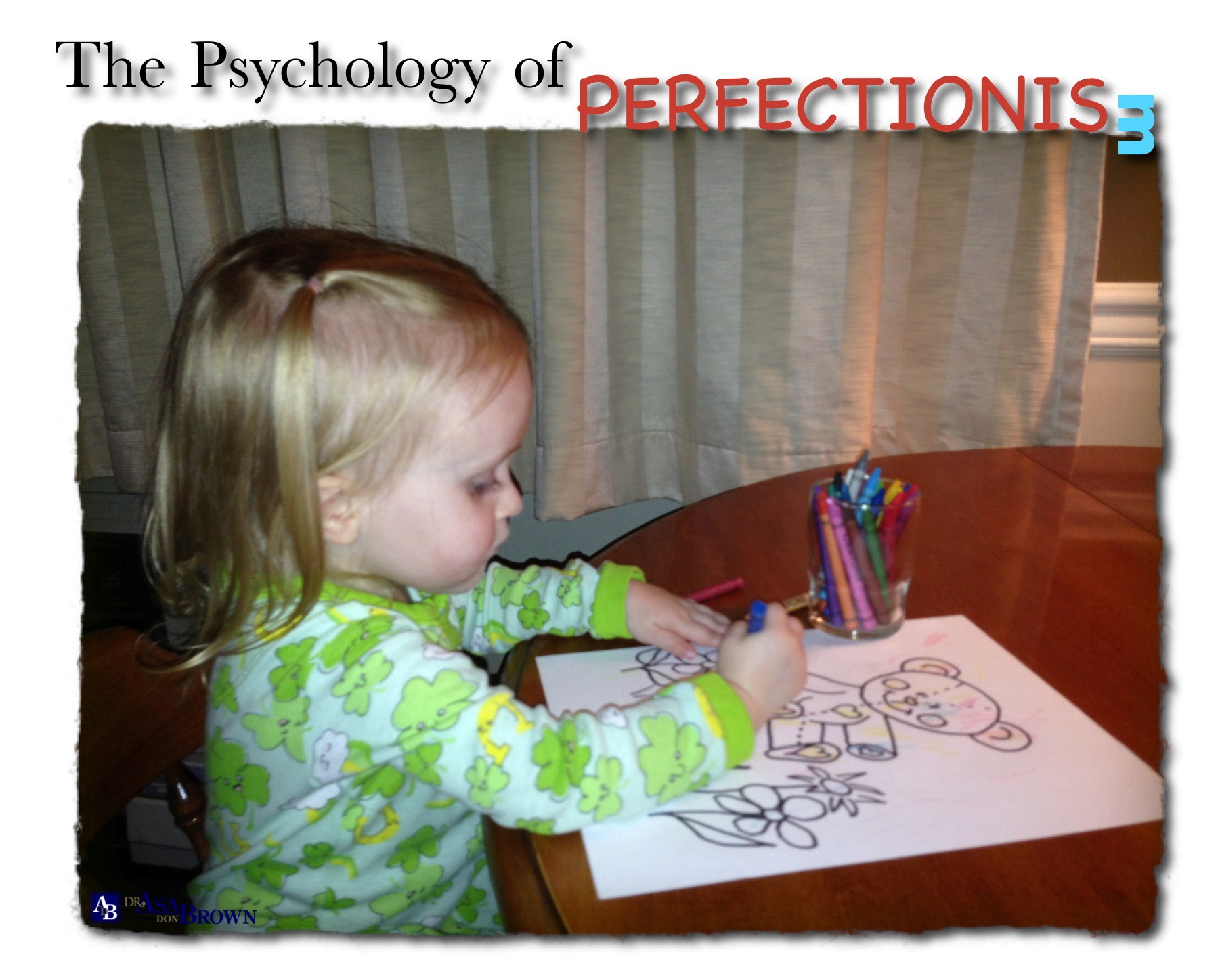
The Psychology of Perfectionism

Posted by: Asa Don Brown on October 11, 2013 3:14 pm

“I’m a perfectionist, so I can drive myself mad – and other people, too.  At the same time, I think that’s one of the reasons I’m successful.  Because I really care about what I do.”       ~ Michelle Pfeiffer

Why is it that perfectionism is considered a negative?  Are there not benefits from having a perfectionistic attitude?  According to New Oxford American Dictionary, perfectionism is “the refusal to accept any standard short of perfection.”  In reality, there a variety of influences that create perfectionism.  Perfectionism may be influenced or imposed by another.  Many times we adopt these habits, traits, characteristics, features, customs, standards, and ideological viewpoints during our youth.  In some cases, the perfectionistic way is unbeknownst to us. 

There are many different types of perfectionism:  A person may desire to prove perfectionistic if he/she has an aspiration to prove flawless in one’s pursuits, endeavors, and through his/her life ambitions.  In some cases, perfectionistic individuals have a strong urge to have even the  appearance of control.  The control maybe over one’s own personal emotional, psychological, or physical being; or it may be over another, an event, a place or an object.  The control may stem from a life that feels out of control, vulnerable, or susceptible to others.  It may have been inspired by physical, emotional, psychological or sexual abuse.  Unfortunately, negative perfectionism commonly stems from our childhood.  

Continue reading


*The views expressed by our authors are personal opinions and do not necessarily reflect the views of the CCPA

My Blogoshere Sojourn

Posted by: Linda AK Thompson on September 30, 2013 10:14 am

 Emerging Field of Psychotraumatology in Canada

I have returned from a 5 month journey venturing into the Depth Psychology Alliance (DPA); a fruitful endeavor indeed.  The impetus remains inherent in those unbound, existential moments experienced personally within healing moments, and professionally during critical occasions and intimate therapeutic conversational levels, facilitating titrations – the traversing of mystical spaces inherent in the spectrum of the trauma/healing vortices, referred to in previous articles.

Virtually connecting with the innate and immaterial is good medicine for one’s soul for we need good vibrations to release trauma anomaly inherent in Complex PTSD profiles and difficulties with self-regulating stressors and deep-seated triggers – the picking and mining away of one’s survival earned trauma amnesic barriers (TAB), and the re-opening, revisiting of one’s old trauma memories/wounds contained within.

That is one long thoughtful sentence and thoughtfulness is essential for survivors of trauma, especially and essential from one’s helping professionals who will not know what their clients have contained within.  There are similarities; however there are vast differences with unique individual expressions, treatment responses and need for creating community care plans and teams which client’s need to be able to self-direct or as I call it – be the captain of their own healing ship/journey.

Continue reading


*The views expressed by our authors are personal opinions and do not necessarily reflect the views of the CCPA

End of Summer

Posted by: Priya Senroy on September 30, 2013 10:06 am

Hello Counsellors….

Hope you had great summer… for me… It was a time for letting o as well as acquiring new information to sustain me during the Canadian Winter Hibernation….. I had the opportunity to attend events and workshops through-out the summer and as part of my work, I attended a settlement service event here in Toronto which was attended by service providers from as far as PEI and Manitoba.

We as counselors working with diversity are always looking for best practices that we can incorporate into our exiting work and also trying not to reinvent the wheel. In one such chance encounter, I came across the Aurora Therapy Program for Immigrant and Refugee Families, who are based in Winnipeg, Manitoba and are also featured in the Citizenship and Immigration Canada website. I got to meet eh ‘therapists;’ and was enriched by the work that they are doing.  Its a new program and this is how they describe w=the need for its existence in their website:  The new Therapy Program for Immigrant and Refugee Families came about as a result of our efforts to become more involved with our surrounding community. We recognized that there was a large part of this community that we had not been able to serve due to various obstacles, including language, cultural differences, and the stigma many members of refugee and immigrant communities associate with mental health issues (Aurora Family Therapy Centre).

I get the opportunity to work with immigrants and refugees and have often been approached to support issues like Your Family Support Counsellor provides support for:

Continue reading


*The views expressed by our authors are personal opinions and do not necessarily reflect the views of the CCPA

Hello….

Posted by: Priya Senroy on September 30, 2013 10:04 am

Fall is finally around the corner and I hope you have had a good summer-mine was busy working and learning  and hurling myself into new knowledge—one of which I would like to share today…. its called Acceptance and Commitment Therapy or ACT….for those who might not have heard about it.  

I knew nothing of ACT until summer this year, when I attended a workshop called the  ‘ACT for Anxiety’. It sought to apply the core principles of ACT to those of us afflicted with an anxiety disorder. So Acceptance and Commitment Therapy (ACT) is a behavioral therapy all about creating a rich, full and meaningful life whilst accepting the pain that inevitably goes with it. Officially, when written as ACT, the ACT is said as the word “act” and not as the initials A-C-T. From the “third generation” of behavior therapies, ACT is a contextual approach challenging clients to accept their thoughts and feelings and still commit to change(Dewane,C, 2008)

ACT in a Nutshell… is

The core principle of ACT can be described by using a simple (and unsurprising) acronym:

Continue reading


*The views expressed by our authors are personal opinions and do not necessarily reflect the views of the CCPA

Come to the Dark Side – We Have Apps

Posted by: Dawn Schell on September 30, 2013 10:01 am

I have been spending a lot of time lately with tweens and teens learning about how they are using all sorts of social media.  I’ve heard stories of connection and of cyberbullying.  Stories about rumours and damage to reputations.   I have also witnessed how quickly something on social media can escalate into a real-life crisis.  

One such crisis in recent weeks originated via Snapchat.  Once the crisis was dealt with I decided to research this ‘new to me’ app.   I was surprised at how popular it is.   As of September 21st Snapchat users were sending 350 million photos daily.

What is it? A mobile app for “real-time picture chatting”.  Theoretically, Snapchat allows users to send a photo that then disappears after 1 -10 seconds.  The creators of this app refer to it as “a new way to share moments with friends. Snap an ugly selfie (a self-portrait) or a video, add a caption, and send it to a friend (or maybe a few). They’ll receive it, laugh, and then the snap disappears…”

Sounds like a reasonable, fun idea. Yet it raises some red flags for me.

Continue reading


*The views expressed by our authors are personal opinions and do not necessarily reflect the views of the CCPA