The Counsellor in a Reflective Mood – Thoughts on the CCPA Conference

Posted by: Dawn Schell on June 15, 2012 1:39 pm

It was Sunday morning of the conference, and I was in  Roberta Neault’s session on “Counsellors’ Career Journeys”. Roberta said [hoping I’m recalling accurately], “I encourage you all to set aside time on Monday to reflect on what you learned at this conference”. After all that was the theme – Reflecting on self and practice. And the past few days had given me much to reflect on through those who spoke in both the concurrent and plenary sessions and those I met and talked with inbetween sessions – new inspiring ideas, fresh perspectives, challenges, affirmations, salutary reminders to be purposeful in my work and intriguing possibilities to explore.

I resolved to do exactly what Roberta suggested.  Set aside time on Monday to reflect on the conference. And I did.  I sat down, reviewed my notes from all the sessions and gathered up my swirling thoughts.  This conference was unique in my experience in that I feel it spoke to my mind, heart and spirit.  Thank you again to the CCPA and the organizing committee.

Here’s some of what stood out to me.

Continue reading


*The views expressed by our authors are personal opinions and do not necessarily reflect the views of the CCPA
“Today We Leave These Halls As Adults”

Posted by: John Stewart on May 22, 2012 4:33 pm

       John and I have been talking about different theories regarding how identity is formed. In the social sciences identity can have many meanings including references to the idiosyncratic things that make a person unique, the mental image one has of self, and the mental capacity for self-refection and self-awareness. Mark Savickas defines it is “an individual’s understanding of self in society” (Savickas, 2011, p.17).  Savickas’ explanation of how the identity forms, considered here a few weeks ago, is dependent on how we construct and understand the experiences of our youth in the process of creating a narrative.  The difficulty with this, from the perspective of a practitioner looking for strategies to foster effective identity formation, is that, to a great extent we don’t control the number or variety of experiences of our youth.  In our last entry John described a structural stage approach to identity formation that focuses on intrapsychic structures that change over time, and help one to have an increasingly complex way of making sense of experiences. With this theory, even if we could control the number and variety of experiences the stages appear to be more deterministic and one is subject to the changes that come with the identified stages.  I think that the quotation in the title of this blog, taken from the concluding thoughts of the valedictory speech at a recent convocation ceremony that John and I attended, straddles the line between identity being the product of, on one hand, the understanding and self-awareness we have our experiences and, on the other hand, the natural progression through identifiable stages of development.

Continue reading


*The views expressed by our authors are personal opinions and do not necessarily reflect the views of the CCPA

How to Create the Stillness Necessary for the Spiritual Dove to Descend

Posted by: Hailing Huang on May 2, 2012 2:47 pm

Spring is the season of Easter, remembering the death and resurrection of Jesus. It is also the time of Lent, many people choose this special time to be baptized. When Jesus was baptized by John, a dove landed on his shoulder; it states in Matthew 2: 16:  the spirit of God descending like a dove and alighting on him.  This description leads me to think, if we regard the dove as spirituality, then how do we prepare ourselves to invite the Spiritual Dove to land on our shoulder?

In a practical way, in order for dove to land, the atmosphere needs to be calm, and safe. If we apply this tangible rule to understand the intangible rule of attracting the Spiritual Dove, it may indicate that we need to be calm, still, feel safe and make ourselves ready to invite the dove to land.

Then the next question is, how do we make ourselves ready? We may have more conveniences such as transportation and communication than our parent’s generation because of our aggressive and rapidly progressing technologies. But these conveniences also have the counter products which is the requests of multitasks and multi-roles.

Continue reading


*The views expressed by our authors are personal opinions and do not necessarily reflect the views of the CCPA

When is a Good Time to Write the Next Chapter in Your Career and Life Story?

Posted by: Mark Franklin on April 16, 2012 10:21 am

It’s spring and the cycles of nature show us it’s a time for renewal. The natural world is reviving, flowers blossom, trees bud, and your career and life can be aligned with this powerful cycle. Check out this short video linking career and life choices to spring’s inspiration. Easter celebrates the renewal STORY of resurrection, which happened when Jesus was 33 years old. Some call this the JESUS YEAR a time to clarify what you want in your career and life. Here’s the thinking: If Jesus could be credited for all that was accomplished in his life by 33, then anyone approaching that age might want to assess where they’re at and what they want to do next. But how to answer, “What next?” Sidestep those silly career tests, and instead draw on the power of YOUR STORY – it holds all the clues you need.

What do you think about the Jesus Year? How are your being inspired this spring? Leave a comment!


*The views expressed by our authors are personal opinions and do not necessarily reflect the views of the CCPA

What Can You Learn From the Edge of Town to Enrich Your Career and Life?

Posted by: Mark Franklin on March 6, 2012 3:23 pm

Interesting people, unusual sights, sounds and smells, and serendipitous experiences show up in the transitional area between city and countryside. See for yourself in this short video we made last week on the outskirts of a town in Nicaragua, when we were leading the CareerCycles ‘enriching lives and careers trip.’

Metaphorically, the edge of town is linked with career and life changes:

  • City / TRANSITIONAL AREA / Countyside
  • Comfort zone / LEARNING ZONE / Anxiety zone
  • Ending, Losing, Letting go / NEUTRAL ZONE / New beginning

For those of us who live in cities, as we leave town, we often feel a sense of relaxation and relief from the busy-ness of our lives to the calming effect of the countryside.

Continue reading


*The views expressed by our authors are personal opinions and do not necessarily reflect the views of the CCPA

Is Everyone Hypnotizable?

Posted by: Curtis Stevens on February 28, 2012 10:35 am

I’ve been asked if everyone is hypnotizable.  My answer to them is never a straight yes or no.  I truly believe that everyone is hypnotizable.  There are differences between clients and how well or how quickly they respond.  I believe there is a great deal of preparation one can do to increase the success of the session.  I have had two clients that struggled with getting into trance.  As a therapist, I often fall into the trap of…”if it works well, I did a good job… if it didn’t, it must be something the client did.”  Own my successes, blame the failures…. No, wait… that’s not true.

Anyway.  One male client just couldn’t go into a deep enough trance.  He responded well to relaxation, but couldn’t get any deeper.  My office building was particularly louder that day and my client simply did not respond to the suggestion of letting the sounds around him bring him deeper into trance (as opposed to not paying attention to them… it’s really hard to not pay attention to something… my favorite, and you can try this right now… is to not pay attention to the thought of a blue horse… what’s the first thing that popped into your head?).  Sometimes it just doesn’t work.  The other situation was with a lady that, for lack of a better way to put it, was just too high strung.  She could not (and I truly think this is the deciding factor contributing to successful hypnosis) get past the concept of locus of control.  Most people struggle with hypnosis because they simply do not want to give their power to someone else, and in their mind they truly believe they are giving their power up to me.  Those have been the only two so far.  Not bad.

Continue reading


*The views expressed by our authors are personal opinions and do not necessarily reflect the views of the CCPA

Clinical Hypnosis and Pain Management

Posted by: Curtis Stevens on February 15, 2012 10:00 am

Pain in the Brain

Where is pain felt?  Where is it registered?  Where is it really experienced?  Pain seems to be experienced solely in the spot where it was inflicted.  We burn our finger, we feel pain in our finger.  I believe there is enough scientific “knowledge” out there to indicate that when pain is triggered in an area, the signal is sent through nerves to the brain, it is registered in the brain and a reactionary message is sent back through the same nerve system to the triggered area.  That would explain why, in simpler terms, a child does not notice the pain of a scratched knee while they are still playing; however, once they notice the injury, or someone points it out for them, the child feels the immense pain, begins to wail uncontrollably until they receive a bandage and a kiss.  It may also explain why a guy (such as myself) doing a chore from the “honey-do” list doesn’t notice the scratch on his hand until his darling wife draws attention to it; however, once he notice the injury, the guy feels the immense pain, wails uncontrollably until he receives a bandage and a kiss.  The brain was previously occupied by something more important to register the pain of the injury.  It was there, but the concentration of the involved act was more intense than the pain signal.  It wasn’t until other systems became involved that the brain had to notice.  The visual input (seeing the scratch), the emotional input (the reaction of others), the change in focus (the activity being stopped), all play an important role in noticing the pain.  With chronic pain, there is also the mental anguish; the emotional suffering (feelings of helplessness, the worry that it will never end, etc), the lack of sleep, the decreased physical energy that makes up  vast majority of the pain experience.

Continue reading


*The views expressed by our authors are personal opinions and do not necessarily reflect the views of the CCPA

Counsellor’s Taboo

Posted by: Curtis Stevens on February 8, 2012 11:31 am

The views expressed in these blog entries are my own.  They are probably not completely endorsed by the Canadian Counselling and Psychotherapy Association, although they should be…

I’m sparked to write this entry partly by the book I’ve been attempting to write (check back on earlier blogs) and by my attempts to start my own private practice.  I’ve worked for the Alberta Government for some time now and was dismayed but not surprised to discover that even though I am an ethical practitioner and specifically trained to do clinical hypnosis, I was not allowed to use these particular skills with my clients.  I am also not completely surprised that a training that I took with the  police and social workers regarding  interviewing child sexual abuse involved relaxation and guided imagery to help people recall details of events, but they, too, were not allowed to use the word hypnosis.  What does surprise me is that, as I pursue EAP providers to supplement my private practice, there are still bodies that are involved with the direct counselling of clients that do not accept or support the use of clinical hypnosis with clients.  I get the general public being a little more on guard when I mention that I do hypnosis as part of my practice… we wouldn’t want to be tricked into clucking like a chicken, but major service providers?  Fear and avoidance can only mean one thing… lack of knowledge.  We fear what we don’t know, and most of us; even trained head shrinkers, don’t know hypnosis.

Continue reading


*The views expressed by our authors are personal opinions and do not necessarily reflect the views of the CCPA

Under the Influence of Terry O’Reilly: The Courage to Speak Up; The Beautiful Letter

Posted by: Mark Franklin on February 8, 2012 11:26 am

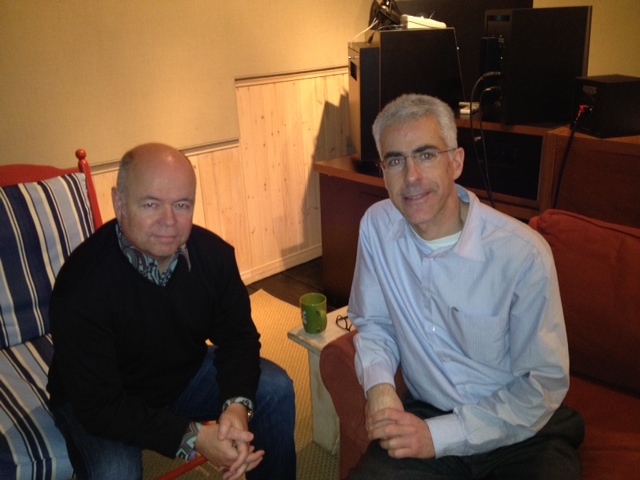
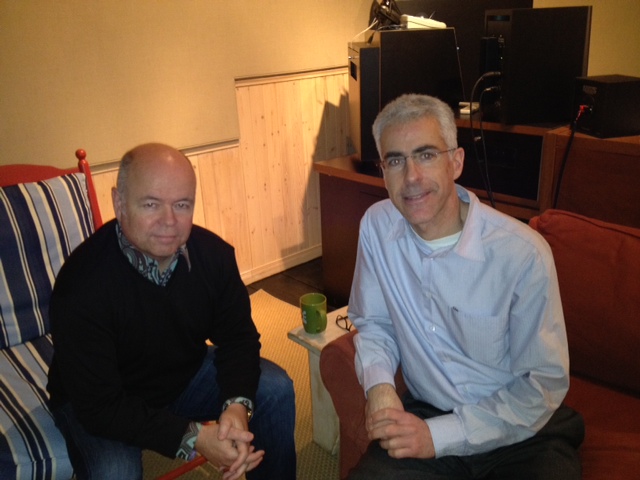
Award winning advertising and marketing expert, Terry O’Reilly, author of “The Age of Persuasion: How Marketing Ate Our Culture,” and host of “Under the Influence” on national CBC radio joined me on Career Buzz radio recently (pictured together) for a feature conversation. In this exciting hour of radio, Terry shared ideas and stories about:

  • What you can do better to communicate your own story and harness “The Power Of Storytelling”
  • Turning points in his own career story
  • What the career field can learn to shape up its image and market itself better

A key turning point: “I had five years under my belt and I was still considered green. One day I put my hand up in [an important client] meeting and said, ‘I feel differently, and let me take you though my thinking.’ The creative director looked at me and said, ‘I agree.’ And the whole room switched around to my point of view. In that moment, my career changed. I was given incredible opportunities by the creative director. It was the first time I had the courage to listen to my inner voice.”

Continue reading


*The views expressed by our authors are personal opinions and do not necessarily reflect the views of the CCPA

When Clients Die: To Cry, or Not to Cry?

Posted by: Siri Brown on January 20, 2012 3:41 pm

The recent holidays reminded me of a time when I returned home from a two week vacation refreshed, rested, and rejuvenated.  Work started at 8:30am; at 8:36am a colleague is in my office, face sombre, eyes welled, asking, “Have you heard?”   A client, survivor of a series of unfortunate hardships, has died in a tragic incident.  My colleague looks at me expectantly, arms hovering, silently offering the need for a hug, and I am flummoxed.  The time, now 8:39am, brings another colleague into view, ready to share the same sad news.  I see both of their expectant faces, waiting for the “typical” response – but though I am saddened by the news (the client was a delightful, generous, unique human being), I am not emotionally devastated, as seems to be expected.  It begs the question:  to cry, or not to cry?

Continue reading


*The views expressed by our authors are personal opinions and do not necessarily reflect the views of the CCPA