Author Archives: Asa Don Brown

The Benefits of Friendship on a Relationship

Posted by: Asa Don Brown on May 6, 2013 1:47 pm

“It is not a lack of love, but a lack of friendship that makes unhappy marriages.”    ~ Friedrich Nietzsche

The key to a healthy relationship is the purposeful development of a healthy friendship.  Couples who have achieved the merits of friendship, have strived to develop their relationship beyond the confines the marriage. 

“Excluding some very good family relationships, the only other close adult relationships we have besides marriage are with our long-term friends.  What is extremely interesting about these two affiliations is that marriage is the least successful adult relationship, whereas long-term friendships are by far the most successful.” (Glasser & Glasser, 2000, p. 17)

Continue reading


*The views expressed by our authors are personal opinions and do not necessarily reflect the views of the CCPA
Forgiveness

Posted by: Asa Don Brown on April 15, 2013 3:36 pm

“Forgiveness is not an occasional act; it is a permanent attitude.”
                                                                                     ~ Martin Luther King, Jr.

Forgiveness is good, forgiveness is necessary, forgiveness stimulates the positive perspectives of the mind.  When we retain hate, anger, displeasure, or hostility towards another; we have allowed the negative to absorb into our mind, body, and spirit.  It is forgiveness that empty’s the soul, mind, and the body of the filth that we carry. 

Forgiveness allows the pathways of our minds to flow smoothly.  We are blocking the pathways of nutrition, healthy, and happiness.  Even if, we have the “right” to hold resentment towards another; any negative thought, deed, action or reaction only affects our person.  When we hold contempt for another person, we are essentially continuing the harm that was done by another. 

FORGIVENESS

“What we don’t recognize is that holding onto resentment is like holding onto your breath.  You’ll soon start to suffocate.”  Deepak Chopra

The importance of forgiveness is that it reminds us that we can feel better, be better, and achieve more.  Forgiveness’s importance is unmistakable; real forgiveness can alter your perceptions and worldview.  If your worldview and perceptions have been based on the negative, then forgiveness refocuses your mindset onto the positive perspectives of life.

Continue reading


*The views expressed by our authors are personal opinions and do not necessarily reflect the views of the CCPA

Toxic Relationships

Posted by: Asa Don Brown on March 25, 2013 1:04 pm

A toxic relationship is any relationship that is unfavorable to you or others.  The foundations of any relationship, healthy or not, are most commonly established upon mutual admiration and respect, but can in time become remarkably unhealthy.  It is the poisonous atmosphere of the relationship that distinguishes a merely bad or troublesome relationship from a toxic relationship.   Toxic relationships are interfering with those involved from living a productive and healthy life. 

Toxic relationships can be caused by two polar opposite personality types.  The toxicity is caused by the incompatibility of the persons involved in the relationship.  In some cases, there is no one necessarily to blame for the toxicity, rather the toxicity is caused by the inability to commune and establish healthy boundaries, conversations, and communication. 

Not all toxic relationships are caused by two unhealthy people.  It does not always take two to tango. In some cases, unhealthy individuals target and prey upon others for their own personal needs and gratification.  It is a slanted desire for a relationship.  The individual who is preying is seeking to emotionally and psychologically dehydrate others, removing whatever is possible for their own greedy benefits.  Such individuals have a manipulative style, and will frequently triangulate and maneuver their way into any relationship that they perceive as beneficial. 

People who are toxic are rarely aware of their own toxicity.  Toxic personalities have an unawareness of their own personality type.  They are too self-absorbed and preoccupied with their own emotions, interests, needs, and goals to be aware of the needs, goals, interests and emotions of others. 

Continue reading


*The views expressed by our authors are personal opinions and do not necessarily reflect the views of the CCPA

The Effects of Pornography

Posted by: Asa Don Brown on March 7, 2013 4:23 pm

The effects of porn addiction are undeniable.  Those who suffer from such an addiction, frequently struggle with a desire to part from their addictive issue.  The nature of porn addiction infiltrates the mind by gradually permeating the very essence of the individual.  The individual becomes so entangled by the web of such an addiction, that every waking moment is about fulfilling the addiction.  In many cases porn addicts frequently feel that the pornography has so entrenched their mind, that they begin carrying on a surreptitious like affair with their pornographic habit.  

WHAT IS THE CAUSATION OF PORN ADDICTIONS? 

There is no absolute cause for porn addiction.  Porn addiction can occur because of a variety of issues.  A child who runs across his father’s collection of pornography, may develop a habitual need for pornography.  A man or woman whose partner denies them continuously, their sexual desires or advancements, may find pornography as a comfortable replacement.   

“A 50-year old married physician views internet pornography for hours at home, masturbating five to seven times a day, then begins surfing porn sites at the office… A woman spends four to six hours a day in internet chat rooms and having cybersex… A married couple view pornographic movies together as part of their loving relationship, but the husband starts spending more time watching…” (SFGate, 2011, Online) 

There is no one single causation for porn or sexual addictions, rather there a multiple number of causations that could be the catalyst for such sexual deviance.  Pornographic and sexual addictions frequently stem from childhood related abuses, sexual indiscretions, psychological and psychiatric disorders, familial violence and abuse, relationship violence and abuse, traumas incurred in childhood or as an adult, an opportunity for sexual or pornographic imagery, relationship problems with a spouse, or compulsive needs.  

Continue reading


*The views expressed by our authors are personal opinions and do not necessarily reflect the views of the CCPA

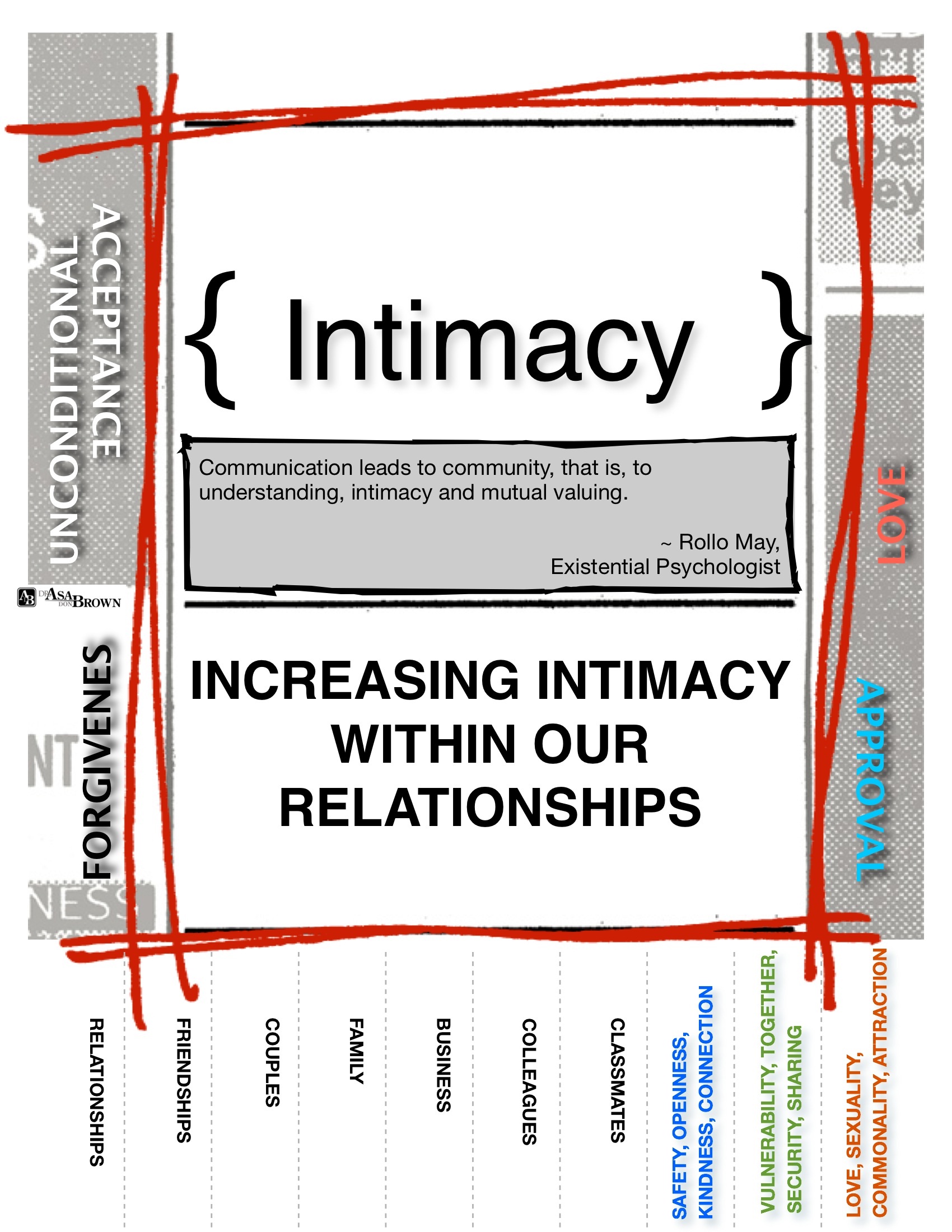
Increasing Intimacy Within Our Relationships

Posted by: Asa Don Brown on February 15, 2013 3:45 pm

When we hear the word intimacy, all sorts of images maybe conjured up in our minds.  The word intimacy may stimulate a visual image of sexual encounters, or it may project an idea of deeply fostered relationships, but the truth is, intimacy can occur on the most primitive of levels.  Yet, the types of intimacy vary depending upon the depths of the relationship in question.

WHAT IS INTIMACY?

Intimacy is the ability to share an emotional and physical connection with another.  Such connections can occur between couples, friends, families, and within a variety of relationships.  Intimacy involves a level of cohesion that unites the very essence of our person.  It is a connection that can occur on the very basic of human emotions, conditions, and attractiveness.  

Intimacy occurs when we have a bond between ourselves and another person.  Intimacy does not have to occur on a sexual level alone, it can occur between persons who are simply seeking to be connected.  We can be intimate through our verbal and nonverbal gestures, facial expressions, touch, and through the words we choose to use. 

Again, it is important to recognize that it can occur beyond a couple’s relationship, it can occur through friendships, familial relationships and through a variety of close knit avenues and environments. 

Continue reading


*The views expressed by our authors are personal opinions and do not necessarily reflect the views of the CCPA

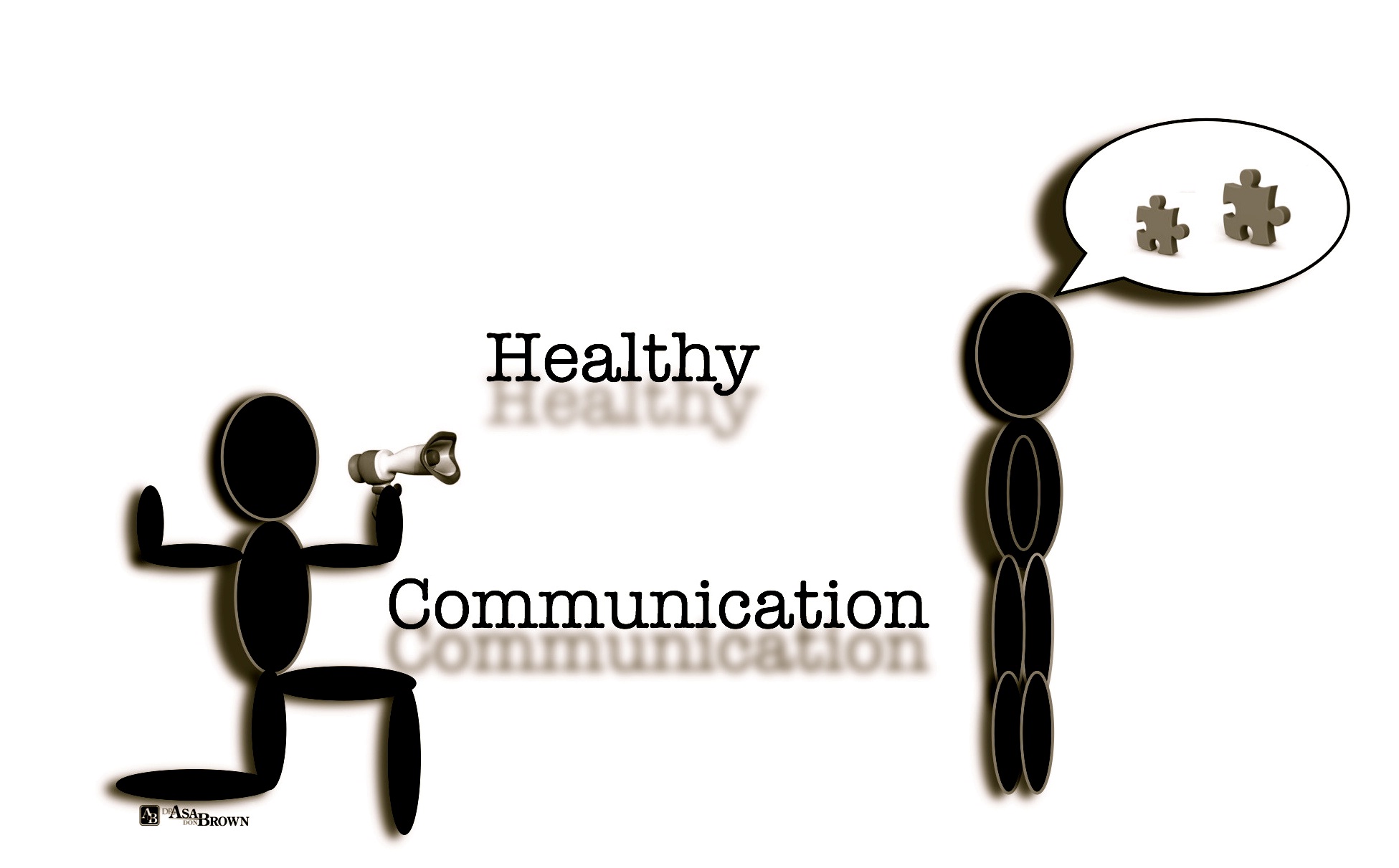
Healthy Communication

Posted by: Asa Don Brown on January 23, 2013 4:23 pm

Relationships are an art form created by two individuals who have a similar or complimentary vision, passion, and ambition.  Rarely has a relationship developed without its growth pains.  Similar to the development of the human body; a relationship is affected by the nurturing it receives.  If a relationship lacks in nutrition it will not have a healthy development. Unhealthy relationships are most commonly lacking in the most essential of ingredient: healthy communication. 

What is communication? It is the ability to convey or share emotions, feelings, sentiments, and desires.  Communication can be sent or received through verbal or nonverbal cues.  Healthy communication is the ability to communicate without offering hateful or undesirable responses.  While not all communication will be received with a welcoming spirit; healthy communication acknowledges that we have a right to “agree to disagree”.  

Continue reading


*The views expressed by our authors are personal opinions and do not necessarily reflect the views of the CCPA

Relationships

Posted by: Asa Don Brown on January 14, 2013 2:27 pm

Clinicians rarely have couples enter their offices proclaiming an overwhelming fondness, admiration, and unconditional love for one another  “In Western cultures, more than 90 percent of people marry by age 50.  Healthy marriages are good for couples’ mental and physical health.  They are also good for children; growing up in a happy home protects children from mental, physical, educational and social problems.” (APA, Online, 2012)

Why are healthy marriages good? If you are in a healthy marriage, you are experiencing positive feedback, unconditional acceptance, unconditional love, unconditional approval, and the admiration of another.  You are benefiting from the positivity of that relationship.

In unhealthy marriages, you may be experiencing marital strife, conflicts, and continuous disagreements. While unhealthy marriages are not irreparable, they maybe on pathways of irreversible damage.  It is vitally important that if someone has entered an unhealthy stage in their marriage that they seek professional help to resolve their relationship conflicts.

Continue reading


*The views expressed by our authors are personal opinions and do not necessarily reflect the views of the CCPA

Sexualization of Children

Posted by: Asa Don Brown on December 14, 2012 1:59 pm

Our society has become a cesspool of sexualization and the minimization of sexualization. The aim of sexualization is typically the commercialization of product or trade.  Sexualization goes beyond the borders of Hollywood and Bollywood.  Sexualization ensues the very fabric of our human collective consciousness.  It has become acceptable to see a young girl or boy dressed in unacceptable clothing.  A societal challenge occurs when we try to define acceptable verses unacceptable.  What is appropriate clothing verses inappropriate?  Who do we choose to define what sexualization is and is not?  Who do we appoint to mandate such a form of appropriateness?  Who do we appoint the guardian of our children? Finally, is sexualization an issue or are we trying to fuel a fire that has no kindling?

SEXUALIZATION DEFINED

Defining a healthy form of sexualization verses an unhealthy form of sexualization is a difficult challenge.  “There are several components to sexualization, and these set it apart from healthy sexuality. (Negative) Sexualization occurs when 

  1. a person’s value comes only from his or her sexual appeal or behavior, to the exclusion of other characteristics;
  2. a person is held to a standard that equates physical attractiveness (narrowly defined) with being sexy;
  3. a person is sexually objectified — that is, made into a thing for others’ sexual use, rather than seen as a person with the capacity for independent action and decision making; and/or
  4. sexuality is inappropriately imposed upon a person.” (APA, 2012, Online)

What is a healthy form of sexualization?  Is there such a form?  Is all sexualization inappropriate and unbecoming of our humanity?  When we speak of a healthy sexualization, we are speaking of the awareness and clarification of one’s sex and sexuality.   “It can be hard to acknowledge that all of us, even children, are sexual beings, have sexual feelings and are curious about sex and sexuality. Children’s curiosity can lead to exploring their own and each other’s body parts by looking and touching.” (StopItNow, 2012, Online)

A child’s personal development is a part of their sexualization.  Learning who they are, why they think, do, and behave in particular ways is core to their development.  A child’s sexual development should be encouraged from a healthy perspective.   A child should never be made a symbol of an unhealthy perspective.  Children should never be forced to engage in inappropriate sexual conduct.  They should never be made to wear clothing that is risque or revealing of their youthful innocent. 

Continue reading


*The views expressed by our authors are personal opinions and do not necessarily reflect the views of the CCPA

Conversations Concerning Sex and Sexuality

Posted by: Asa Don Brown on November 28, 2012 2:56 pm

The mind of a child is a precious thing.  Parents frequently struggle with knowing when, why, and how to discuss sex and sexuality with their child.  Parents may have a wide range of questions themselves pertaining to the timing, the nature, and appropriateness of such conversations.    

  • When is it appropriate to discuss sex and sexuality with a child? 
  • Should a parent inform a child of sexual acts?  Or, should a child learn about sexual relationship on his / her own? 
  • How old should a child be when he / she learn of sexual relationships?
  • Is it ever appropriate to discuss sex with your child? 
  • Should the mother or father discuss the sex and sexuality with their child? Or both?
  • When is it not appropriate to converse about sex and sexuality?
  • Continue reading


*The views expressed by our authors are personal opinions and do not necessarily reflect the views of the CCPA

Child Favoritism

Posted by: Asa Don Brown on November 19, 2012 1:21 pm

What is favoritism? Favoritism in simple, is the intentional or unintentional preferential treatment of an individual or group of persons.  Parents who favor one child over another, are subscribing to the notion that one child is better behaved, more attractive, similar in personality to the favoring parent, or they have preferred kinship.  

Favoritism is commonly associated with a bond that develops between the child and the parent.   Moreover, the favoring parent may have a guilt, remorse, or negative emotion associated with the unfavored child.   In some cases, a detachment occurs because of some major traumatic event or a major life challenge.   Such cases can breach the bond between the parent and child.   If a child is conceived unexpectedly or without a desire, the parent may withdraw emotionally, cognitively, and physically from the child.  Children who are born with physical birth defects, psychological or psychiatric challenges, or a comorbidity of issues simultaneously, can prove burdensome to the oppositional or unattached parent.  

Favoritism is not always intentional.  Favoritism can occur when a child favors or resembles a parent whether physically or through a particular personality style.  Moreover, favoritism is not always related  to a resemblance of a parental figure, rather it is a fondness established between a parent and a child.  In some cases, if a child is too much alike the parental figure, then this too may cause a rift between the parent and child.   The parent may ultimately see qualities in the child that they dislike or distain.  The heart of the matter is such parents want ease and comfortability.  

Continue reading


*The views expressed by our authors are personal opinions and do not necessarily reflect the views of the CCPA