The Relaxation Response

Posted by: Victoria Lorient-Faibish on June 10, 2011 2:30 pm

Today I arrived home after seeing five back to back clients and I realized my nervous system was in need of some deep relaxation because when the phone rang and I just about jumped out of my skin!
And here is where we all need to walk out talk. I meditate and visualize regularly but when I miss a few days I really feel it!

There is a need to turn on the “Relaxation Response” regularly. This essentially means that the parasympathetic nervous system is turned on.  When this nervous system is on line, the body then begins to deepen the breathing, strengthen the immune system, clear the mind, release tension in the muscles and increase ease of thoughts.   The brain is signaling to the rest of the body that the war is over and it is peace time. The corresponding biochemicals begin to emit and the body starts to let down and relax.

Not all relaxation exercises work for everyone. But here is a universal one that may assist to turn on your  relaxation response.

Continue reading


*The views expressed by our authors are personal opinions and do not necessarily reflect the views of the CCPA
Presence – The Demo

Posted by: Dawn Schell on June 10, 2011 2:25 pm

In my last blog post I said I would demonstrate, in a mock client “session”, how to use the techniques – emotional bracketing, descriptive immediacy and descriptive imagery.  

Here it is…

******************

Dawn – Hello Client [smiling warmly].  It’s a lovely spring day outside.  My two office chairs are set up and waiting for us.  Please do make yourself comfortable as you read through this message.

Client – After I told you what I did last week I got scared.  It was a really difficult week for me.

Dawn – [nodding my head in understanding] What you told me last week was big.  

You had held this inside for a long time

 [feeling honoured that you shared this with me] 

Sometimes when we open up and share so much with another person we can feel….hmmm….[searching for the right words]…..

Continue reading


*The views expressed by our authors are personal opinions and do not necessarily reflect the views of the CCPA

Self-Injury: The Role of the School Counsellor

Posted by: Lori Walls on June 10, 2011 2:15 pm

I recently conducted a series of interviews for a research project where a number of the participants were adolescents. While speaking with the youth it was hard not to notice how many of these individuals presented with major scarring up and down their arms from what I assume, were repeated engagements in self-harming behaviours. This observation was the impetus for investigating the role of the school counsellor in the prevention and intervention of self-harming behaviours.  In the literature, self-harming behaviour is most often referred to as non-suicidal self-injury (NSSI) and is defined as the intentional destruction of body tissue that is not culturally sanctioned and is without conscious suicide intent. The most common forms of NSSI are reported as self-cutting, scratching, burning and hitting. North American prevalence rates for NSSI in the adolescent population range from 15-28% with the age of onset ranging between 13-15 years (Heath, Baxter, Toste, & McLouth, 2010).

Continue reading


*The views expressed by our authors are personal opinions and do not necessarily reflect the views of the CCPA

Self-Help Resources in the Counselling Context

Posted by: Debbie Grove on June 8, 2011 1:03 pm

Self-help resources come in many formats; for example, self-help books, motivational videos, on-line discussion forums, and workbooks with specific exercises. Sometimes these resources are accessed before counselling begins; in other instances, they are used in conjunction with counselling. Most often, self-help materials are self-generated, in the absence of a counsellor recommending them.

 A common question by clients who are working with a counsellor is whether or not they should continue using their self-help resources while they are engaged in the counselling process. Client-counsellor conversations about self-help resources has many benefits, such as these five: (a) identification of what aspects of the resource are helpful and why; (b) amplifying the changes that the resources are stimulating; (c) building on the momentum of client self-directedness; (d) exploration of how the resources can work in concert with counselling goals; and (e) discussion of additional resources that might be helpful.

 Bringing the resource(s) to a counselling session can facilitate goal-setting. For example, a client reading a workbook about self-esteem may have questions about which exercises would be most beneficial to the counselling goal of increased confidence in social situations. In fact, specific sections from the workbook could be used in-session for role-play exercises. This is a great way to empower and engage clients in the change process.

 While self-help resources are not for everyone, choosing to seek out and try different tools is a great way to boost confidence, sense of control, and active engagement. When you discover what works for you, over time, you can build your own resource toolkit – a helpful strategy to stay motivated and maintain change once counselling ends.

 The views expressed are mine alone and do not reflect the views of the CCPA.

Dr. Debbie Grove is a therapist working in Edmonton, Alberta. To learn more about her, visit her web site at www.learningtolive.ca


*The views expressed by our authors are personal opinions and do not necessarily reflect the views of the CCPA

Short vs Long Term Counselling

Posted by: Maritza Rodriguez on June 8, 2011 12:44 pm

The trend in the past few years has been a promotion of short term counselling. This has been highly influenced by cost. How many sessions will health insurance cover and for what problems or can I afford this treatment? Additionally, our society is increasingly fast paced and people simply do not have time to spend years in psychotherapy.

Short term therapy is often defined as 12 sessions or less. There has been a debate as to which type of counselling is more appropriate. There are many factors that the individual has to take into consideration when choosing between short and long term therapy. Two of the factors include: chronicity of problem and the extent the problem affects the person seeking help. The following questions are helpful to ask when contemplating the length of therapy. How long has this problem been affecting me? How deeply entrenched am I in negative thinking, bad habits or poor coping skills? How many aspects of my life is this negatively impacting such as work, relationships, health, etc?

Often, short term therapy is appropriate for situational problems such as stress management, conflicts at work, communication, relationship issues, parenting, etc. Twelve sessions or less provide the opportunity to set up a therapeutic relationship and interaction needed to increase awareness and follow through with permanent changes. On the other hand, if the problems are deep seated and/or engrained in the relationship, have to do with any type of abuse or are as a result of a chronic diagnosis, long term therapy will usually be more beneficial.

It is recommended that you speak with your counselor or psychotherapist before hand to get their recommendation and an accompanying explanation as to the rationale behind the decision. In the end, it is the client’s decision as to how much time and financial resources he or she can invest in themselves and solving the problem.


*The views expressed by our authors are personal opinions and do not necessarily reflect the views of the CCPA

Giving up, Giving in: The Hidden Power in Surrender

Posted by: Derrick Shirley on June 3, 2011 10:32 am

I have taken a slight detour this week. In my next post I will pick up the “Practically Yours: Self-Care Tips for Counsellors” trail and discuss spiritual health.

Recently, a few friends and I gathered in the park to enjoy the sunshine. One of my female friends was “play fighting” with an obviously stronger and larger male. Every time she attacked him, however, whether by surprise or calculated move, he overpowered her, “Okay, I give up!” she would say. Then when he was not looking, she would try again and again he would overpower her. Her frustration grew with each attempt, but she would not concede defeat.

Eventually, she turned to me and asked, “What should I do?” “Surrender,” I said. She looked at me with a puzzled look on her face and said “Okay fine, I’ll play dead,” then lay on her back and, despite the odd giggle, did not move. He seemed just as puzzled as she.

He tried a couple of gentle nudges while she lay on the ground, inviting her to re-engage. No response. I watched with curiosity to see what would happen next. After 10 seconds he became bored and walked away. She remained still. After 30 seconds he returned, offered her his hand to help her up, and then taught her self-defence moves he learned in karate. They never did return to their sparring match.

Without an adversary, there is no fight. When his force had no counterforce, he gave up. Please note, I am by no means advocating “playing dead” when confronted by potentially harmful situations – do whatever you have to do to protect yourself. I use this story, however, as an example of the potential of re-evaluating a habitually unsuccessful plan of action or mindset to achieve a different outcome.

Sailors do not fight the wind. They respect its influence. They surrender to it, make calculated adjustments, and harness its power to reach their destination. Let go of what you think you know, relinquish control, learn from outcomes, make adjustments, then set sail again toward your goals. Sometimes a sensible surrender is the most sensible move.

Surrender to your potential, rather than limitation.

Take good care,

Derrick Shirley.


*The views expressed by our authors are personal opinions and do not necessarily reflect the views of the CCPA

Can I really be a doctor?

Posted by: Jeffrey Landine on June 3, 2011 9:15 am

Most career counsellors and almost all school counselors can provide stories about having to counsel a young person who was determined to pursue a career that seemed, to the observer at least, to be outside their ability level.  Teaching courses in vocational counseling, I have, on a number of occasions, been faced with the following question from teachers who are working towards being counselors: What do I do when a student tells me that they want to be doctor and I know they don’t have the cognitive level of functioning or the grades to meet the entrance to pre-med science programs?  One of the important, and particularly interesting, dimensions of the self-system is the dimension of realism.  My colleague, John Stewart, wrote about the realism of vocational choice (Stewart, 1995), referring to it as the degree of fit between an individual’s work-related characteristics and the characteristics of the chosen work environment.  A lack of realism in vocational choice can result in aspirations towards careers that require different skills and abilities than the individual possesses and can result in frustration or shock when the reality of trying to meet the demands of the job become obvious.  Conversely, it can result in under-utilization of an individual’s skills and abilities, which can result in poor job satisfaction and a lack of productivity.  The latter situation was at one time a more common phenomenon with females (Wolfe & Betz, 1981), stemming from the tendency to aspire only to careers that have been gender stereotyped as appropriate for women.  This often resulted in women under utilizing their skills and abilities.

Continue reading


*The views expressed by our authors are personal opinions and do not necessarily reflect the views of the CCPA

To Be A Bully

Posted by: Asa Don Brown on June 1, 2011 9:46 am

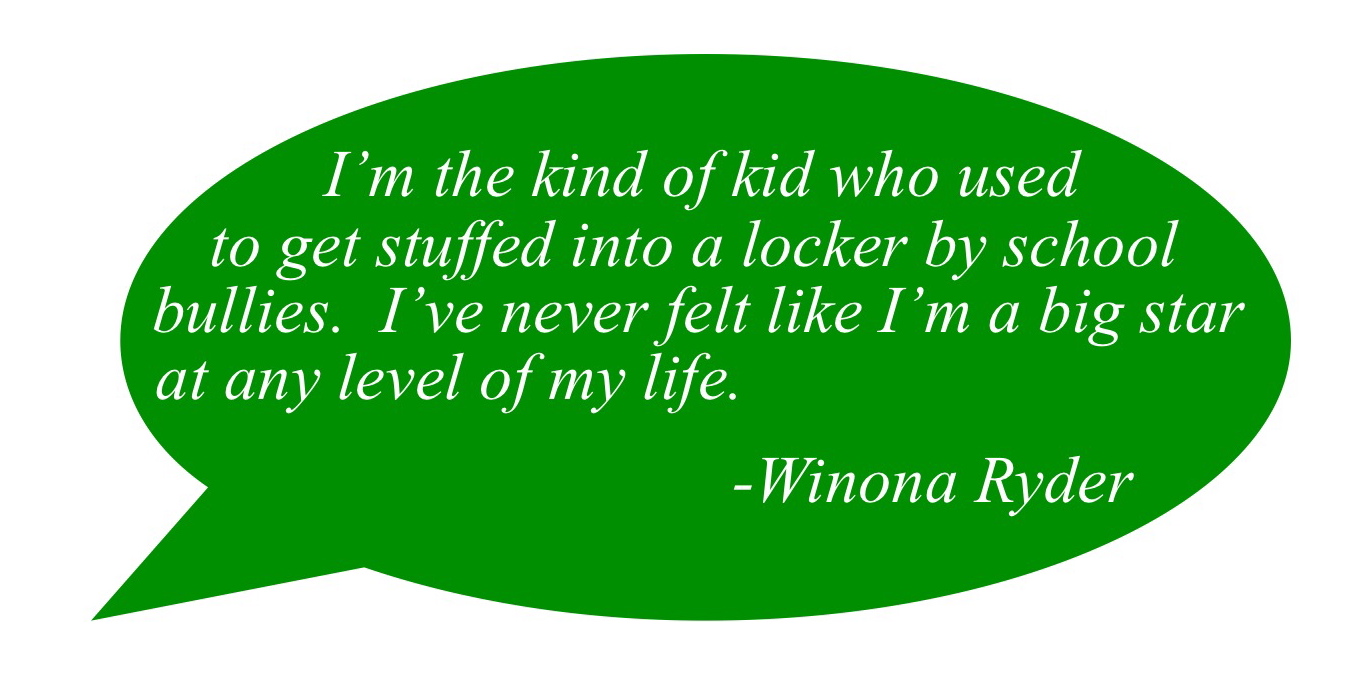
A bully is someone who feels empowered or strengthened by using force, intimidation, teasing, name calling, scare tactics, violence or threats to achieve a desire.   A bully is someone who feels superior or inferior. Their sense of superiority or inferiority can be derived from a variety of areas including their own personal IQ (intellectual quotient – whether high or low); belonging to a particular clique or organization; a religious order; their personal status or their families status in a community; economic standing; or in any other area whereby they feel a sense of superiority or inferiority in relationship to another being.

Continue reading


*The views expressed by our authors are personal opinions and do not necessarily reflect the views of the CCPA

Wow What A Conference!!

Posted by: Victoria Lorient-Faibish on May 31, 2011 10:40 am

I just got back from presenting at the CCPA 2011 national conference!  I have to tell you, it was a magnificent experience that left me so renewed and enthused!

I presented on a topic that I am passionate about. As Holistic Psychotherapist I am always mindful that we are more than our brain and our emotions. We are bodies and souls as well.

My presentation was called “Somatic Focusing, Chakra Meditation, Visualization: Tools for Trauma Unwinding.”  So interesting for me to present this material to my peers.  I am used to presenting to the general public or to different professionals like nutritionists. But when it is your own peer group it can feel a tad intimidating!  Especially since my main message was that when working with trauma, the talking head just does not do it. That is, when we experience trauma our talking centre shuts down. So when addressing trauma there is evidence that supports the notion that the best way to tackle trauma is through a very slow process of visuals, body talk, sensing into the body and closed eyes work. This way the reptilian brain, where we registered the trauma memory and our most primitive brain area is communicated with more effectively.

I also demonstrated a technique called Somatic Focusing that originated from Eugene Gendlin’s work and Peter Levine’s work on trauma. Both speak of trauma unwinding and refer to the trauma being held and frozen in the nervous system as opposed to in the story or the event.

All in all the experience of being at the conference has been a professional highlight for me. The networking and trading of ideas has been so invigorating and inspiring. The different seminars were of such a high caliber that it made me realize how special it is to be accepted to present at one these conferences.

Being therapists, usually means we are alone with our clients all day and we cannot talk to anyone about our different specific success and dilemmas so that we do not violate privacy or ethics. Being at a conference of peers that understand this and live this,  is something that I will always want and need more of.

So self care for the counsellor includes attending events that are networking and sharing based so that loneliness and isolation can be lessened.


*The views expressed by our authors are personal opinions and do not necessarily reflect the views of the CCPA

Showing Up On The Page

Posted by: Dawn Schell on May 30, 2011 10:12 am

Hello [waving a hand in greeting].  Welcome back!  In my last post I said I would be talking about how to convey “presence” throughout an online counselling session.  So – let’s see [thinking out loud]. I’ll tell you about three important techniques I have learned and show you some examples.  I invite you to make yourself comfortable. Ready?  Let’s get to work [rolling up my sleeves].

When I talk about online counselling a common response is “non-verbals are such a big part of our communication. How do you deal with that? Isn’t it easy to misunderstand each other?”  One counsellor said that she thought online counselling would be “cold and clinical”, with no way to show warmth, empathy or humanness.

I understand the concerns.  Text-only can be challenging. However, there are ways to address the lack of tone of voice and non-verbals in text-based counselling work.[1] Lawrence Murphy and Dan Mitchell of Therapy Online have developed techniques such as Emotional Bracketing, Descriptive Immediacy and Descriptive Imagery (amongst others).

The point in using techniques such as these is to: bring the client into the room with you, create an immediacy of experience, assist them to understand or ‘see’ the non-verbals (i.e. thoughts, feelings, tone of voice), minimize the chance they will misinterpret what is said, and give them an opportunity to ensure they have been ‘heard’ correctly.  Most importantly, these techniques are aimed at deepening the therapeutic connection and engendering change.

Continue reading


*The views expressed by our authors are personal opinions and do not necessarily reflect the views of the CCPA