The Power of Parental Acceptance

Posted by: Anna Coutts on March 18, 2015 12:00 pm

I recently re-read the award-winning book The Help. While the book carries many important messages, there is one message in particular that really stood out for me. It was the message about the importance of acceptance. I was struck by just how determined the main character Aibileen is to make sure the child she nannies grows up feeling good about herself. In order to make sure this happened, she tells the child daily she is kind, smart and important. Aibileen reflects on how she’s learned over the years the value of giving children messages of love and acceptance, as she has seen how too many pushes for change can devastate a child’s sense of self. It made me realize how powerful feeling accepted by a parent can be for a child.dualism-597093_640
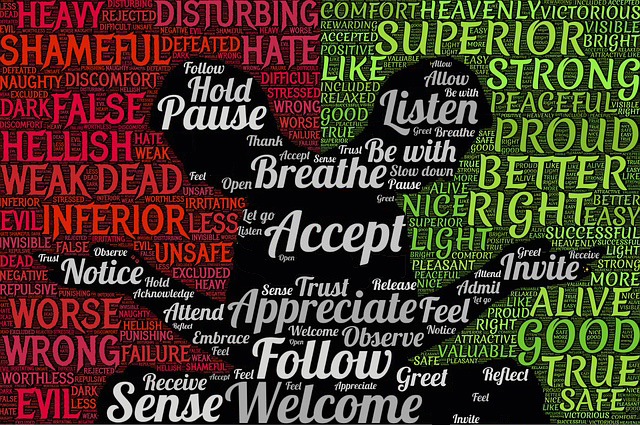
Every parent wants the best for their child. They want them to be happy, healthy and successful. Most parents will bend over backwards trying to give a good life to their child. Unfortunately, sometimes in an effort to make things better, we inadvertently make things more difficult. I see it all the time – parents pushing their kids to excel at school or sports, convinced that pushing them will give them a prosperous life. They will fight tooth and nail with teachers to get their kids out of difficult situations and to protect their kids from perceived harm. They fear the emotional devastation that will be caused if their child doesn’t go to the best school or have the best friends or make the best team. They push for change because they believe it is what will give their child everything they want.

No one can fault them for their good intentions. They are trying to do something wonderful for someone they love. The problem is this constant push for the best often causes us to forget the power of accepting someone as they are now. Unintentionally, the message that is often sent along with the strive for change is that who you are at the moment isn’t good enough. This is of course not at all what parents intend. But unfortunately, it is often the impact.

Continue reading


*The views expressed by our authors are personal opinions and do not necessarily reflect the views of the CCPA

It’s Brain Awareness Week!

Posted by: CC PA on March 16, 2015 2:52 pm

“In the past twenty years, neuroscience and psychotherapy research has increased our knowledge of how and why people change and the reasons individuals may ‘get stuck’ in negative patterns of behaviour. This new brain awareness allows for innovative ways to understand interpersonal relationships, emotional memories, and strategies for mental health and wellness,” said CCPA President Blythe Shepard.  “It simultaneously offers new hope for recovery and stabilization of mental illnesses.  The brain can change — it is not fixed. The brain responds to external environmental events and actions undertaken by the individual. This means that counselling and psychotherapy can also build new brain networks as we actively listen to our clients, show empathic understanding, and build upon and recognize clients’ strengths.”

CCPA hosts a public website “Talking Helps” (www.talkingcanhelp.ca), which facilitates open dialogue and provides a place where members of the public can find authoritative information about the benefits of counselling in ameliorating a variety of challenging life situations. This website also provides a directory to Canadian Certified Counsellors by geographic location and specialty. You can also visit www.ccpa-accp.ca, to access this directory and search for a Canadian Certified Counsellor in your region.

Read more at: http://www.ccpa-accp.ca/en/newsevents/newsreleases/details.php?id=125.


*The views expressed by our authors are personal opinions and do not necessarily reflect the views of the CCPA

Canada’s E-Mental Health Status Update

Posted by: Dawn Schell on March 16, 2015 12:44 pm

Last year the Mental Health Commission of Canada (MHCC) published a briefing document on “E-Mental Health in Canada”. It is a worthwhile read. You can check it out here – MHCC E-Mental Health briefing

The aim of this document is to “describe e-Mental health in Canada and to outline the potential that technology has in transforming the delivery of mental health services.”  This briefing paper is intended to inform practitioners, policy makers, funders, academics, researchers and those who develop e-Mental health technologies. The MHCC wanted to highlight “…tremendous possibilities for new technology in promoting mental health and preventing mental health problems.”

keyboard-621830_640The definition of e-Mental health? The MHCC defines it as “…mental health services and information delivered or enhanced through the Internet and related technologies” which includes “…telephone, videoconferencing, web-based interventions, interventions using mobile devices, patient monitoring sensors, social media, virtual reality and gaming.” I think that about covers it!  

In thirty-six easily accessible pages the MHCC provides us with an excellent snapshot of the state of e-Mental health in Canada. It’s interesting to see just how far we have come in the past few years in this regard.

Continue reading


*The views expressed by our authors are personal opinions and do not necessarily reflect the views of the CCPA
Be a Lifeguard, Not a Lifesaver: The Benefits of Avoiding Rescuing Behaviours

Posted by: Anna Coutts on February 24, 2015 3:31 pm

It’s hard to not be a rescuer. Very few parents, therapists or generally empathetic people I know can stand idly by and watch someone they love drowning in emotional pain, getting choked by waves of sadness, anxiety or shame. It’s not to say that rescuing is a bad thing- saving someone from a painful struggle is absolutely necessary sometimes.

Unfortunately, however, it’s easy to get trapped in a rescuer role that eventually puts both of you at risk. I see parents getting caught in this trap all the time in my work with youth dealing with complex mental health issues. Parents witness their child’s emotional turmoil and bend over backwards to find a way to dive in and save them from suffering. Who can blame them? No one wants to see their child in pain and every parent wants to protect their child.

Balancing Stones - 36428104The problem with rescuing is that while it provides immediate relief, it doesn’t yield long-term results. It dis-empowers the person being rescued and they never learn how to swim. Instead, you get caught in an infinite loop, as they become reliant on you to rescue them over and over again. Even the healthiest lifesaver, the strongest swimmer, can only pull someone safely to shore so many times before they too become exhausted and are unable to keep their head above water. Not only can this lead the person rescuing to struggle to stay afloat themselves, it can breed resentment. How many times can you rescue someone before you get frustrated with them for always jumping in? It can also stir up negative feelings for the person being rescued. They may begin to see themselves as a helpless victim and feel ashamed or angry that they always need someone to help them get to shore.

Continue reading


*The views expressed by our authors are personal opinions and do not necessarily reflect the views of the CCPA

The Art of Un-Goals – Embracing Cultural Perspectives While Setting Goals

Posted by: Priya Senroy on January 19, 2015 8:29 am

I always grapple with goal setting and while have to do that continuously in my work, for my kids as well teach about it. I have been having a conversation with a colleague who said that he doesn’t set goals, he has no past and no future but the present only and he is happy going with the flow. I found that concept somewhat unsettling as suddenly feeling rudderless, having no control over the future and off course not having a plan. And then he explained that he has had to master the art of un-setting goals and that has been inspired by the eastern philosophy that can practices. I dug deep and I found similar thoughts shared in this article by  William Berry, 2014( http://www.psychologytoday.com/blog/the-second-noble-truth/201402/control-is-the-psychological-goal) who shares that though it is often believed control leads to a happier life, there is evidence to suggest the opposite is true. In Eastern philosophies the goal is to let go of control, to let things unfold, to go with the flow of the universe. Wu-Wei is a term which is translated to “action through non-action.”  Wu-Wei is practiced by letting go, letting things unfold, and aligning one’s actions with the flow of the universe. It is the opposite of trying to control.

And that’s I think is interesting to share with my clients and let them perhaps think of how to set goals not in the sense of using it to control the future but as guide map and perhaps not letting it control the present. I will try to incorporate that into my goals for this year-which is to be more of myself and be less of what others want me to be and just explore-be more creative more free and hopefully un-setting goals might liberate me from the shackles of trying to control what is not mine.


*The views expressed by our authors are personal opinions and do not necessarily reflect the views of the CCPA

How to Keep Your New Year’s Resolutions

Posted by: Reena Sandhu on January 16, 2015 10:19 am

As a follow up to the CBC TV interview, “   “ Dr. Reena Sandhu expands on her tips on how to keep a New Year’s resolutions.

A New Year significances a fresh start, a clean slate, and a time to reflect on setting new goals and intentions to make changes in our lives. Typically, by mid February our resolutions are either disregarded or lost.

So, why is it so difficult for us to set goals and follow through on them for the year? The answer may lye in the way we go about creating our resolutions. Instead of focusing on broad goals, create a plan to form better habits. Routine and habit are powerful in forming our behavior. Habit and routine have an enormous impact on our way of being. Habit impacts our health, efficiency, happiness and much more. Creating a habit can impact whether we keep or abandoned our resolutions in 2015.

The psychology of habit can provide insight into making your resolutions stick in 2015. Below are 5 ways to keep your resolutions in 2015.

  1. Get Specific: Instead of writing a list of goals, write a list of actions that can be incorporated into your daily routine. The key here is to structure the behavior so it becomes a habit. For example, Instead of writing a goal that you will lose 15 pounds by the end of the year, write a list of actions that you will incorporate into your day- so this can be scheduling 3 workouts a week, after work. People who break their resolutions up into manageable chunks, typically have more success because they have more control over the actions.
  1. Build in a Reward: Every habit has a cue that triggers the habit to start and makes our brain go into autopilot mode, then the behavior follows, and the reward is experienced. This is how the brain leans to remember and habitually craves to create the experience again. For example, if your resolution is to lose weight, your cue may be to wake up at 6am to be at a spin class by 7am. Taking out 10 minutes to enjoy the steam room may serve as the reward that helps your brain associate the spin class with something enjoyable.
  1. Create Accountability: Share your goals with the world! Tell your friends and family what your resolutions are. Research shows that people who explicitly state their goals are more likely to keep them. Telling people about your goal can give you both a support system and a way to hold yourself accountable. It also makes the goal you’re trying to reach less initiating. Publicly announcing what you intend to do I not only empowering, but it can also hold you socially accountable for making it happen. In general, making a public commitment adds motivation.
  1. Anticipate obstacles: In my practice, I like to encourage my clients to dig deep into their vault to explore their thoughts and feelings in order to understand what obstacles can get in the way of reaching their goals. So if we’re honest with ourselves, we can actually plan for the obstacles – And it’s much more likely that we will still follow through with our resolutions. It’s important to note that a slip up might just be part of the process- it might be an indication that you need to refer back to the 3 techniques to see which one of those components are not working.
  1. Don’t Be So Hard on Yourself– Resolutions are all about becoming a Better Version of yourself, and not the Perfect Version of yourself.


*The views expressed by our authors are personal opinions and do not necessarily reflect the views of the CCPA

New Year’s Resolutions

Posted by: Asa Don Brown on January 16, 2015 8:00 am

“Faith is not the clinging to a shrine but an endless pilgrimage of the heart.”  ~ Abraham Heschel

At this time of the year, we are encouraged to develop our New Year’s Resolutions. The resolutions may play upon our heartstrings, moral compasses, religious ideological viewpoints, or the need for physical and mental improvement. Resolutions are not only geared towards improvement of the individual, but as well as the improvement of societies’ moral and ethical compasses. While many may disagree, I unequivocally believe that the key to moving forward, as well as, establishing new pathways in this life, must begin by forgiving ourselves and forgiving others.

FORGIVENESS IS THE KEY TO MOVING FORWARD

“Forgiveness is not an occasional act; it is a permanent attitude.”  ~ Martin Luther King, Jr.

A key to moving forward, is forgiving others, as well as your own person. Forgiveness is not only a state of mind, but it is a state of being. It is woven through the very essence of our being. Forgiveness is a constant attitude occurring through a purposeful action. As humans, we are instinctively designed to forgive. It is only when we choose not to forgive that our minds, bodies, and spirits begin to experience disrepair. Those who choose not to forgive; choose to harbor the wrongs of others and of their own person. Thus, frequently developing physiological and psychological signs and symptoms associated with stress, anxiety, and depression. Forgiveness cleanses the body, ridding it of the decay of negativity, disappointment, and heartache. It is through the act of forgiveness, that we can live a balanced and well-adjusted life. Forgiveness is the key to living life productively. Being productive enables us to be effective in this life, by producing the desires and intended results with which we may choose to acquire. Forgiveness is a purposeful action filtered through a permanent attitude.

WHAT IS A RESOLUTION?

“For last year’s words belong to last year’s language And next year’s words await another voice.” ~ T. S. Eliot

The basic principle of a resolution is to be firm with one’s decisions, opinions, intentions, and expressions. It is through a resolution that we clarify our stance, becoming a decisive person. Being decisive is intent on settling an issue or a set of issues, by producing a definite result.

Continue reading


*The views expressed by our authors are personal opinions and do not necessarily reflect the views of the CCPA

Discover Your Authentic Self

Posted by: Reena Sandhu on November 6, 2014 4:04 pm

AuthenticityHow Identify is Formed

As children, many of us have tried to mold ourselves to the expectations and perceived demands of our parents. We either tried to please our parents, or rebel and fight against them. At a young age, we are taught to think that we are either very good or very bad. This message of being either really good or really bad is carried forward into adulthood. As a result, most of us create an identity that is formed from our parents’ reactions to our behaviors. Consequently, their reactions become internalized and labeled as our identity. John Bowlby, the pioneer of attachment theory, called these messages an “Internal Working Model of Behavior”. These internalized messages can run like tapes in our minds. For some, the messages in the tapes are “What will people think” or “Taking care of others is more important than taking care of myself.” We all have some variation of these internalized messages, which help us make sense of the world and to understand others and ourselves. But what happens when these messages and expectations trigger feelings of unworthiness? First, we’ll likely start negative self-talk and second, we’ll stop believing in our worthiness and start hustling for acceptance to disguise our vulnerability.

How to Find the Authentic You

Brene Brown describes authenticity as a practice of letting go of who we think we’re supposed to be to embrace who we really are. It’s a collection of choices we make daily to be real with ourselves by speaking honestly and openly about who are, what we’re feeling and our experiences. When we put our vulnerabilities on the line, we’re choosing to accept our authentic and imperfect selves. But, why would we want to be vulnerable in a world that encourages perfectionism? I can think of two reasons 1) There is no such thing as perfect 2) Perfectionism is all about trying to earn approval and acceptance. Perfectionism is the belief that if we live perfect, look perfect and act perfect, we can avoid pain, judgment, and shame and instead fit in with society. For example, some people will try to mitigate the feelings of vulnerability by numbing themselves with a few glasses of wine. The drinking often takes the edge off and reduces the anxiety that is powered by the vulnerability. Others may try to shield their vulnerability by turning to judgment or by immediately going into a fix-it mode. Instead, if we lean into the discomfort, we can learn to take a balanced approach to the negative emotions so that we neither resist nor amplify these feelings. To overcome self doubt and the “supposed to” messages, we have to start owning the messages by asking, “What’s on our supposed to list? Who says? Why?”

3 ways to Cultivate Authenticity

Be Honest- Speak honestly and openly about who you are, what you are feeling, thinking and experiencing- regardless if it is good or bad.

Compassion- At the core of compassion, is acceptance. Learn to relax (via deep breathing techniques) and gradually move towards your fears. Be compassionate with yourself by knowing that we all have strengths and set backs. The better we get at accepting ourselves and others, the more compassionate we become.

Connection- Connection is a bond that joins two people together, which is free of judgment. We are all social beings, and are wired to connect with others; It’s in our biology. Therefore, the connection that we experience in relationships allows us to be valued, seen and heard. Let go of comparisons and connect at an emotional level.

By: Dr. Reena Sandhu


*The views expressed by our authors are personal opinions and do not necessarily reflect the views of the CCPA

Cultural Stigma Can’t Get In The Way of Therapy, When There’s A Willingness to Change

Posted by: Farah Lodi on October 30, 2014 3:47 pm

In my counselling practice I see a lot of clients from cultures where there’s still a stigma linked to seeking mental and emotional health care. Interestingly, once these clients walk through my door, they leave their stigmas behind. They come willingly and motivated to change, accept the benefits of psychotherapy, are open and genuine in the session, and even acknowledge feeling better. But when they step out of my office, their cultural bias is back in place, denying the appreciation or even relevance of counselling therapy. The weekly visits to my office are part of a secret behavior, a secret still linked to shame and fear of society’s judgment. As far as the world is concerned, those hours in my office never happened.

When these clients step out of my office sometimes I see them veer towards the side exit, quickening their pace and looking down, avoiding any chance of bumping into anyone they know. Occasionally I take part in social justice work, and have perhaps crossed the strictly defined counsellor /client boundary by asking for support on social welfare or philanthropy projects. The culturally stigmatized clients respond in a curtly unhelpful fashion, not wanting to acknowledge any relationship with me outside of the session – even though they are back to their normal friendly selves in our next meeting. They may even decline claiming from insurance, to keep their secret safe. The bottom line however, is that they still keep coming back each week for a therapy that must be helping them, but they won’t admit it to the outside world.

On the other hand, I have clients who are referring their friends, family and co-workers to me, and even sometimes bringing a friend into the session as an intervention to elicit moral support. These clients have nothing to hide. How nice! But honestly, I see equal rates of therapeutic success in both culturally stigmatized and non-stigmatized clients. Yes, really! When there is a willingness and readiness to change together with a good therapist/ client alliance, stigma or not, therapy works.


*The views expressed by our authors are personal opinions and do not necessarily reflect the views of the CCPA

A Life Lived Without Forgiveness

Posted by: Asa Don Brown on October 28, 2014 1:52 pm

“A life lived without forgiveness is a prison.” ~ William Arthur Ward

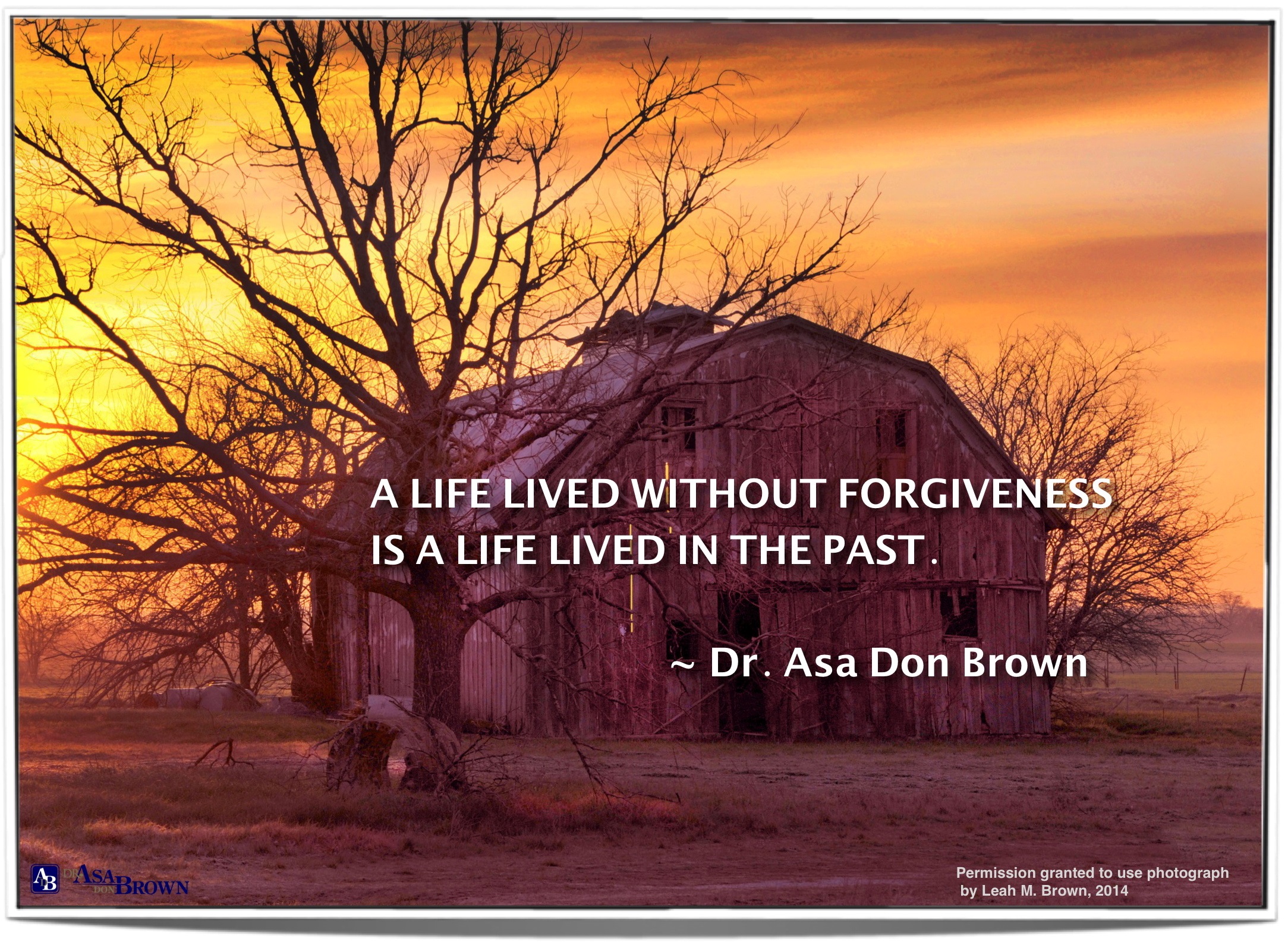
forgiveA life lived without forgiveness is a life lived in the past. Living in the past is a conscious or an unconscious choice made through a connection to the past. In simple, the past is a time gone by and no longer exists in the present moment, but we choose to allow this past to occupy our minds, our bodies and our very existence. Living in the past is like choosing to cling to a chronic illness. Would you choose to be plagued with a chronic illness? Would you allow yourself to be
injected with a disease that could take your life? Why then, are you allowing yourself to be injected daily with the memories associated with the past? Why have you chosen to cling to the negative memories associated with your life? Have you found comfort with the negative memories, or do you feel incapable of letting go of the past?
Letting go of the past is through purposeful action. The action is the process with which we choose to rid the very essence of our person of the past. The past may be comprised of tragic events, thoughts, or circumstances. Whatever the case, the past is haunting you and it is denying you the freedom of moving forward in this life.
As a clinician and a person, I have been witness to countless individuals who have chosen to cling to the past. Clinging to the past is a purposeful action of recalling, remembering and harboring negative thoughts, deeds or actions. When we harbor the memories associated with the past, we are protecting the negative memories, rather than allowing them to exist no more. Moving beyond the past requires a combination of actions: letting go, forgiveness, and moving forward.

FORGIVENESS IS A STATE OF BEING

Forgiveness is not only a state of mind, but it is a state of being. It is woven through the very essence of our being. Forgiveness is a constant attitude occurring through a purposeful action. As humans, we are instinctively designed to forgive. It is only when we choose not to forgive that our minds, bodies, and spirits begin to experience disrepair. Those who choose not to forgive; choose to harbor the wrongs of others and of their own person, frequently have physical and psychological signs. Forgiveness cleanses the body, ridding it of the decay of negativity, disappointment, and heartache. It is through the act of forgiveness, that we can live a balanced and well-adjusted life. Forgiveness is the key to living life productively. Being productive enables us to be effective in this life, by producing the desires and intended results with which we may choose to acquire.

FORGIVENESS OF OTHERS

Forgiving others, especially our enemies, is a challenge indeed. What if, you had committed a wrong against another? Would you not have a deep desire to be forgiven? Have you ever experienced the denial of your repentance? What sort of effect did this have on your person? Were you shattered by the unwavering and unyielding of the person or persons you had wronged?
As a clinician, I have met a variety of patients / clients who’s hearts ache to be forgiven. As an individual, I too have had the experience of others denying the acceptance of my repentance. The denial of our repentance can have a penetrating effect, plunging like a dagger deep into the very core of our being. For so many, forgiveness and the lack of forgiveness, can prove a major stumbling block.
If we deny accepting the repentance of another, then we are intentionally and purposefully hanging on to the wrongs of the past. The wrongs of the past serve as a coat-of-arms. We identify our coat-of-arms as a shield of honor, but the reality is, our coat-of-arms is shielding the very nature of our person from allowing others to enter. It is serving as a warning sign, informing others to tread lightly because I will remove them from my life, if they wrong me.
For people who long for the acceptance of their repentance, they will continue to be haunted by their past wrongs as long as they choose to hang onto them.

Continue reading


*The views expressed by our authors are personal opinions and do not necessarily reflect the views of the CCPA