Author Archives: Priya Senroy

Holiday Wishes Readers

Posted by: Priya Senroy on December 13, 2011 10:53 am

As we begin to wrap the year up, I thought of sharing two books with you.
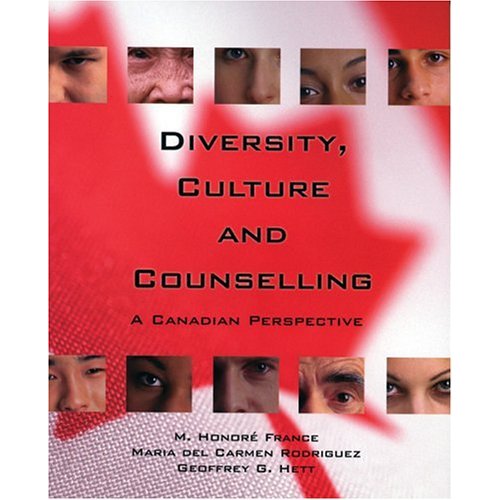
Diversity, Culture and Counselling: A Canadian Perspective:  by Geoffrey Hett, M. Honoré France, Maria del Carmen Rodriguez  is based on the belief of diversity and the importance of culture, that multicultural counselling offers an approach to working with people from different ethnic, racial, religious backgrounds and sexual orientations. Understanding the causes and costs of stereotypes and biases is vital if counsellors are to bridge the ethnic and racial divide. Being secure in one’s own identity, culturally and racially, can only help to ensure that people accept and respect individual and collective differences. This book provides necessary background information relative to many of the diverse cultural groups in Canada .Canadian society encompasses a variety of cultural, ethnic and religious groups. It is essential for the counsellor to understand the beliefs and thought processes of individuals within these various groups in order to establish rapport and understanding, as well as to make the counselled individual feel comfortable.
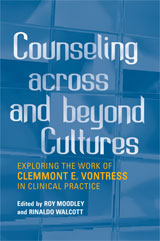
Using as a starting point the pioneering work of Clemmont E. Vontress, the contributors to Counseling Across and Beyond Cultures trace the evolution of multicultural counseling and discuss remaining challenges for practitioners. Essays include a personal reflection by Vontress himself, critical analyses of the growth of multicultural counseling, considerations of his influence in Canada and the UK, and African and Caribbean perspectives on his work. Throughout, the importance of Vontress’s accomplishments are celebrated, while critical analysis points the way towards further work to be done in the field.  The book focuses on the fact that professional counseling is a dynamic field, necessarily changing to reflect shifting societal norms and client needs. In an increasingly multicultural and globalized society, there is a growing need for counselors to be sensitive to the diverse needs of clients expressing different cultural and ethnic beliefs and facets of racial, gender, sexual, age, ability, disability, or class identities.


*The views expressed by our authors are personal opinions and do not necessarily reflect the views of the CCPA
Hello readers!

Posted by: Priya Senroy on December 5, 2011 3:57 pm

In this month’s blog, I am sharing an article that I came across which describes the efficacy of utilizing expressive arts in group counselling to enhance communication. It goes on to discuss the research conducted by the authors which include methodology and preliminary findings; and provide examples of expressive arts activities that can be used by counsellors in their group counselling work.

 http://counselingoutfitters.com/vistas/vistas08/Odegard_Article_24.pdf


*The views expressed by our authors are personal opinions and do not necessarily reflect the views of the CCPA

Hello Fellow Counsellors and Practitioners,

Posted by: Priya Senroy on November 21, 2011 4:41 pm

As the trees are getting stripped of their leaves and as they start to prepare themselves for another about of season change, I am trying to acclimatize myself by going the other way-putting on more layers. 

For the month of November I wanted to share an article from our own CCPA backyard-written by Gail Beniek, who tackles the ever important topic of acting ethically and valuing diversity as a practitioner. Citing a study Gail talks about providing counseling in a culturally encapsulated manner which may thus have serious repercussions both for the client and the counselor.

http://www.ccacc.ca/_documents/NotebookEthics/Valuing%20Diversity%20and%20Acting%20Ethically.pdf


*The views expressed by our authors are personal opinions and do not necessarily reflect the views of the CCPA

Learning Through Creative Play (With People With Disabilities)

Posted by: Priya Senroy on November 15, 2011 12:00 pm

These series of videos took me back to 1993 when I started incorporating drama, art, music and movement into my special needs teaching. And it was then I fell in love with the creative arts therapy medium and decided to pursue it as a full time career before inducing counselling into it.

I wanted to share it with you as I am currently incorporating it again in my practice and would like to encourage some of the practitioners out there who might want to use their expertise in working with people with disabilities.


Continue reading


*The views expressed by our authors are personal opinions and do not necessarily reflect the views of the CCPA

Multicultural Counselling: From Diversity to Universality

Posted by: Priya Senroy on October 13, 2011 11:53 am

Hello blog readers- 2011 is nearly over and I thought of sharing this article with you which interested me. I found it interesting as I read the view point of author, C.H.Patterson on the shift of using counseling as a universal intervention modality than just a diverse one.

 I hope you find it interesting too!!

 http://www.baatn.org.uk/Resources/Documents/MULTICULTURAL_COUNSELING_FROM_DIVERSITY_TO_UNIVERSALITY.pdf


*The views expressed by our authors are personal opinions and do not necessarily reflect the views of the CCPA

Book Review

Posted by: Priya Senroy on October 13, 2011 11:49 am

Greeting fellow counsellors.

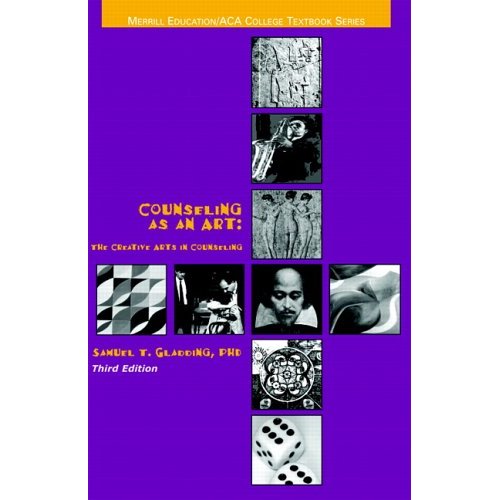
In this Fall  blog, I am excited to share a book that I came across in my quest to quench my thirst for more knowledge. Counseling as an Art :Creative Arts In Counselling,  provides myriad practical suggestions for how to use the creative arts in counseling and serves as a reminder that there are a variety of venues to precipitate growth–no matter how diverse the life experiences of the counselor and client may be. 

For courses in Counseling and Mental Health programs.  The chapters are written in a logical sequence, exploring seven specific art forms, and the research and techniques that support their use in clinical settings. Each chapter offers inspiring ideas for working with special populations and strategies for using various art forms in concert with one another. Designed to enrich many counseling courses, the text provides a unique combination of history, theory and application and demonstrates all the creative arts have to offer the healing and helping professions.

The author Samuel T. Gladding has a website that can be visited for more information at http://www.wfu.edu/~stg/creativity/creativity_in_counseling.html


*The views expressed by our authors are personal opinions and do not necessarily reflect the views of the CCPA

Multicultural Counselling in the New Millennium Article

Posted by: Priya Senroy on September 16, 2011 2:01 pm

Hello fellow counselors, as the weather slowly starts to change, I am focusing my energy on trying to read articles and books on cultural diversity and I came across an article that was published in the Canadian Journal of Counselling in 2001 on  Multicultural Counselling in the New Millennium. The article written by Nancy Arthur, University of Calgary and John Stewart from the University of New Brunswick, begins by describing the cultural diversity of Canadian society with an emphasis on changing population demographics in the fore seeable future. Next, perspectives about the multicultural counselling movement are outlined. The discussion then turns to culture-centred counselling competencies in the domains of self-awareness, knowledge, skills, and organizational competencies. Counsellors are invited to consider ways of incorporating culture-centered competencies into their professional practice, future research, and professional development.

It is an interesting read and I hope that the momentum and enthusiasm that was shared way back in the beginning of the millennium is going to continue in the foreseeable future where multicultural counseling will be incorporated in the daily repertoire of counselors.

      cjc-rcc.ucalgary.ca/cjc/index.php/rcc/article/download/175/407


*The views expressed by our authors are personal opinions and do not necessarily reflect the views of the CCPA

Art Angel

Posted by: Priya Senroy on September 15, 2011 12:00 pm

In this month’s blog, I am sharing my research that I have been doing on using Creative Arts with people with mental health issues. I came across the Art Angel Project in which a fellow creative art therapist is involved in and I found the work to be fascinating, inspiring and stimulating.

There is a video at the end of the description and a link to a pdf document, titled The Arts and Mental Health :Creativity and Inclusion- for those who are interested in knowing more .

Continue reading


*The views expressed by our authors are personal opinions and do not necessarily reflect the views of the CCPA

Need For All Therapists to Become More Skilled in Working Multiculturally

Posted by: Priya Senroy on August 24, 2011 9:27 am

Multiculturalism and the Therapeutic Process

by Judith Mishne Guilford Press, 2002

In this blog I am sharing a review of a book I recently came across on the therapeutic process that is associated with multiculturism. As an ethnic counselor myself, I found the book to validate many of my practicing methodology as well as provide an insight into the working knowledge of my colleagues who are working with diverse population in their own countries. In this modern day and age of practicing as counselors or as therapists, most professional mental health associations in the developed world now have policies and procedures aimed at not only applying affirmative action in the recruitment of minorities, but also of encouraging all therapists to develop at least minimal level of multicultural competence.  To give an example, in the United States, not unlike other developed countries, 31 percent of the population is made up of ethnic minorities, yet 90 percent of the social workers, psychologists, and family therapists are white (Psychotherapy Networker, Sept/Oct 2003).  Recruitment and retention of minority therapists is not keeping pace with the growth of minority populations, and hence the need for all therapists to become more skilled in working multiculturally.  Throughout Judith Mishne’s book  on Multiculturalism and the Therapeutic Process(2002), the author shows us that cultural responsivity is not always easily acquired, as much as for any reason because of our own counter-transferences.  However, persevered with, it brings its own rewards to us as therapists in this global village, as it does in turn to our clients.  This is a thought-provoking book, which is rich in its coverage of psychodynamic therapy and multiculturalism, and contains a strong invitation to all therapists to broaden their relational responsibility.Well-written, with in-depth case examples, it extends intersubjectivity theory and Kohut’s self psychology from the object-relations approach, into the cross-cultural arena.  Central to this is the empathy that follows from recognizing the self in the other, which evokes a human echo in both client and therapist, as a reciprocal and mutually influential system of exchange arises.  As the therapist remains transparent and in recognition of their own biases and cultural/ethnic ignorance of the client’s reality dyadic learning is facilitated in the crucible or context of our mutually recognised common humanity and fallibility.  Within this context of a shared recognition of our commonalities and fallibilities, Mishne shows us how to integrate the use of feminist, empowerment, family, narrative, and strength theories.


*The views expressed by our authors are personal opinions and do not necessarily reflect the views of the CCPA

Art and Music Therapy in Rehab and Beyond

Posted by: Priya Senroy on August 15, 2011 12:00 pm

In the last couple of months I have been doing some research on how creative arts therapy can be used to work with clients with disability. This need came up because of two reasons-one I am getting more clients with disabilities in my counseling session-clients with psychical and intellectual disabilities and trying to adapt my creative arts background in my current counseling practice. The second need is also to equip myself with tools so that I am ready to gear my practice under the Accessibility for Ontarians with Disabilities Act ( AODA) which is coming into effect  in 2012.

I found this video shared by the department of rehabilitation medicine, University of Washington. The presentation is an hour long but gave me an insight on some of the basic techniques or tools that I could adapt and modify in my current practise. Even though is primarily based on art and music, I think creative arts counsellors from all kinds of ‘art’ background would be able to take away some ‘teachable moments’ from this video.

Art and Music Therapy in Rehab and Beyond from NW Regional SCI System on Vimeo.

On a personal level, it was also inspirational as well as motivational in my journey of working with people with disability.


*The views expressed by our authors are personal opinions and do not necessarily reflect the views of the CCPA