Welcome

The Indigenous Circle (ICC) is a gathering space for First Nations, Inuit, and Métis counselling therapists who are members of the Canadian Counselling and Psychotherapy Association (CCPA). We also welcome non-Indigenous members who work with First Nations, Inuit, and Métis individuals and communities.

Please note the term Indigenous in the context of the Indigenous Circle of the Canadian Counselling and Psychotherapy Association refers specifically to First Nations, Inuit, and Métis.

The History of the Indigenous Circle Chapter (established in 2004)

Our collaborative advocacy and a sense of our shared history are important to honour and celebrate. Chi miigwech (a large and sacred gratitude) to Andrea Currie and Margie Cain of our Knowledge Holders Council as they put their hearts, minds, and Spirit towards sharing some of the origin stories of our Circle. We are grateful for their care and support. We will add these stories here, as they are developed in their own good time.


Statement of Good Intention

The Indigenous Circle seeks to tend to the Spirit of the larger membership and consider the needs of First Nations, Inuit, and Métis practitioners, clients, and communities. We offer a support network and gathering space for our Circle members with activities centred through a cultural lens. We endeavour to raise awareness and support advocacy efforts. We honour and celebrate Indigenous Knowledges in helping and healing work.

Our path

❖ To offer opportunities for members of the Circle to meet, discuss, and share ideas, knowledges, and resources; to support each other to facilitate the ongoing exchange among First Nations, Inuit, and Métis practitioners and those who work with First Nations, Inuit, and Métis individuals and communities.

❖ To provide opportunities for practitioners to become aware of safe, effective, and culturally appropriate ways of working with / alongside First Nations, Inuit, and Métis Peoples.

❖ To transmit Indigenous Knowledges in the context of culturally congruent, appropriate, and respectful practices through culturally informed discussions, teachings, and sharing circles.

❖ To continue shared leadership practices within the ICC Leadership Circle. This involves a commitment to a decolonizing lens and Indigenizing practices that value slowing down, openness, respectful consideration, reciprocity, invitation to all, and transparency.


Ways of Leading, Ways of Seeing, Ways of Being: Shared Leadership Practices

Beginning around 2016, the Indigenous Circle of the CCPA began actively shifting their former “Constitution and Bylaws” document to articulate a concept of shared leadership practices rooted in a cultural-relational approach. We invite you to read our shared leadership document, which guides the Circle, titled Ways of Leading ~ Ways of Seeing ~ Way of Being.

Please CLICK THIS LINK to read / download the “Ways” document.


Annual Gathering Meeting (AGM) Notes

The Indigenous Circle holds an Annual Gathering Meeting (usually in May) to discuss activities and initiatives over the previous year, share highlights, review the budget and expenses, and consider any decisions that require consensus or further discussion. We invite the entire membership of the Indigenous Circle of the CCPA, for those who would like to attend.


Here is our most recent Annual Gathering Meeting note: May 2025
Here is the Annual Gathering Meeting note from last year: May 2024

Regular Circle Activities

The Indigenous Circle regularly holds the following:

❖ We meet monthly from September to June to connect and discuss leadership activities and directions. We invite the Indigenous Circle membership to join us by sending out a Zoom link (for those who would like to attend).

❖ We are grateful to Andrea Currie, one of the founders of the Indigenous Circle and now a member of the Elders and Knowledge Keepers Council. Andrea continues to support the Indigenous Circle through the facilitation and mentorship of Virtual Sharing Circles, honouring the seasonal rhythms and shifts. Members of the Indigenous Circle will receive invitations and the Zoom link via email.

❖ We organize Indigenous Knowledges Circles for our ICC members to provide meaningful opportunities to listen, absorb teachings, engage with each other, and learn more about cultural wholistic approaches to care.

➢ An Indigenous Knowledges Circle was held in January 2024. Nicole Roy spoke to us about her published article: The Use of Indigenous Research Methodologies in Counselling: Responsibility, Respect, Relationality, and Reciprocity.

➢ A Discussion Circle was held in November 2024 to focus on the apology by the Canadian Medical Association in September 2024 for its role and the role of the medical profession for “past and ongoing harms to First Nations, Inuit and Métis Peoples in the health system”. Visit the CMA website for the full apology statement and a link to watch the apology delivered in Victoria, BC, on the traditional territory of the lək ʷəŋiʔnəŋ speaking people of Songhees and Xwsepsum Nations.

➢ A book study was held in 2025 to explore Finding Otipemisiwak: The People Who Own Themselves with author Andrea Currie.

Please note: Our Virtual Sharing Circles and Indigenous Knowledges activities provide CECs through the Indigenous Continuing Education Credits Program, which was first established through the advocacy of the Indigenous Circle starting in 2015 and solidified in 2018.


ICC Learner Appreciation Gifts for First Nations, Inuit, and Métis

The Indigenous Circle held a draw for four gifts of $500, inviting submissions from First Nations, Inuit, and Métis members currently mentored in helping and healing work from a cultural lens that honours First Nations, Inuit, and Métis Knowledges, as well as those involved in counselling-related studies from an academic lens while carrying their ways of knowing.

Sixteen submissions were received, and we celebrated them all in March 2025!


Current Leadership Circle


Amanda Carver (ON)

Amanda Carver (ON)
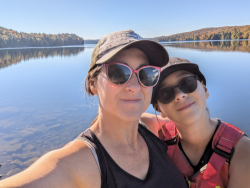
Hi there, and welcome!

I’m originally from Nova Scotia, which is the ancestral and unceded territory of the Mi’kmaq People, shaped by the Peace and Friendship Treaties. These roots mean a lot to me. These days, I split my time between Toronto—on the traditional territory of the Mississaugas of the Credit, the Anishnabeg, the Chippewa, the Haudenosaunee, and the Wendat peoples—and South River, Ontario, which sits on the lands of the Anishinabewaki and the Huron-Wendat.

I’m a Registered Psychotherapist in private practice, where I lead a small clinic that supports folks navigating stress, trauma, and anxiety. My academic path includes a B.A. in Psychology from the University of Guelph, a Certificate in Crisis Management and Human Psychology from Algonquin College, and a Master of Education in Educational Counselling (now Counselling Psychology) from the University of Ottawa.

Mentorship is close to my heart. I offer clinical supervision and love helping newer clinicians shape their own integrative approaches, build confidence in their clinical identity, and move through imposter syndrome with compassion and clarity.

Throughout my career, I’ve had the honour of working by invitation with Indigenous communities. These experiences have been deeply formative, allowing me to receive traditional teachings that continue to enrich my therapeutic work. This connection also resonates personally—my Acadian heritage includes a history of relationship with the Mi’kmaq people of Nova Scotia, and I hold that lineage with care.

I believe in showing up as a whole person. That means embracing a holistic view of well-being. I’m also a practicing Yoga Instructor, and I see yoga as a powerful way to support mental health and reconnect with the body. On quieter days, you’ll find me grounded in my embroidery practice—stitching stories, one thread at a time. I prioritize reconnecting with nature either on my own or with my family, so you will easily find me taking time to paddle my canoe, kayak, or SUP, or find me gliding along winter’s rolling hills with my cross country skis.

Community matters to me. I try to stay engaged with friends and neighbours, socially and politically, and I believe in the power of collective care. I invite you to find your own space for connection—whether that’s with us at ICC or through whatever local community feels right for you.

Every step toward engagement is a step toward empowerment. Let’s walk it together.
Darlene Denis-Friske (ON)

Darlene Denis-Friske (ON)

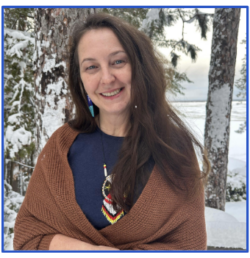
Kwey Kakina // Hello everyone

Darlene nidijinikàz // Darlene is my name
Kipawa nidònjibà // Kipawa is where I am from
Algonquin Anishinàbe nidaw // I am Algonquin
Ottawa Valley nidà // I live in the Ottawa Valley

By way of introduction, I would like to share that I am Algonquin Anishinàbe on my maternal side (born into the Kipawa Algonquin community) and French Canadian on my paternal side (Laniel, Kipawa Lake, Quebec). I am a registered member of Kitigan Zibi Anishinàbeg, the community where my great-grandmothers were born and raised (before moving to Kipawa). I currently live in the Ottawa Valley on the unceded territory of the Algonquin Nation.

I am a Registered Psychotherapist (College of Registered Psychotherapists of Ontario) with a Doctor of Counselling and Psychotherapy degree. I have been a child and youth worker since my early career days (35 years ago) and now work in adult and adolescent practice as part of a medical health team in Pembroke (ON). I have worked in schools (elementary, secondary, adult, and alternative education), private practice, and a large psychiatric hospital in Northern Ontario (Sudbury).

Nimìgwechiwendam // I share my gratitude with the Indigenous Circle of the CCPA for the support, experiences, mentorship, teachings, and relationships that are now a rich part of my life. I have been an active member of shared leadership with the Indigenous Circle for half a decade. As a deeply personal and professional focus, now in this particular season of my life, I am dedicated and passionate about advocating for and supporting First Nations, Inuit, and Métis knowledges in helping and healing work.

Heather Lash (ON)

Heather Lash (ON)
A warm hello! My maternal family is Saulteaux / Red River Métis, from Treaty 2 Territory in Manitoba, and I’ve called Toronto home for most of my life. 
I’m the Mental Health Auntie within the Call Auntie program of Seventh Generation Midwives Toronto, an Indigenous-led family and sexual health clinic. There, I co-facilitate group programming and visit with community members individually. I’m also a psychotherapist (qualifying) in private practice at Vistas Psychotherapy and Wellness.
I hold a bachelor’s in directing performance arts, a master’s in ethics and refugee issues, and a Master of Arts in Counselling Psychology. My personal and career experiences, including many years as a post-secondary professor in access / transition programs, have taught me much about what harms, and heals, human lives. I come from a tradition of visiting. The heart of visiting is also the heart of my practice and of how I serve the CCPA’s ICC: relationship comes first.
The Circle has been my soft landing, starting this new and final career later in life. The love – support, mentorship, acceptance – I’ve been met with here will continue to guide me and shape my path, as I both practice and find good ways to share the complex and cherished wisdom our communities have to offer the field.

Judy Letendre (BC)

Judy Letendre (BC)

Judy Letendre, MEd (Counselling), BSc (Kinesiology), CCC, is Nêhiyaw (Cree) Metis working as a counselling therapist in southern British Columbia. She lives as a guest on lands of the Syilx. Secwepemc, and Sinixt, and arrives as grandmother, auntie, sister, wife, friend, and hugger of Mihko, the dog. With the voice of the ponderosa pines and the rhythm of the earth, she joins her voice to the sound of our collective healing story.

Carla Pauls (MB)

Carla Pauls (MB)

Sonya Procter (AB)

Sonya Procter (AB)

Oki // Hello 

Nisappinihka’sim Sonya // My English name is Sonya

Nii tsii tsi ta pin ih ka’sim // My Blackfoot name is Piikaatii

I am of Algonquin ancestry, and I am a guest living in Medicine Hat, a traditional territory of the Blackfoot, Cree, Saulteaux, Sioux, and Metis. I am a master’s student in counselling psychology and art therapy.

I was drawn to the Indigenous Leadership Circle of the CCPA about a year into my master’s. I have felt enriched by all of the teachings and mentorship, and the welcoming, supportive, respectful environment is helping me become a therapist. This safe space has assured me that my passion is to focus my research on the healing properties of Traditional Indigenous games through the lens of cultural neuroscience, and how that could support First Nations, Inuit, and Metis Peoples is the route for me as I enter a different season of my life.

Meredith Ramsey (ON)

Meredith Ramsey (ON)

I am Treaty 61, Robinson-Huron Batchewana First Nation member. Being a 60’s Scoop Survivor provides an active and accepting understanding of intergenerational trauma. I have psychotherapy practice in Barrie, Ontario with a focus on trauma, anxiety, depression and relationship disorders. Being of Ojibwe and English descent I use best practices with a wide worldview while embracing and encouraging a traditional and whole understanding of wellness in a complex world. 


My formal education is BA in Psychology, Masters in Counselling Psychology, and a BA in English and French for Secondary Teaching with a minor in theatre. I have lived in Ottawa, Northern Ontario, Michigan, and overseas working on policy, programs, and mental health. This experience has led me to see the wisdom in the Seven Grandfather Teachings and the value of shared cultures for developing individual and societal wellness. I advocate fiercely towards promoting wellness and a flourishing in the determined Ojibwe people. 


Mashkode-Bihikii Gikaa Ozaawa Kwe 

Lisa Marie Van de Water Harvey (NWT)


Our Guidance: The Elders and Knowledge Keepers Council

The Knowledge Holders Council of the Indigenous Circle is made up of past members of the leadership who choose to continue to participate in a supportive way, being available when needed, as they are able. This aligns with our Indigenous tradition of valuing our Elders and Knowledge Keepers and turning to them when we need guidance and support. Members who are moving out of active involvement in the Indigenous Circle Leadership are invited to join the Knowledge Holders Council, if they wish, with no minimum or maximum number for this Council and no set term.


Elaine Berwald

Elaine Berwald

Elaine Berwald
Waawaasaa Waawaataa Waayabee Kwe
“She Sees the Northern Lights Woman”
Cultural Advisor/Liaison, Knowledge Keeper, Grandmother

Elaine is an Indigenous Cultural Advisor/Liaison and a Grandmother. Her work as an educator and facilitator in Indigenous post secondary education provides student support and faculty education through an Indigenous Circle process. She also works in Indigenous child welfare, anti-human trafficking, healthcare, and community support. Elaine is a strong facilitator and storyteller with a passion for bringing an Indigenous lens to non-indigenous peoples, organizations, institutions, and communities. She serves on the Elder and Knowledge Keepers Circe for the Indigenous Circle Chapter of the Canadian Counsellors and Psychotherapist Association.

Elaine Berwald is of Mi’kmaq and Metis heritage. Her maternal ancestral territory is Northern New Brunswick and her paternal ancestral territory is Selkirk, Red River Manitoba. She follows the teachings and practices of the guiding principles of Etawuptamunk “Two Eyed Seeing” which is an Indigenous framework by Elder Albert Marshall of Eskasoni First Nation Unama’ki (Cape Breton) Nova Scotia.

Margie Cain

Margie Cain

Membership in the Indigenous Circle Chapter has been part of my connection to CCPA since joining as a Canadian Certified Counsellor over a dozen years ago.  I was drawn initially for both personal and professional reasons.

Personally, my children raised initially in Quebec but for the most part on Prince Edward Island, are members of the Nisga’a Nation of British Columbia. They met their Nisga’a grandmother on a few occasions and over time realized how her life was impacted by colonialist practices including residential schooling. During their formative years I sought to provide them with an awareness and appreciation of their Indigenous culture and community which they now cherish and pass on to my four grandchildren. Now young adults, they are working in the areas of justice, education and science which value Indigenous knowledge and recognition.

Professionally, during more than two decades of work as an educator, administrator, and school counsellor on PEI, I developed relationships with Indigenous students, their families and communities and valued the cultural insights and sensitivity I acquired through my work. The thesis I completed for my M Ed in Leadership and Learning with a Specialization in Counselling is titled, They Think They Know Me but They Really Don’t Know Me: Beginning to Explore the Schooling Experiences of Intermediate Mi’kmaq Students at a Provincial Intermediate School. My early CCPA Chapter involvements were with the School Counsellors Chapter and the Aboriginal Circle Chapter during the process to change the name to ICC, to adopt a logo and build a broader inclusive membership base.

Since my retirement from a career in education, I have maintained my CCC, served as Provincial Director for PEI on the CCPA National Board, served two years as ICC Treasurer and the initial committee work on recognizing Indigenous based educational activities for continuing education credit, and pursued life-long learning through occasional part-time work and volunteering. Over the past 6 years that my husband and I have made our home in Ottawa, I have contributed to the leadership of organizations in Ottawa that assist with refugee sponsorship and settlement and provide community meals and food bank services. As a lover of the natural environment, I am fortunate to live in an area that offers enriching opportunities to savour the outdoors through Nordic pole walking, cross country skiing, biking, and hiking. In late 2020, I felt the nudge to re-offer my perspectives, gifts, and skills to the ICC. I was warmly welcomed mid pandemic to a role as member-at-large role pending affirmation at the ICC 2021 AGM. I have much to learn from the full membership and I am open, enthused and grateful.

Andrea Currie

Andrea Currie

I am Green Turtle Woman, a Red River Métis from the historic Métis homeland in southern Manitoba. I currently live in Unama’ki (Cape Breton). I am a psychotherapist, writer, and musician who has worked in the Mi’kmaq community for twenty years. I am the Indigenous therapist at the Kiknu Centre (St. Francis Xavier University), and I have a private practice working with Mi’kmaw and Wolastoqiyik individuals throughout Mi’kmaki. I have been the facilitator and therapist for the We’koqma’q Residential School survivors for the past twenty years. I am a founding member of the Indigenous Circle of the Canadian Counselling and Psychotherapy Association in 2004, and I continue to support the Circle as part of the Elders and Knowledge Keepers Council. I bring a connection with All Our Relations, Elders, and Knowledge Keepers who have supported and guided me, professionally and personally, to my healing work and life. My newest book is Finding Otipemisiwak: The People Who Own Themselves.

Deva Little Mustache Gordon

Melissa Jay

Melissa Jay
tân’si!
I’m Melissa (she/her), a white-presenting nehiyaw (Cree) member of the Métis Nation of Alberta. I’m a psychologist, educator, living between Châ Ûpchîchîyen Kudebi (Canmore) and the lands of the Lək̓ʷəŋən and W̱SÁNEĆ Peoples.
As a psychologist and associate professor, my work is grounded in decolonized healing, anti-oppressive practices, and integrating ancient wisdoms with psychology. I am dedicated to putting social justice into action and fostering trauma-informed, culturally responsive care that supports continued learning, unlearning, and growth.
It is a joy to be part of the community 🙂
With goodness,
Melissa

Tina Nash

Jamie Warren


Resources to Note

❖ Honouring the Truth, Reconciling the Future: Summary of the Final Report of the Truth and Reconciliation Process

❖ Truth and Reconciliation Commission of Canada: 94 Calls to Action

❖ Reclaiming Power and Place: The Final Report of the National Inquiry into Missing and Murdered Indigenous Women and Girls

❖ United Nations: Declaration on the Rights of Indigenous Peoples

❖ CCPA Standards of Practice: Indigenous Peoples, Communities and Contexts (p, 90-100)

❖ Canadian Psychological Association: Response to the TRC Commission, including a formal apology (2018)

❖ Canadian Association of Social Workers: Statement of Apology and Commitment to Reconciliation (2019)

❖ Canadian Medical Association: Statement of Apology in September 2024 for its role and the role of the medical profession for “past and ongoing harms to First Nations, Inuit and Métis Peoples in the health system”.

The CCPA also provides an Indigenous Initiatives webpage where you can access information about Indigenous History Month, advocacy campaigns, and a large collection of Indigenous resources such as recommended readings, movies, documentaries, websites, etc.


Send a message to our IC Chapter!

  • This field is for validation purposes and should be left unchanged.