Tag Archives: counselling

Moore’s Law

Posted by: Sherry Law on June 8, 2015 1:40 pm

Moore’s law is an observation of exponential improvement in digital technology both due to the accumulating effect of research and development, and also the falling consumer cost of products. This describes a trend that we have been witnessing for the past few decades, and the explanation to our increasingly digital life style as Canadians. Computers used to be the size of trailer homes and very costly, convincing people that it was impossible that the computer would ever be a mainstream consumer product. The average person today carries with them more computer power in their pocket than was used during the Apollo missions to put humans on the moon. So what does this have to do with counselling and psychotherapy?

A new fleet of wearable technologies will be saturating the markets in the coming years. These technologies have great implications for how we interact with our world and with each other. Virtual reality (VR) can become one of those technologies which revolutionizes psychotherapy. VR is typically experienced through a head-mounted device and gives the user the experience of presence, a phenomenon whereby the user is convinced they are in a place other than reality, regardless of their conscious acknowledgment that what they are witnessing is not real. Once a person puts on one of these headsets, they are transported into an entirely crafted digital world . The programmable nature of digital technology means that a user can exist anywhere in reality, and in fantasy. A person can experience the thrill and excitement of a 100 foot high roller coaster, and moments later, be visibly shaken, left alone in a claustrophobic series of hallways and crypts. One can soar gracefully through space observing spiral galaxies to an accompanying orchestra, or simply relax within a virtual cinema with friends and family connected through the internet. Due to VR’s powerful impact, it has the potential to provide convincing therapeutic tools to aid in many therapies which rely on visualization, such as therapies to help manage phobias, anxieties, depression, and even mindfulness training for relaxation, among others.
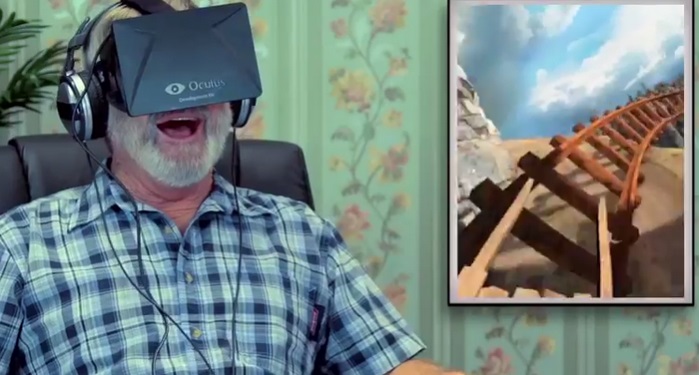
glasses Continue reading


*The views expressed by our authors are personal opinions and do not necessarily reflect the views of the CCPA

“Willful Blindness”: Is Your Workplace at Risk Psychologically?

Posted by: Denise Hall on June 8, 2015 8:30 am

The subject of my upcoming book is the psychological health of professional helpers’ workplaces. The material used for this blog is partly from the manuscript completed in 2013 for my Doctorate in Clinical Psychology. My purpose is to bring more awareness to workers and their supervisors in hopes of preventing psychological injuries at work.

energy-73336_640Recent initiatives by progressive thinking agencies, government, and health and safety organizations establishing guidelines for psychologically healthy workplaces are the topic of conferences and workshops. Discussion is beginning to happen in workplaces and with health care providers. One of the main reasons for this initiative is the recognition that psychologically unhealthy workplaces cost money in terms of absenteeism, high turnover, lost productivity, health care, and insurance costs.

This initiative is largely in its infancy similarly with physically unsafe workplaces years ago. In British Columbia WorkSafe BC and the provincial government developed Bill14 in this regard. This piece of legislation also encompasses bullying and harassment in the workplace. The legislation came about because of the potential for losses to employers if employees filed suits in court over mental stress. In essence, this came about because it was going to cost $$, not necessarily because it is the best thing for workplaces.

Continue reading


*The views expressed by our authors are personal opinions and do not necessarily reflect the views of the CCPA

A Narrative Psychoeducational Introductory Tool for Trauma Work

Posted by: Trudi Wyatt on June 5, 2015 2:08 pm

Following emotional trauma, people may develop symptoms of post-traumatic stress disorder (PTSD) such as flashbacks, avoidance of reminders of the event, negative cognitions or mood, and hypervigilance (1). Observing that some clients with these symptoms seek an understanding of why they experience them, David Leong, MA, LMFT, created and often starts off therapy with a “story” about the neurological effects of trauma on the brain (2). While David notes that his story (based on work by Dr. Dan Siegel) might be over-simplified, he finds his clients find it helpful. This post is a summary of the story:

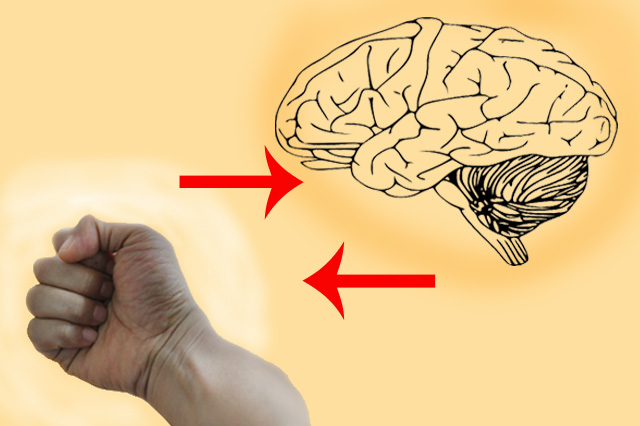
fistbrainThe brain can be thought of as a fist: Your forearm leading up to it is the spinal cord, and the base of your palm is your “lizard” primitive brain, that manages such automatic body functions as heartbeat and sweating. Next, if you fold your thumb sideways across your palm, this is your mid-brain—your “limbic system.” It houses emotion, memory formation, and the “fight or flight” response. Two important structures within it are the amygdala, thought to be a key player in emotional/fear/implicit memories (3,4), and the hippocampus, thought to be a key player in converting information into memory codes (4). The “language” of the limbic system is emotions. Finally, if you fold your fingers over your thumb, you have your cerebral cortex, which speaks in words, and houses sense of time and explicit memory—a more abstract, gist-based, structural recording of episodes than implicit memory (3). Continue reading


*The views expressed by our authors are personal opinions and do not necessarily reflect the views of the CCPA

Be Kind, Not Nice

Posted by: Mark Franklin on June 5, 2015 9:42 am

When Dr. Marcia Sirota was “too nice” she lost sight of her own wants and needs, and her personal life fell apart. That led her to shift her psychiatry practice, and found the Ruthless Compassion Institute to focus on the “nice versus kind” conundrum.

“People go to extremes in how they deal with themselves and each other,” Marcia told Career Buzz listeners (May 13, 2015). “They’re either too hard or too easy on themselves. And when dealing with each other they’re too tolerant of mistreatment, or too aggressive.”

How the clues apply to you: Marcia’s fresh perspective is finding balance between these two opposing points of view. Stop being “nice” and pleasing others at the expense of your own wellbeing. “Be kind to yourself, which is being honest but loving; be kind with each other which is caring but setting limits and boundaries.” Now, take that perspective into your workplace.

Download and enjoy learning from the May 13, 2015 podcast, also featuring Judi Walsh, the “habit interpreter.”

kind vs nice


*The views expressed by our authors are personal opinions and do not necessarily reflect the views of the CCPA
Sensorimotor Psychotherapy

Posted by: Andrea Cashman on June 4, 2015 9:35 am

My thoughts and a brief introduction on Sensorimotor Therapy for Trauma Clients

In April, I attended a workshop on Trauma and the Body – The Theory and Practice of Sensorimotor Therapy presented by Anne Westcott on behalf of the Sensorimotor Psychotherapy Institute (SPI). I’m particularly interested in theories designed to implement treatment on trauma clients. This particular workshop opened a new realm of possibilities for me. I had my sights on becoming specialized in EMDR in the future but perhaps SPI’s three level certification program is another avenue to explore for me and for anyone seeking to work exclusively with trauma clients. I don’t necessarily believe that one theory is better than another; however, I do believe it is about what works for you the therapist and your clients. The Sensorimotor Psychotherapy Institute was freedom-716143_640founded by Pat Ogden in the 1980’s out of her interest in the correlation of client’s disconnections from their bodies/their physical patterns and their psychological issues. Before PTSD appeared in the DSM, Pat recognized that treatments in that time seemed to trigger traumatic reminders in a detrimental way. Sensorimotor Psychotherapy (SP) is drawn from somatic theories, attachment theories, neuroscience, the Hakomi method and cognitive approaches. Pat Ogden quotes “most human behavior is driven by procedual memory – memory for process and function – and is reflected in habitual, automatic responses and well-learned action patterns: movements, postures, gestures, autonomic arousal patterns, and emotional and cognitive tendencies.” This SP workshop explores the processes of memory and how this information can be utilised to change procedural learning in a window of tolerance for the client with PTSD. Specific skills such as tracking and attuning the body are taught. Dysregulation is noted with trauma responses of fight, flight or freeze and how the neuroscience behind the sympathetic and parasympathetic brain structures play a role in these trauma responses. SP uses movement to move the client in a state of active mobilizing defenses into a state of triumph.
Continue reading


*The views expressed by our authors are personal opinions and do not necessarily reflect the views of the CCPA
Riding the Elevator with Dr. Peter Levine

Posted by: Angela Herzog on June 3, 2015 2:06 pm

There he was, the man I’ve studied from for the past five years. I have poured over his books and practiced his skills, and there he was, Dr. Peter Levine, the creator of Somatic Experiencing.
My heart was beating fast as I assessed the situation:

My colleague, myself — Levine and his wife.
Contained within four walls of a tiny elevator.
Levine — a foot across from me.

My thoughts colliding with each other, picking up momentum with each collision.elevator-787381_640

It’s Levine
Here’s my chance
It’s Levine
I can make contact
It’s Levine
Say something Angela

Nothing came out, but a sheepish grin as I stole a glance.

Continue reading


*The views expressed by our authors are personal opinions and do not necessarily reflect the views of the CCPA

Happy Birthday to Us!

Posted by: Dawn Schell on June 3, 2015 8:46 am

ccpa_50yr-graphic_vf-lrg
50. The CCPA is 50 years old!

Imagine all that has changed since 1965…

Vehicles, medical breakthroughs, space exploration, job titles, prices, environmental concerns, clothing styles (though some of them keep coming back!), phones, computers, technology, the Internet…to name a few.

Whew.

Attitudes towards counselling have changed. Not to mention where and how counselling takes place.  Mental health and wellbeing is an increasingly important conversation in workplaces and communities.

Yup. A lot has changed.

And now imagine all that hasn’t changed ….

Continue reading


*The views expressed by our authors are personal opinions and do not necessarily reflect the views of the CCPA

Musings of a Conference Junkie

Posted by: Stephanie Burley on June 2, 2015 8:28 am

June 2, 2015

Self-care has become a hot topic within the realm of counselling, and rightfully so. As counsellors we are witness to an incredible amount of pain, loss, trauma, and a myriad of other emotions. In order to forge a positive therapeutic alliance with our clients it is important that we as counsellors are in a place of wellness so that we can bring our own strength into the counselling relationship to assist our clients by asking those hard questions, and listening without judgement. In my own experience I find that I often don’t know that I need to indulge in self-care until I finally do it. Once immersed in a self-care activity it becomes strikingly apparent that, boy, did I need it! Last week I had the privilege of spending three and a half days at the CCPA National Annual Conference in Niagara Falls. It might sound odd to equate attending a busy, mentally taxing conference with self-care, but I can assure you that is exactly what it was. This is an interesting point to consider – self-care needs to be tailored to the individual. Not everyone will find the same activities rejuvenating or restful.

Currently I am working as a Career Counsellor in an Ontario university. Although I have seen some attitude change, I believe that there is a belief that career counselling is different from personal counselling. I’ve heard colleagues in non-counselling roles indicate that career counselling was the “light” side of counselling. I suppose in some instances this may be true. However, as a career counsellor I can attest to the fact that the clients that join me in my office are often experiencing emotions linked to loss, grief, disappointment, confusion, frustration and shame. Over the past several months I have seen students – both at the undergraduate and graduate level – arriving in my office and sharing stories of financial crises, marital separation, heniagara-falls-113525_640alth concerns, stress and anxiety, familial pressure to succeed, and suicidal ideation. The number of instances where I have asked the student sitting in front of me “are you planning on harming yourself?” is now so high I’ve lost track. The idea that career counselling is “light” counselling does not align with the experience I have had throughout my career.

Continue reading


*The views expressed by our authors are personal opinions and do not necessarily reflect the views of the CCPA

Let’s Give Creativity a Break

Posted by: Priya Senroy on June 1, 2015 2:26 pm

So it’s now June and half of the year is gone and I can feel that creative burnout smell and I better do something about it, or else, I will be spooning my whole summer with the crash and burn aftereffects. I am being more aware that I need to take care of myself so that I can take care of my practice and also encourage the importance of self care in my clients. As a creative arts therapist and counsellor I have decided to take myself out of feeling the need to be creative 100% and have decided to take a break from the traditional meaning of creativity, in different ways.

So here is one main tip that I have started to implement as I am beginning to prevent the dreaded emotional drain of batteries. ‘Take a break’ is my latest mantra and I have been sharing ideas with my colleagues, at workshops and with my clients and it’s amazing how many conversations are being generated around self care and self advocacy. A study by the University of Illinois has shown that the brain’s resources drop after a long period of focus, which hinders overall performance. Even a brief time away can restore the brain’s ability to think creatively.

So, here are 50 ways to take a break:

  1. Take a bath
  2. Listen to music
  3. Take a nap
  4. Go to a body of water
  5. Watch the clouds
  6. Watch the stars

    night-690041_640

  7. Fly a kite
  8. Let out a sigh
  9. Rest your legs up on a wall
  10. Light a candle Continue reading


*The views expressed by our authors are personal opinions and do not necessarily reflect the views of the CCPA

5 Issues in Elementary Counselling

Posted by: Jennifer Morrison on June 1, 2015 9:01 am

In my last blog I wrote about 5 things to consider when looking at elementary school counselling (http://www.ccpa-accp.ca/blog/?p=4194). This time I would like to look at what I consider 5 main issues that children deal with in elementary school. These issues (in no particular order) would be Bullying, Anxiety, Disruptive Behaviour, Friendships and Family problems. This is not an exhaustive list by any means, but I have found them to be fairly predominant in all schools I have worked in.

lonely-428380_640We all know that bullying is a huge issue in public education and the early elementary years is often where it starts. We all know the reasons why kids bully but what we have to do is work with the child to help them understand positive and negative behaviours and how they affect others. Telling a child they are being a bully makes no sense as they often don’t see themselves in that manner. Instead, work on positive behaviours and showing respect.

Anxiety, whether diagnosed or not, has become one of the biggest issues in school today, leading to low self-esteem, depression and sometimes school refusal. If we can work with student early on and help to develop positive coping techniques for students and parents we may be able to help decrease the likelihood of anxiety becoming overwhelming for students, staff and parents. Allowing students to stay home or have parents pick them up can cause serious and negative effects such as avoidance and school refusal.

Continue reading


*The views expressed by our authors are personal opinions and do not necessarily reflect the views of the CCPA